Changes to SNAP Under HR 1 and the Implications for Food Insecurity
This article examines the historic structural changes to the Supplemental Nutrition Assistance Program (SNAP) enacted through H.R. 1 and their potential consequences for public health and food security.
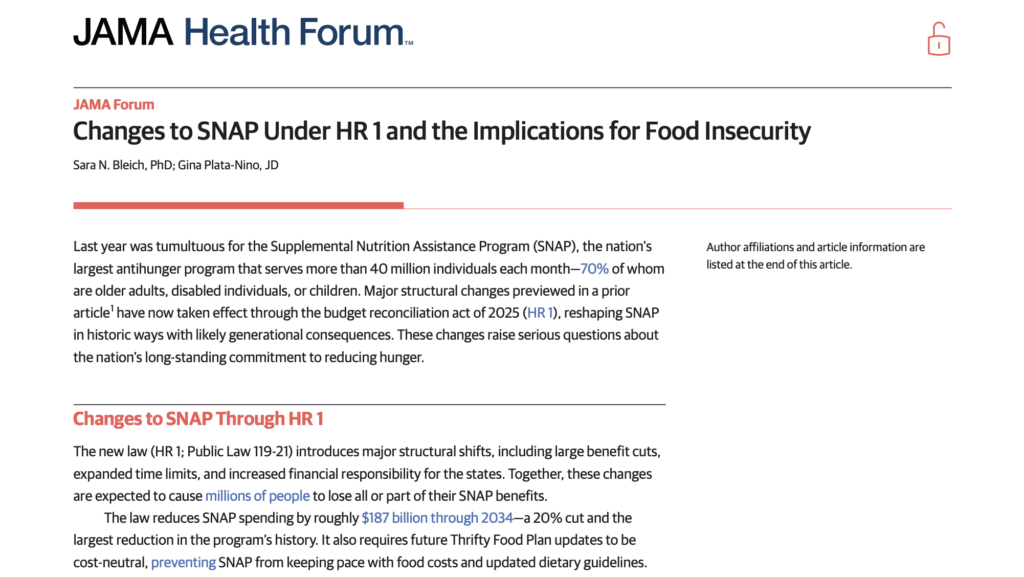
The resource details significant legislative shifts, including a $187 billion reduction in program spending and the expansion of work requirements to adults up to age 64 and parents of older children.
It describes how the law transfers administrative and financial burdens to the states—increasing their share of administrative costs to 75%—while eliminating funding for vital initiatives like SNAP Education (SNAP-Ed). Furthermore, the authors discuss the broader implications for beneficiaries, noting that these cuts are likely to exacerbate health disparities and increase healthcare expenditures, and they conclude with a call for clinicians and researchers to help eligible patients navigate these new complexities.
Share this Resource: