This post explores the lessons learned and opportunities for improvement from USDR's research on families' experiences as they navigate the child care journey.
An overview of current technology systems used by WIC agencies nationwide, highlighting trends, challenges, and opportunities for modernization to improve program efficiency and participant experience.
With the extension and expansion of P-EBT during COVID and the Food and Nutrition Service releasing new guidance, states have an opportunity to effectively deliver essential resources to children and families. Code for America built this toolkit of resources to share recommendations and promising practices around the implementation of P-EBT and to support state agencies and partners tasked with the development of P-EBT programs.
This analysis examines the surge in U.S. state-level AI legislation in 2023, highlighting enacted laws, proposed bills, and emerging regulatory trends.
The CUTGroup book explains how civic user testing (paying residents to test civic apps) can allow for more community engagement in civic tech. This book covers how to do UX testing, community engagement, and digital skills in one civic tech system.
A case study of the Hawai‘i Career Acceleration Navigator — an accessible, data-driven and full-service government platform for unemployed people and other jobseekers to search for jobs and access supportive service benefits.
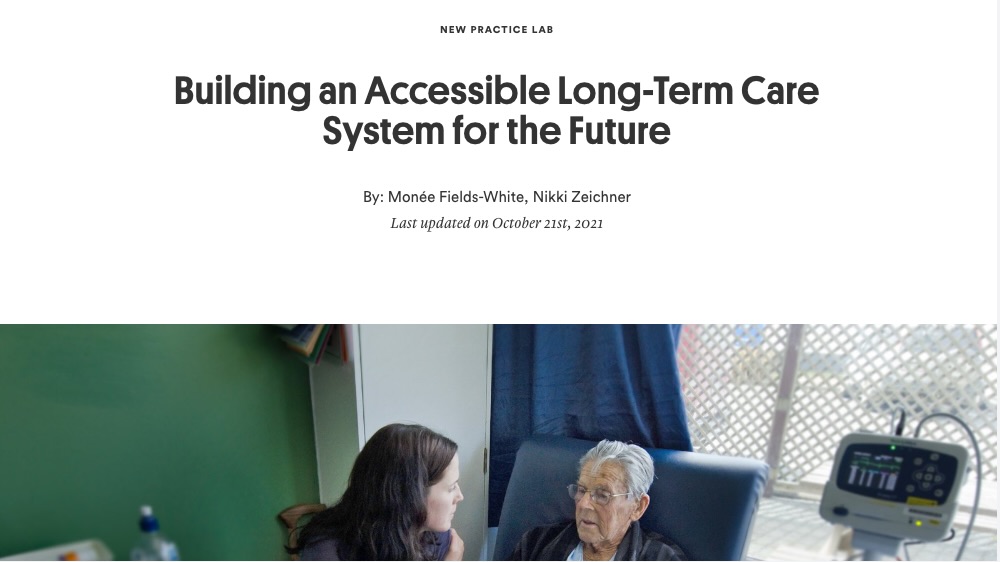
The nation’s long-term care system has struggled for many years, and those constraints are expected to deepen as our nation ages. In 2019, Washington State became the first in the United States to pass legislation that would enable a public state-operated long-term care insurance program, the Washington Cares Fund. We conducted research with the goal to identify concrete ways for Washington State to implement this fund so that it is accessible to all and it supports living-wage jobs for care workers. In this report, we discuss our research methods, we present personas of individuals seeking long-term supports and services from the Washington Cares Fund, and we offer a list of recommendations that, while intended for Washington State, we see as applicable to other states that will embark on offering similar long-term services to residents.
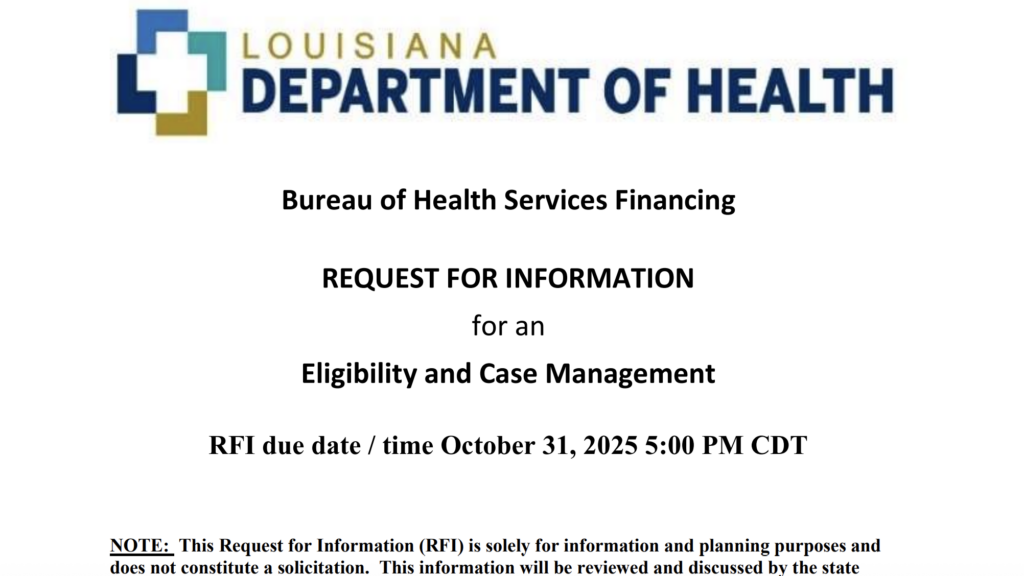
Louisiana issued an RFI to identify solutions that can provide a technology platform for determining eligibility and managing cases across multiple human services programs.