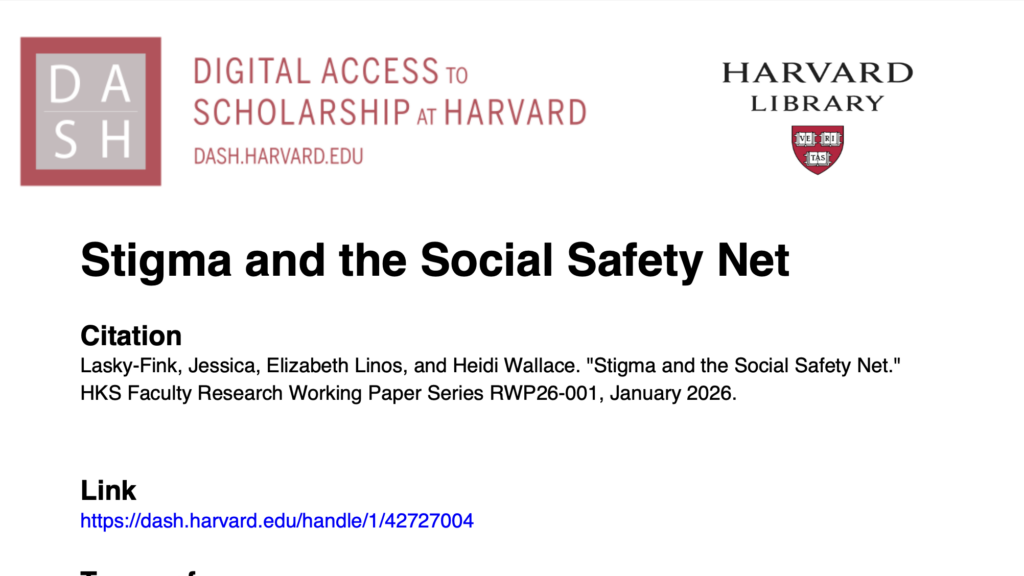
Stigma and the Social Safety Net
This research paper examines how stigma shapes participation in U.S. social safety net programs and influences public support for benefit design and access.
Drawing on four nationally representative studies, the authors develop a validated, four-part framework for measuring stigma (societal, internalized, anticipated, and treatment stigma) and show that higher stigma is strongly associated with lower willingness to apply for benefits and greater tolerance for burdensome program requirements.
The report also finds that program design choices—such as eligibility rules and compliance requirements—can either reduce or reinforce stigma, meaning stigma operates as both an individual and structural barrier to accessing benefits.
Share this Resource: