Programs like Medicaid and SNAP are managed at the federal level, administered at the state level, and often executed at the local level. Because there are so many in-betweens, there is significant duplicated effort, demonstrating the need to simplify eligibility rules to facilitate easier implementation.
In this webinar, a panel of experts discuss what states can do right now to improve EBT security, how to use data to analyze theft patterns, and how EBT payment technology needs to evolve to ensure efficiency, security, and dignity for beneficiaries.
This brief provides a summary of potential federal funding sources and programs that can be used to support programs specifically targeted towards young families. While this list is not exhaustive, it highlights major sources that can serve as a starting point for braiding and blending of funding to create comprehensive programming to serve young families.
American Public Human Services Association (APHSA)
This toolkit provides guidance for state and local WIC agencies on implementing digital tools to enhance participant engagement and streamline program operations.
This report analyzes lawsuits that have been filed within the past 10 years arising from the use of algorithm-driven systems to assess people’s eligibility for, or the distribution of, public benefits. It identifies key insights from the various cases into what went wrong and analyzes the legal arguments that plaintiffs have used to challenge those systems in court.
Algorithmic impact assessments (AIAs) are an emergent form of accountability for organizations that build and deploy automated decision-support systems. This academic paper explores how to co-construct impacts that closely reflects harms, and emphasizes the need for input of various types of expertise and affected communities.
ACM Conference on Fairness, Accountability, and Transparency (ACM FAccT)
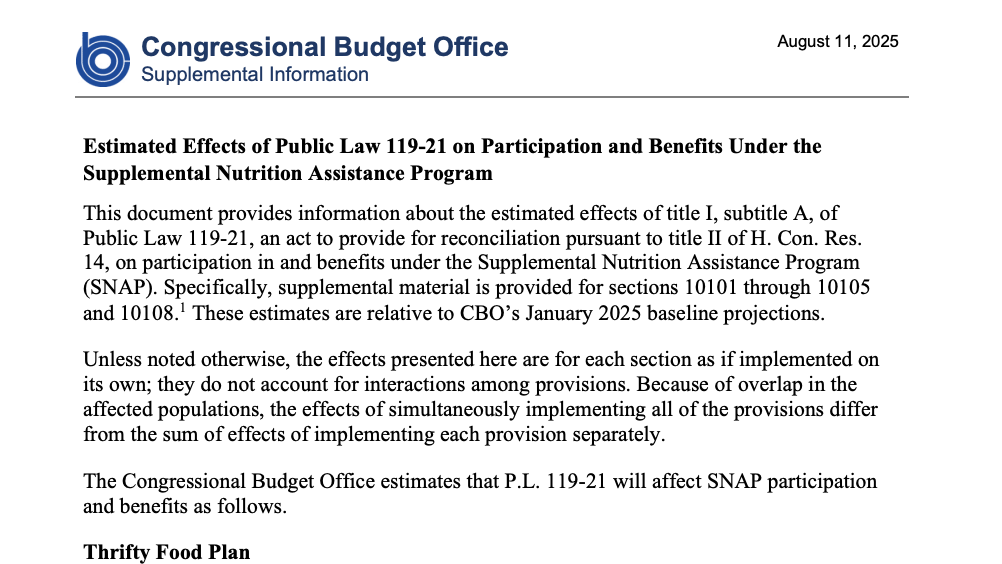
This report provides supplemental estimates on how Public Law 119-21—tied to H.R. 1—will affect SNAP participation, benefits, and state administrative costs over 2025–2034.
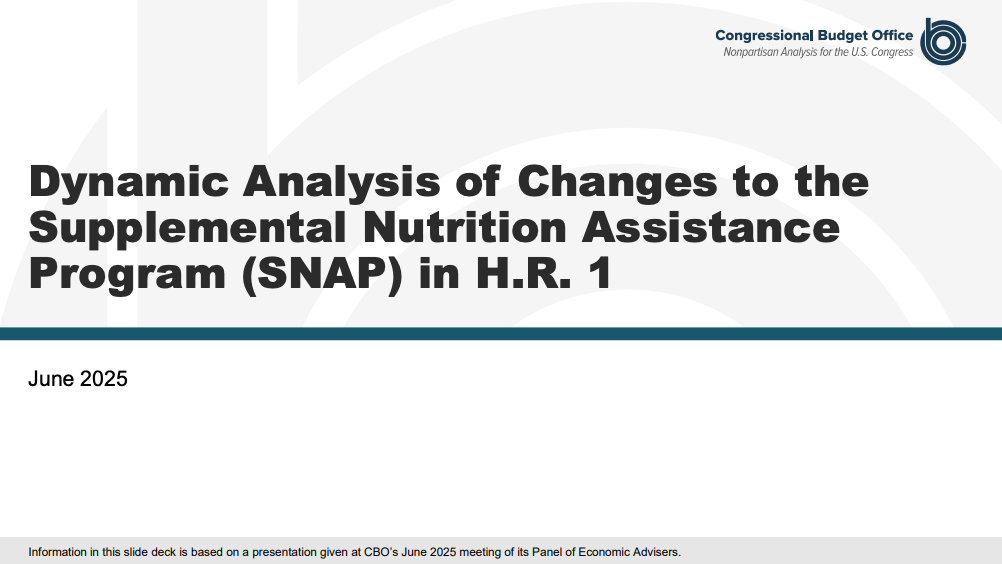
This slide deck describes the main mechanisms in a dynamic analysis of H.R. 1, explains the changes to SNAP, and explains the macroeconomic effects and budgetary feedback of those changes.
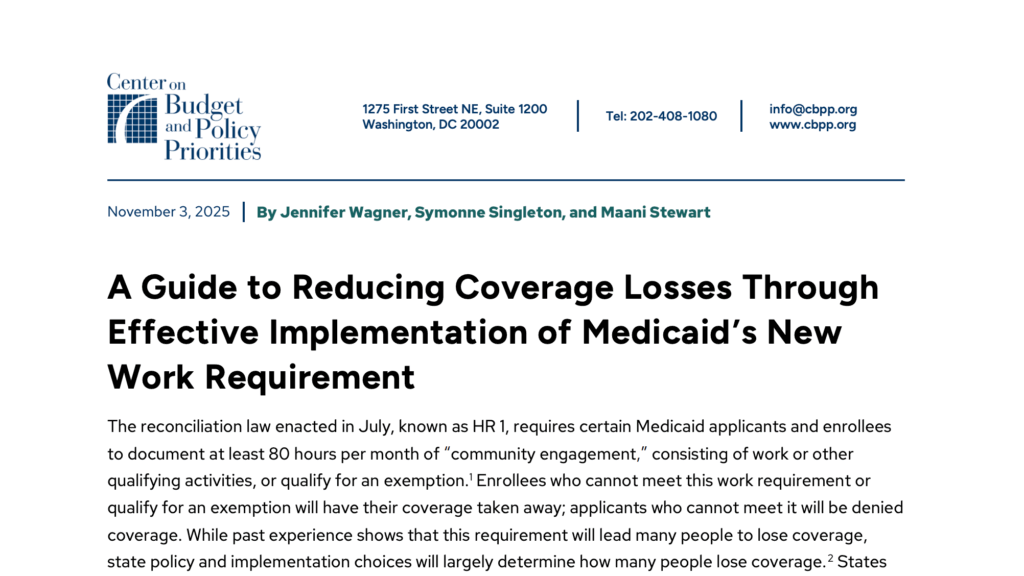
A detailed guide outlining how states can minimize coverage losses and administrative burden while implementing new Medicaid work requirements established under the 2025 federal reconciliation law.