The Center on Budget and Policy Priorities (CBPP) report discusses how reducing administrative burdens in Medicaid can enhance health outcomes and promote racial equity.
A guide by New America to help cities and states set up cash assistance programs for their residents, based on the Alia Cares platform that the National Domestic Workers Alliance built to run their Coronavirus Cares Fund that provides emergency assistance for home care workers to support them in staying safe and at home to slow the spread of COVID.
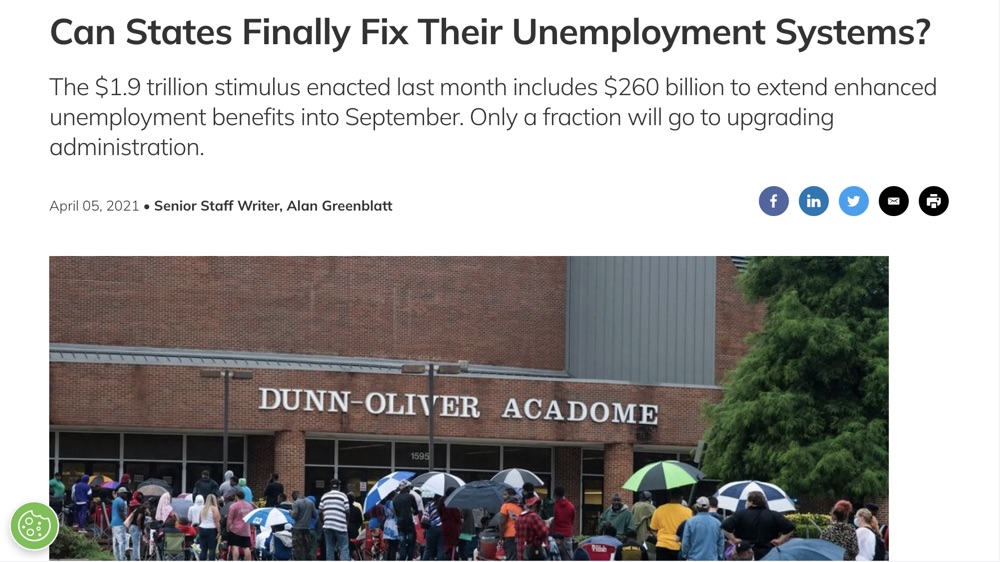
This article explores ongoing efforts to modernize state unemployment insurance (UI) systems, addressing long-standing inefficiencies and challenges exposed by the COVID-19 pandemic.
This resource is a research paper examining the role of the public safety net in insuring job losers against income loss, analyzing which government programs provide financial support and how benefits vary based on pre-job loss income levels.
Code for America highlights the importance of recognizing the effects of intergenerational trauma on communities that have been systemically marginalized when conducting research.
California’s SNAP program faced record application volume due to the COVID-19 crisis, and other states must anticipate similar demand. This post summarizes key takeaways from GetCalFresh’s real-time data and client communications, and offers recommendations for how other states can implement effective responses.
There is a key disconnect between policymakers’ intent and implementation of policies. A user-centric, iterative, and data-driven approach can result result in digital technology that provides much needed data and insights at a substantially lower cost.
This retrospective looks at the way the NYCOpportunity initiative worked across City government, partnering with agencies to initiate new approaches and enhance city practices. It also highlights key areas of focus for the NYC Opportunity team between 2014 and 2021.
This report examines the phenomenon of "churn" in public benefit programs, where eligible participants temporarily lose benefits due to administrative processes, analyzing its impact on both recipients and state agencies, and suggesting strategies to reduce its occurrence.
This case study describes Nava's with the state of Montana’s Special Supplemental Nutrition Program for Women, Infants, and Children (WIC) agency to build an eligibility screener tool.