This policy brief offers recommendations to policymakers relating to the computational and human sides of facial recognition technologies based on a May 2020 workshop with leading computer scientists, legal scholars, and representatives from industry, government, and civil society
This resource provides examples and practical guides that explain how to use existing regulations and data sharing agreements to transfer client information or eligibility status between benefit programs.
This report examines how the U.S. federal government can enhance the efficiency and equity of benefit delivery by simplifying eligibility rules and using a Rules as Code approach for digital systems.
This research article explores how framing income eligibility guidelines in either dollar amounts or as a percentage of the Federal Poverty Line (FPL) affects public attitudes toward program access and administrative burdens in Medicaid and SNAP.
This technical brief uses predictive analytics to identify the primary drivers of SNAP payment error rates (PER) following the implementation of the One Big Beautiful Bill (OBBB).
A blog recap of a FormFest session on improving digital form accessibility, with a focus on accessible error handling and WCAG 2.1 compliance under Title II requirements.
On July 16, members of the Digital Identity Community of practice gathered to learn how peers are gathering beneficiary feedback on their experiences with accounts and proving their identity.
This session from FormFest 2024 featured the work in Austin, Texas on criminal justice forms, and the South Bend, Indiana Animal Resource Center’s efforts to redevelop their animal adoption forms.
Building on our February 2022 report Benefit Eligibility Rules as Code: Reducing the Gap Between Policy and Service Delivery for the Safety Net, the Beeck Center’s Digital Benefits Network (DBN) recently held a convening to share progress and potential in digitizing benefits eligibility and to begin addressing how a national approach could be started.
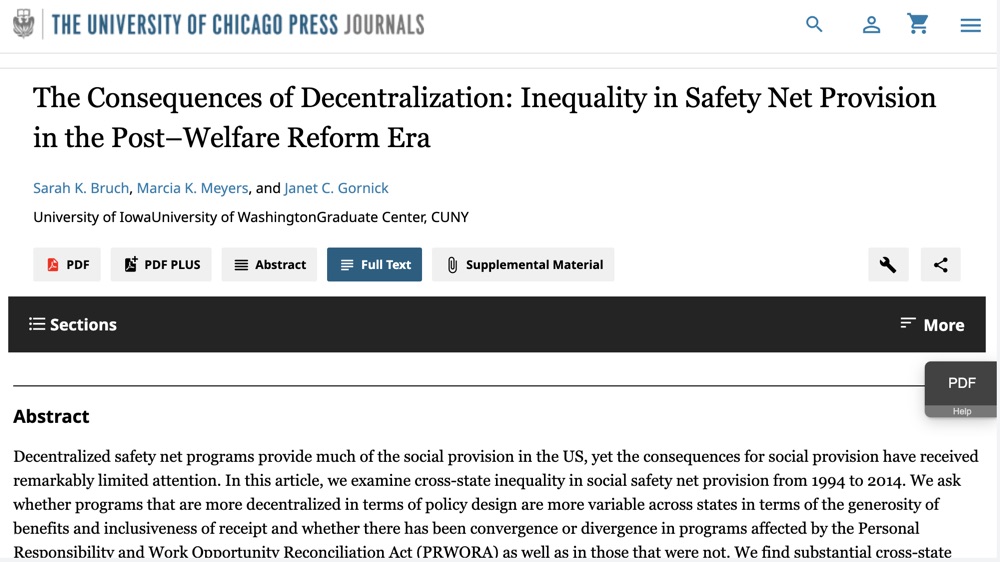
This article examines how the decentralization of safety net programs after welfare reform has led to growing inequality in benefit generosity and access across U.S. states.
This guide highlights approachable ideas for state and local public benefits agencies to improve applications, renewals, and correspondence. As outlined in this resource, even small improvements can be transformative for residents and caseworkers alike.