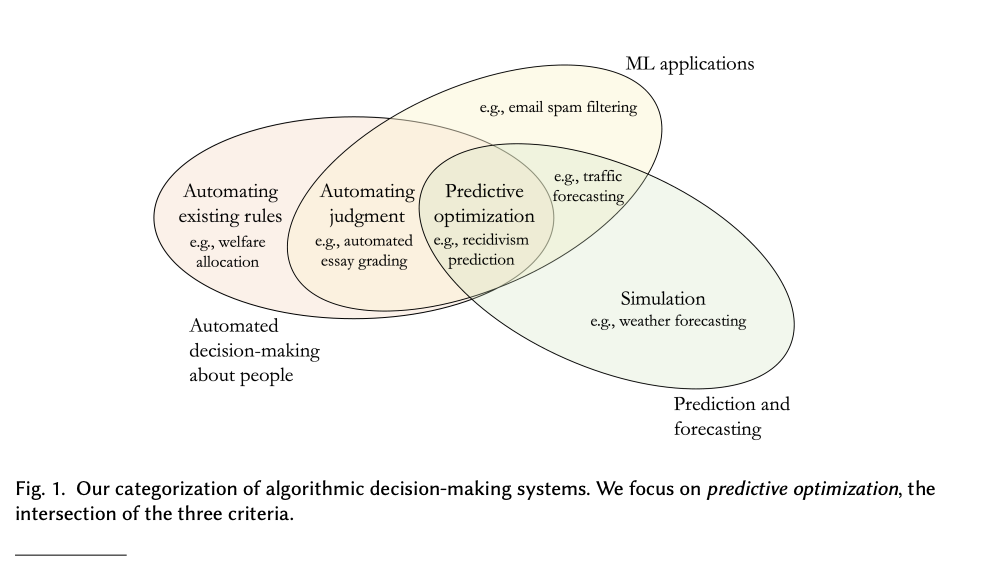
This academic paper examines predictive optimization, a category of decision-making algorithms that use machine learning (ML) to predict future outcomes of interest about individuals. Through this examination, the authors explore how predictive optimization can raise concerns that make its use illegitimate and challenge claims about predictive optimization's accuracy, efficiency, and fairness.
The DBN’s Rules as Code Community of Practice (RaC CoP) creates a shared learning and exchange space for people working on public benefits eligibility and enrollment systems — and specifically people tackling the issue of how policy becomes software code.
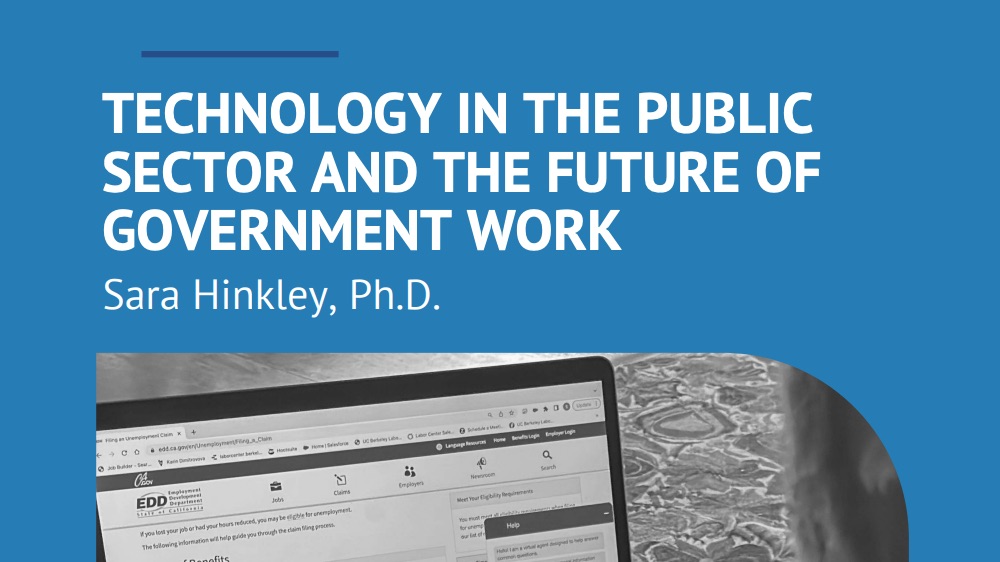
This report explores technologies that have the potential to significantly affect employment and job quality in the public sector, the factors that drive choices about which technologies are adopted and how they are implemented, how technology will change the experience of public sector work, and what kinds of interventions can protect against potential downsides of technology use in the public sector. The report categories technologies into five overlapping categories including manual task automation, process automation, automated decision-making systems, integrated data systems, and electronic monitoring.
A11y Jam session focused on how local governments are advancing DOJ accessibility compliance using practical, resource-conscious strategies across high-impact digital services.
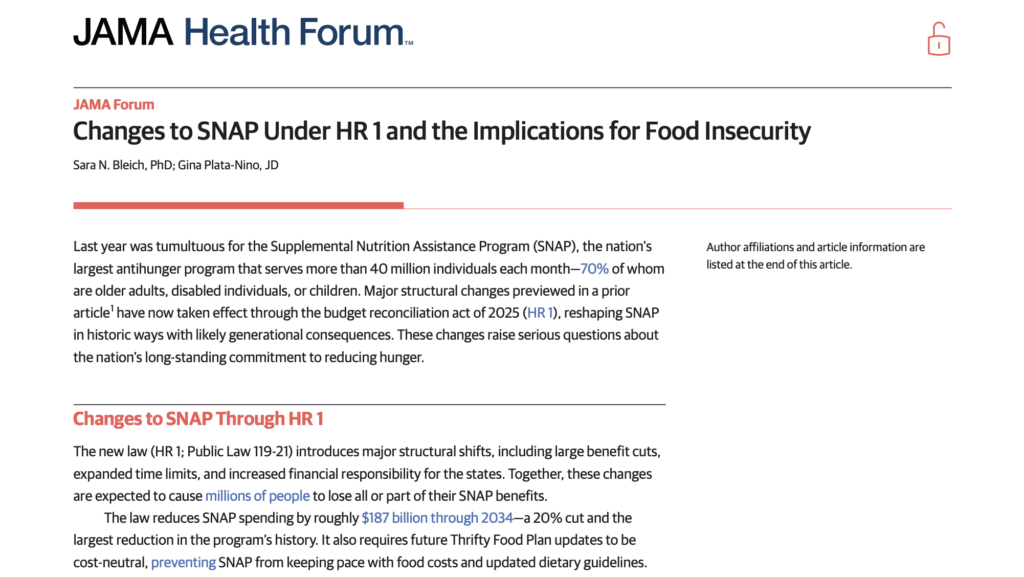
This article examines the historic structural changes to the Supplemental Nutrition Assistance Program (SNAP) enacted through H.R. 1 and their potential consequences for public health and food security.
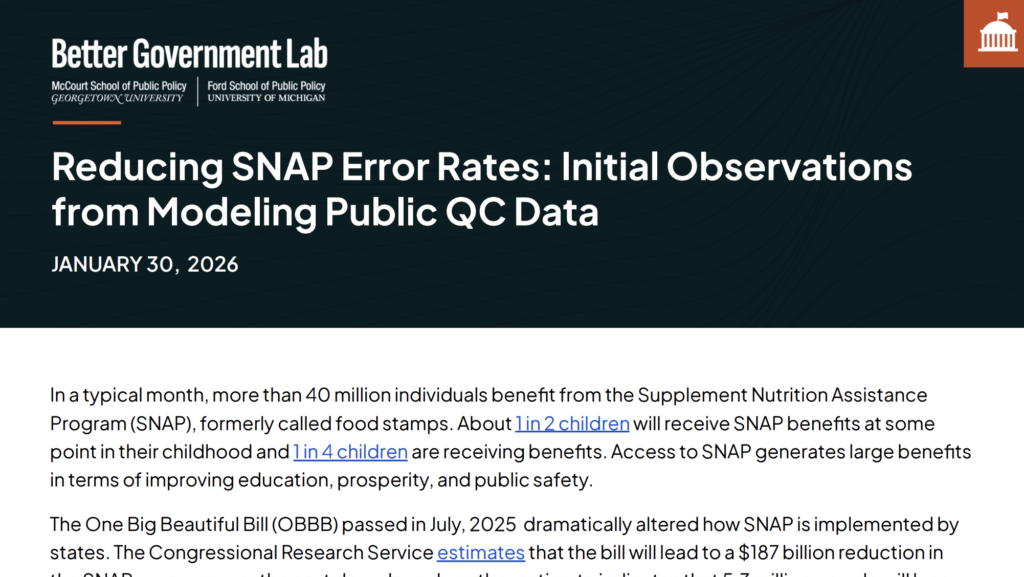
This technical brief uses predictive analytics to identify the primary drivers of SNAP payment error rates (PER) following the implementation of the One Big Beautiful Bill (OBBB).
This guide is a practical introduction to Digital Service Teams (DSTs) for state and local governments. It is designed to help leaders interested in standing up new government DSTs understand what they are, why they exist, and how they are structured, staffed, funded, and more.
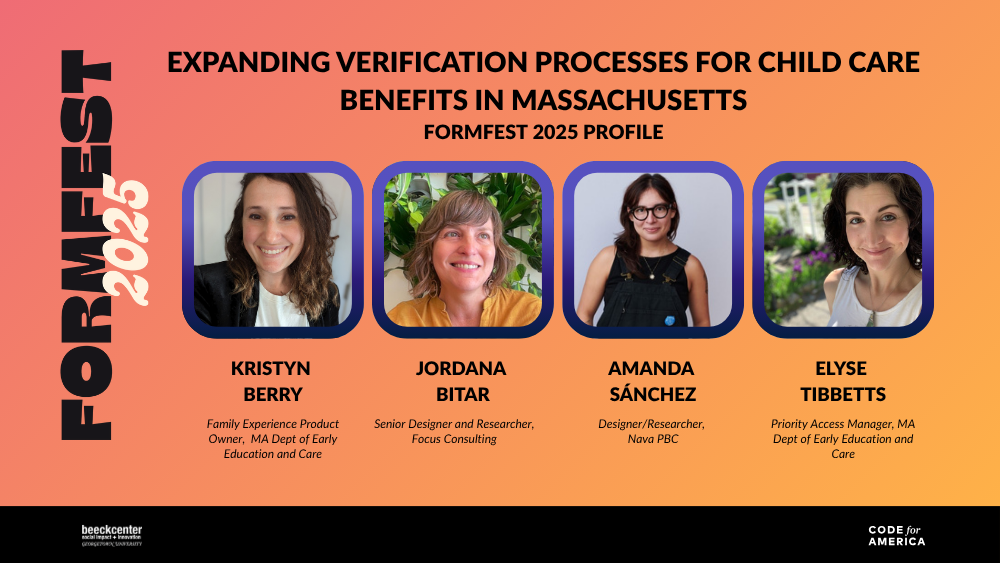
This FormFest profile examines how Massachusetts’ Department of Early Education and Care is modernizing its child care benefits system through human-centered design, making verification and application processes simpler, more compassionate, and more efficient for families and staff.