The Seattle.gov website's new Assistance and Discounts page centralizes information on city benefits and services, offering a user-friendly and consistent experience across 7,000 pages.
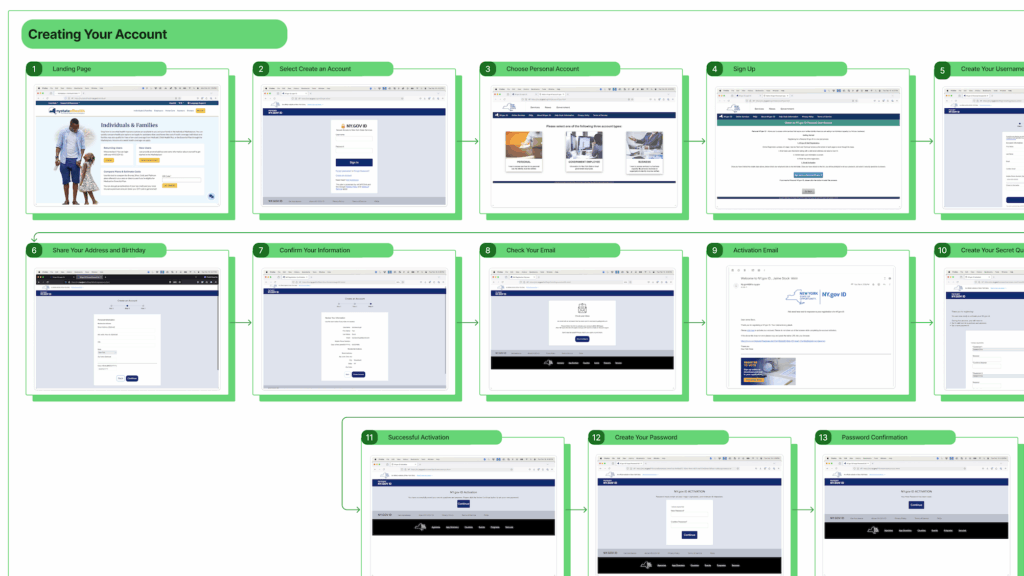
Created for use in the Digital Doorways research project, this design stimuli shows the steps of submitting an application, sharing personal information, and verifying identity for New York's online application for Medicaid.
This page includes data and observations about authentication and identity proofing steps specifically for online applications that include MAGI Medicaid.
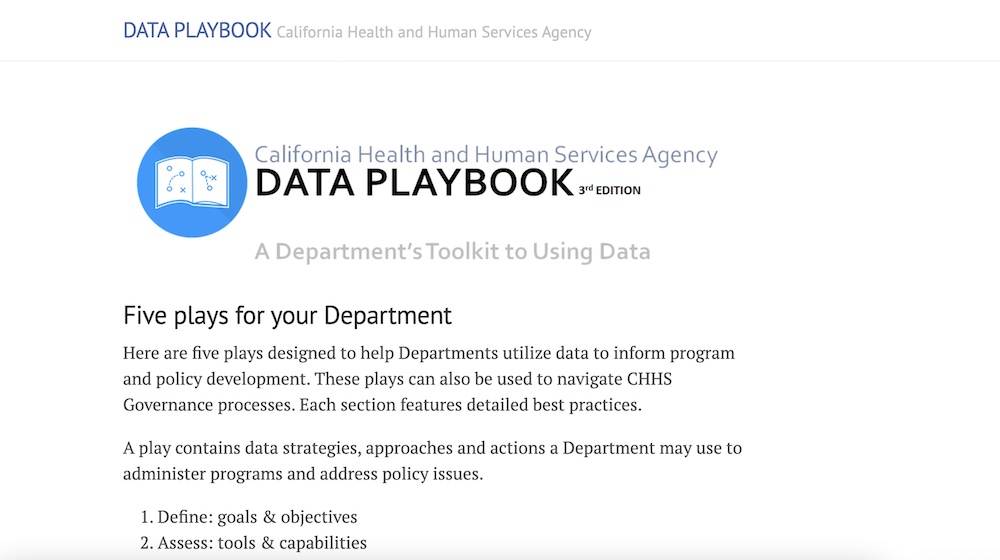
This data playbook created by the California Health and Human services agencies discusses five plays designed to help Departments utilize data to inform program and policy development.
California Health and Human Services Agency (Cal HHS)
Disparities in Economic Impact Payment (EIP) receipt during the COVID-19 pandemic disproportionately affected low-income households, communities of color, and individuals without tax filing histories.