Code for America’s Integrated Benefits Initiative has been working in partnership with the State of Colorado to demonstrate how user-centered approaches lead to measurably better delivery of safety net programs. This article describes their work with the state of Colorado in simplifying how clients report common life changes that can affect their eligibility.
This event convened policy experts and state leaders to explore how states can operationalize new Medicaid work reporting mandates—covering technical, legal, and implementation challenges.
A profile on FormFest speakers Greg Clapp, Josh Gregor, Sophia Tareen, Sourabh Chakraborty, featuring stories about their motivations for working on public sector form innovation.
County workers typically spend most of their time trying to get income information right during eligibility interviews. This article provides several recommendations for asking about income, accounting for cognitive biases, under-reporting, and complexities in reporting income.
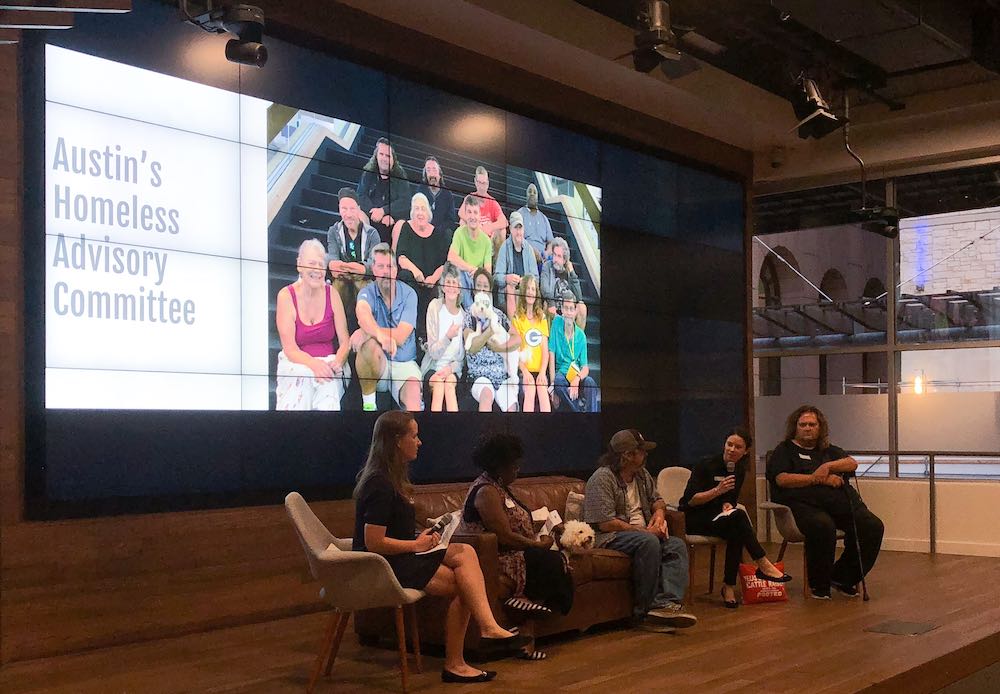
In Austin, there are over 2,000 individuals without a safe place to sleep. There are many reasons a person can become homeless, and these reasons range from the lack of affordable housing to the loss of family and community. In 2017, the Innovation Office secured a three-year $1.25m grant from Bloomberg Philanthropies to focus on the city's goal of ending homelessness. The grant funds an i-team to help the city identify the best ways for City Council, departments, and the community to collaborate towards a shared understanding of homelessness in Austin.
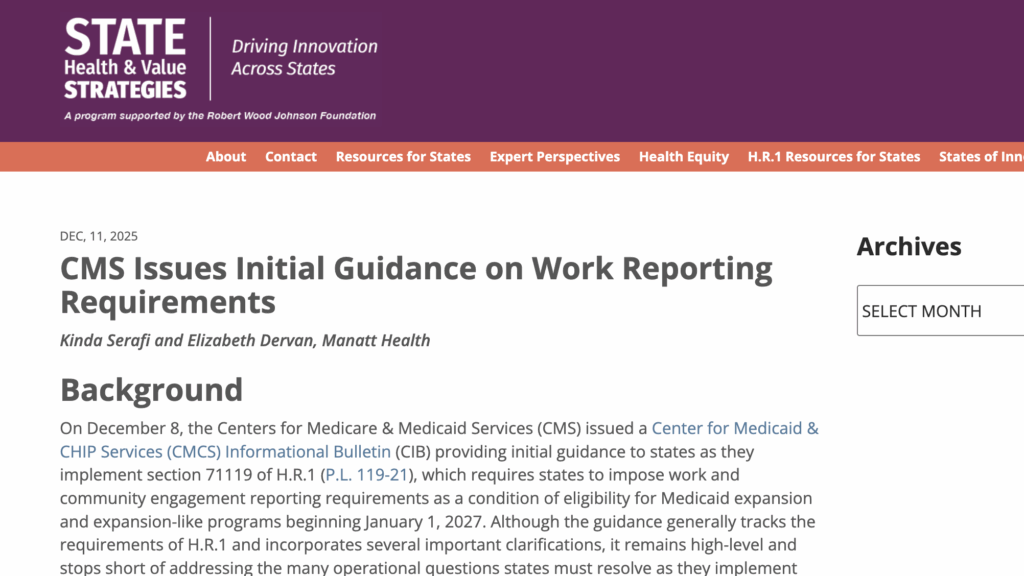
A summary of the initial CMS guidance (CMCS informational bulletin) on how states should implement Medicaid work reporting requirements under H.R. 1, clarifying high-level expectations and key technical points.
The Long Beach Tree Map shows trees throughout the Long Beach region which centralizes, organizes, and visualizes information regarding where and how many trees as well as their type.