The playbook is a comprehensive guide developed by the Maryland Department of Information Technology to assist state agencies in creating consistent, user-centered, and accessible digital services.
This design system accessibility checklist ensures that all components and design tokens meet or exceed the WCAG 2.1 AA standards, aligning fully with Government of Canada accessibility requirements.
The study investigates how state agencies administering SNAP comply with Title VI of the Civil Rights Act by providing language access for individuals with limited English proficiency (LEP).
This article emphasizes the need for local leaders to prioritize disability equity in advancing upward mobility, addressing systemic barriers that hinder disabled individuals' escape from poverty.
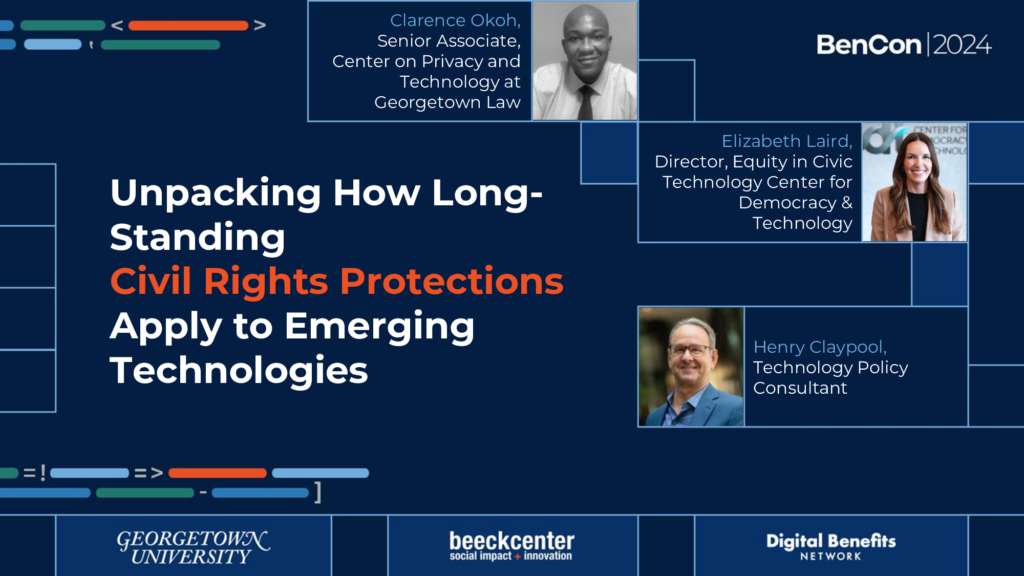
A panel of experts discuss the application of civil rights protections to emerging AI technologies, highlighting potential harms, the need for inclusive teams, and the importance of avoiding technology-centric solutions to social problems.
This Guide to Artificial Intelligence provides a strategic framework for the ethical and responsible implementation of GenA technologies in state operations.
Colorado Governor's Office of Information Technology (OIT)
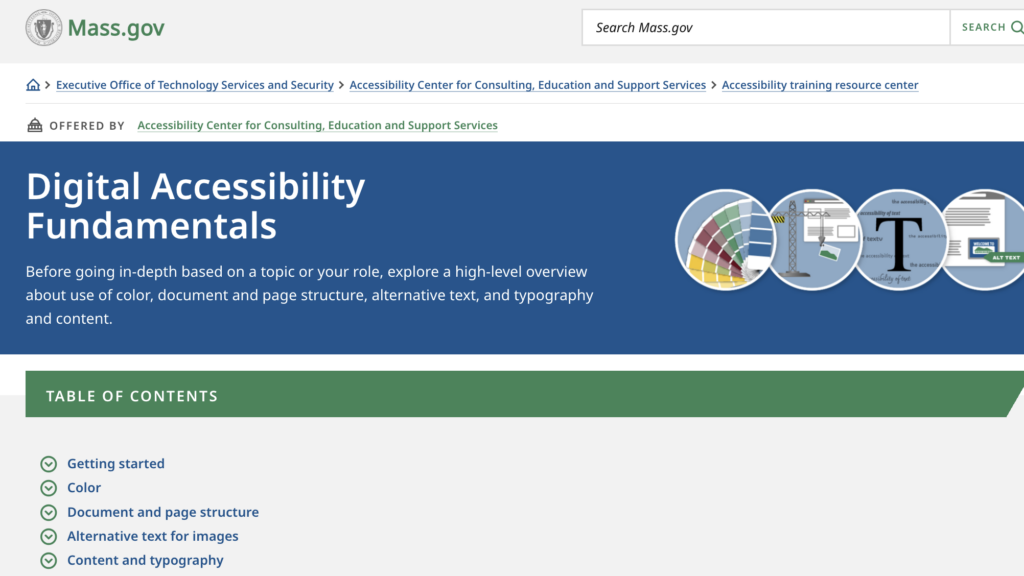
This resource provides practical guidance on the core principles of digital accessibility, helping teams create digital content and services that are more usable and inclusive for people with disabilities.
The Commonwealth of Massachusetts Executive Office of Technology Services and Security (EOTSS)
This report provides an overview of the task force’s work in assessing, guiding, and recommending policies for the safe, ethical, and effective use of generative AI across Alabama’s executive-branch agencies.
State of Alabama Generative Artificial Intelligence (GenAI) Task Force
This research paper explores how government design systems function as the “translation layer” of digital public infrastructure, transforming technical systems into accessible, trustworthy citizen experiences.