An outline of the opportunities for modernizing SNAP to better meet participant needs by streamlining enrollment, improving digital access, and enhancing coordination with other safety net services.
This guide explains how states can implement new Medicaid work requirements introduced by H.R. 1, focusing on minimizing harm to eligible clients while preparing for compliance by 2027.
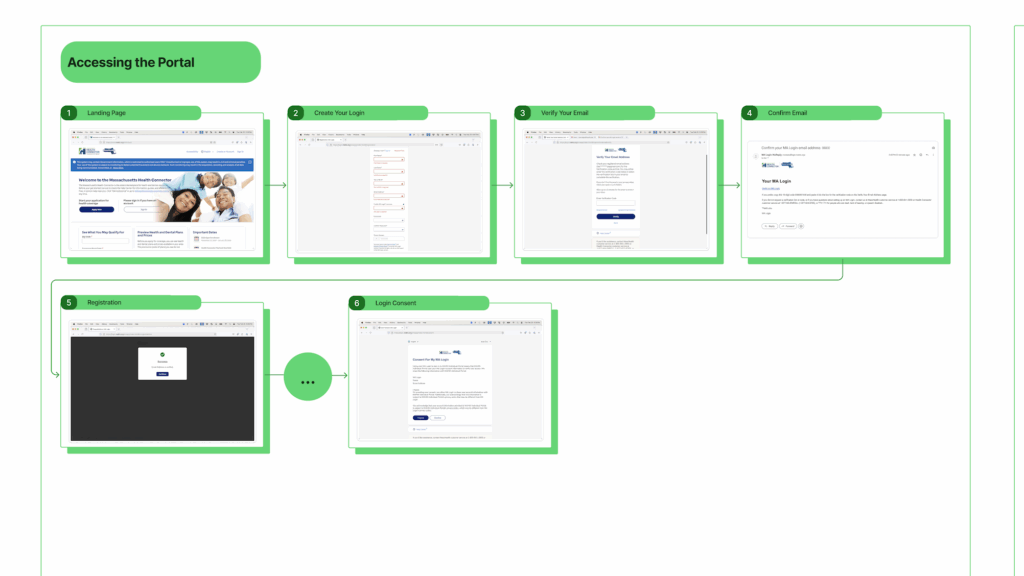
Created for use in the Digital Doorways research project, this design stimuli shows the steps of submitting an application, sharing personal information, and verifying identity for Massachusetts' online application for Medicaid.
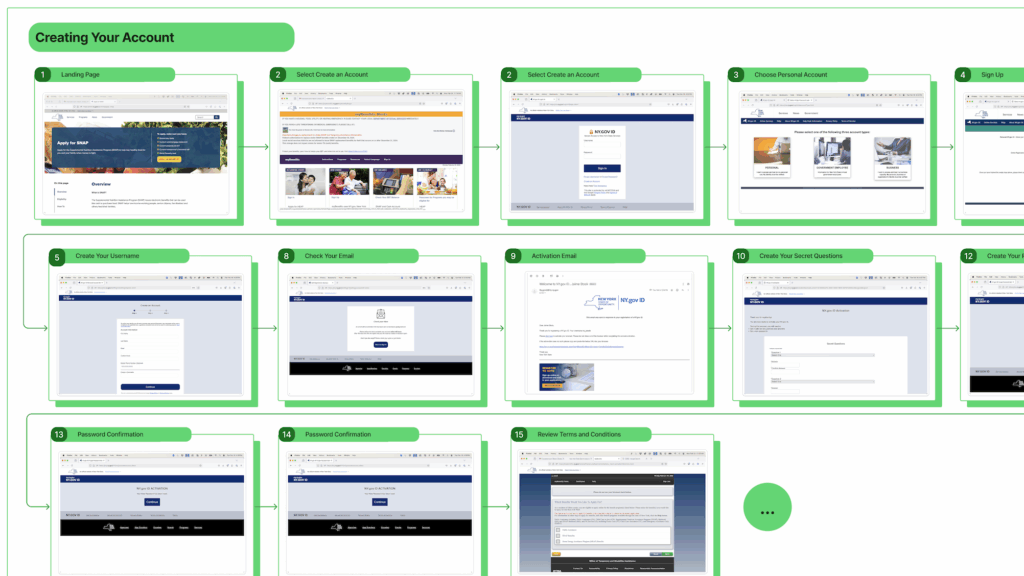
Created for use in the Digital Doorways research project, this design stimuli shows the steps of submitting an application, sharing personal information, and verifying identity for New York's integrated online application that includes SNAP and Medicaid.
This budget request details ADES's FY2027 funding priorities—including developmental disability services, child care, IT modernization, and compliance with H.R. 1—and outlines projected fiscal impacts, caseload growth, and programmatic needs across the state
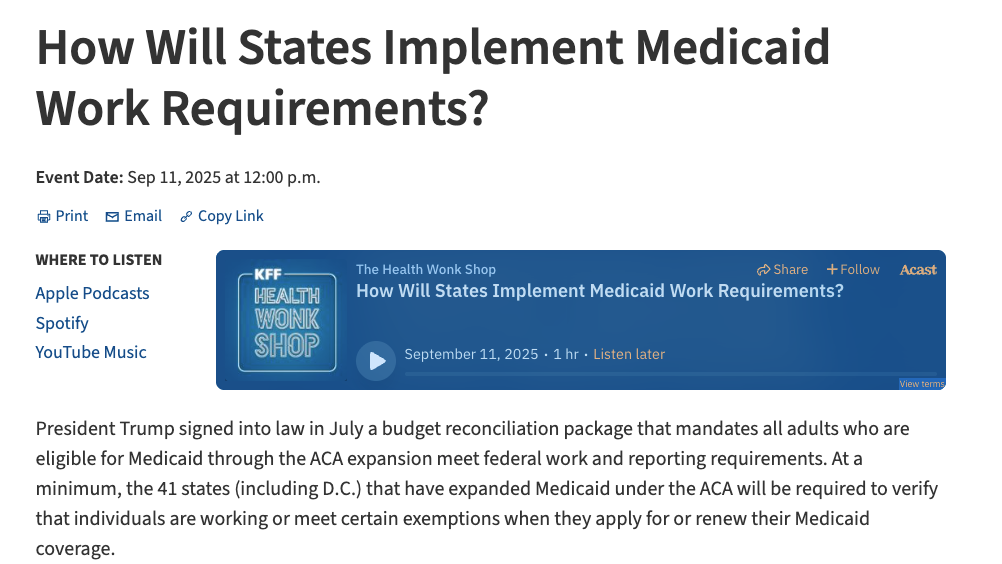
This event convened policy experts and state leaders to explore how states can operationalize new Medicaid work reporting mandates—covering technical, legal, and implementation challenges.
This report provides supplemental estimates on how Public Law 119-21—tied to H.R. 1—will affect SNAP participation, benefits, and state administrative costs over 2025–2034.
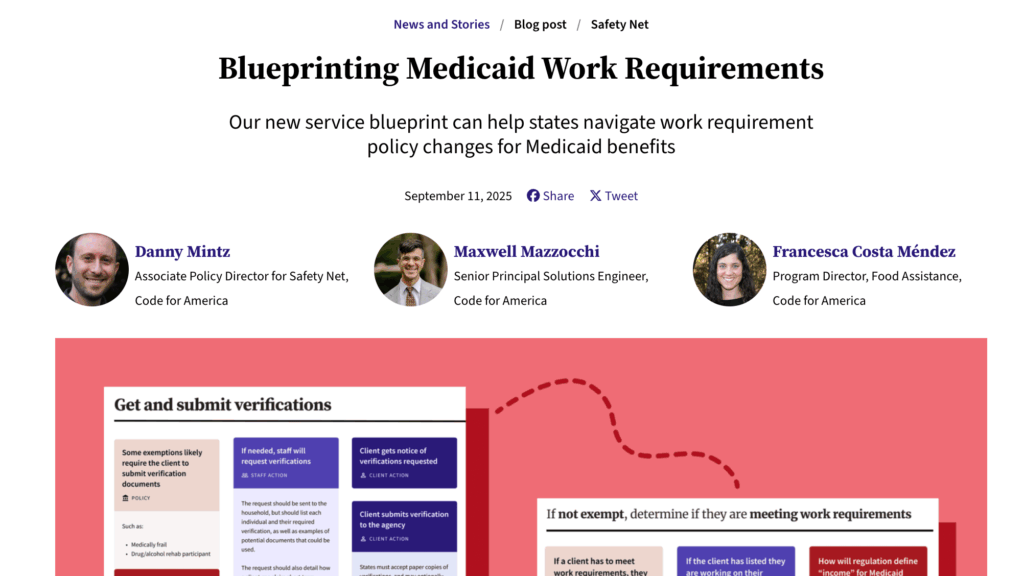
This blog introduces Code for America’s new service blueprint for Medicaid work requirements, highlighting how it can help states map system changes, identify pain points, and prioritize human-centered design.
This report provides an initial fiscal analysis of how H.R. 1 (the “One Big Beautiful Bill”) will affect the state’s federally funded programs across agencies, estimating multi-billion-dollar reductions in SNAP, Medicaid, education, and infrastructure revenues.
A report outlining human-centered design strategies to help states implement new federal Medicaid work requirements in ways that minimize coverage loss and administrative burden