This resource outlines strategies for cross-enrollment outreach, which can break down silos between programs and reach applicants who may be eligible for under-enrolled benefits programs.
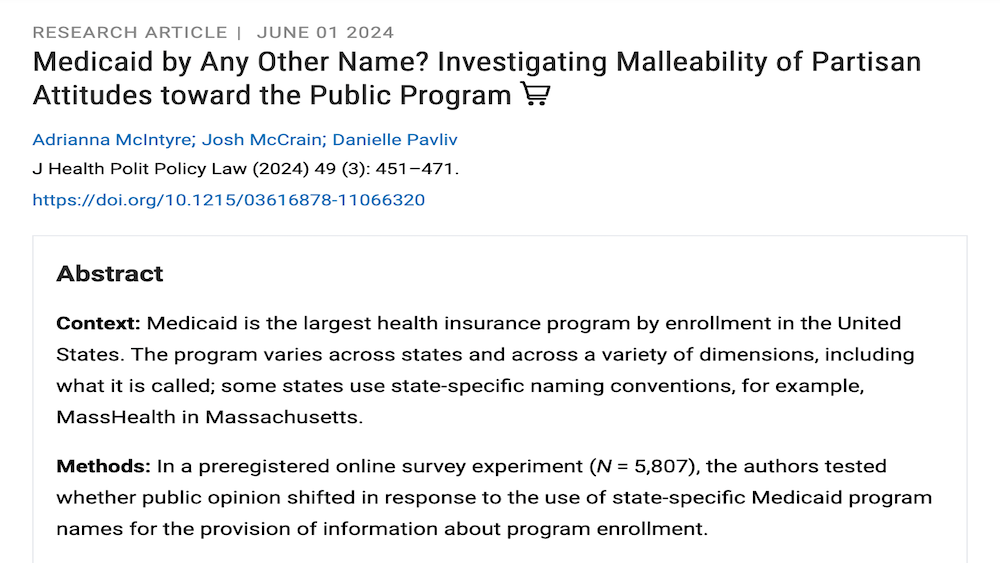
This study found that using state-specific names for Medicaid programs increased confusion and reduced both positive and negative opinions about the program.
This presentation was recorded at the Texting and Notification Working Group meeting coordinated in part by the Aspen Institute Financial Security Program on February 28, 2024.
A toolkit that explains how to apply a content-first design approach to public services, helping teams design content strategy and interfaces based on user needs.
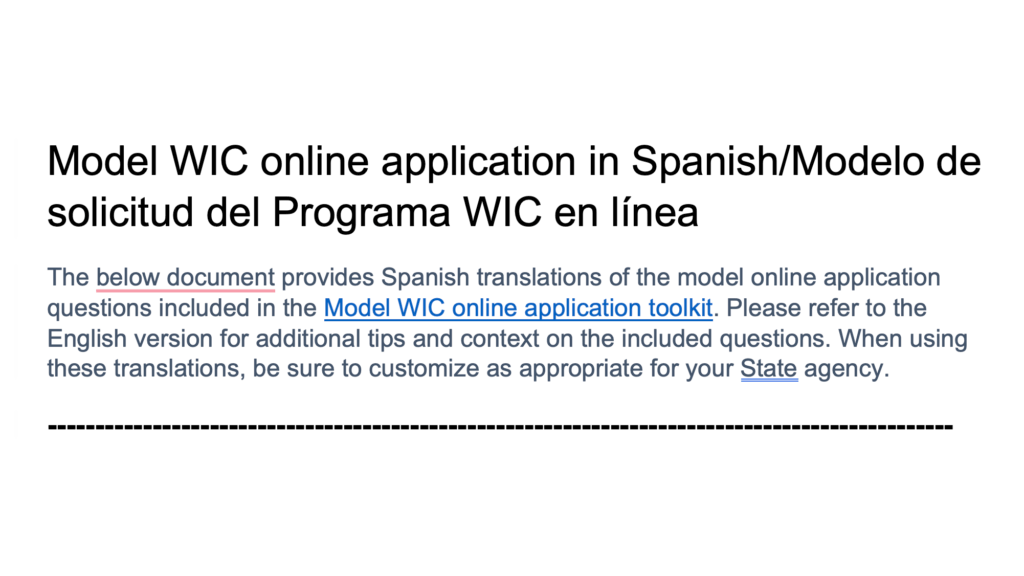
This document is the Spanish-language version of the Model WIC Online Application. It provides a full set of translated application questions and instructions for applying to the Special Supplemental Nutrition Program for Women, Infants, and Children (WIC).
This project portfolio page details a human-centered service design partnership with the Michigan Unemployment Insurance Agency (UIA) to revitalize and streamline the state's unemployment benefits system following crisis-level strain.
The Governor's Office of Administration is seeking a digital director 2 to join our growing and innovative Commonwealth Office of Digital Experience PA team! This is your chance to work with a wide range of technologies for an organization that works for the common good of Pennsylvanians. If you are detail-oriented, have excellent communication skills, and want a career serving the public, we want to talk to you!