In response to exploding demand for social services during COVID-19, the Louisiana Department of children and Family services implemented text-message alerts and reminders for the state’s entire SNAP caseload, launched a text-based public campaign to help people understand and apply for SNAP benefits, and hired SNAP recipients to provide client feedback on communications and policy decisions.
Federal Communications Commission present on how state and local agencies can legally use SMS messaging to engage with public benefits applicants and recipients, including compliance with the Telephone Consumer Protection Act (TCPA).
This resource is a communications toolkit designed to help states and stakeholders inform Medicaid and CHIP recipients about the eligibility renewal process, ensuring they take necessary steps to maintain or transition to alternative health coverage.
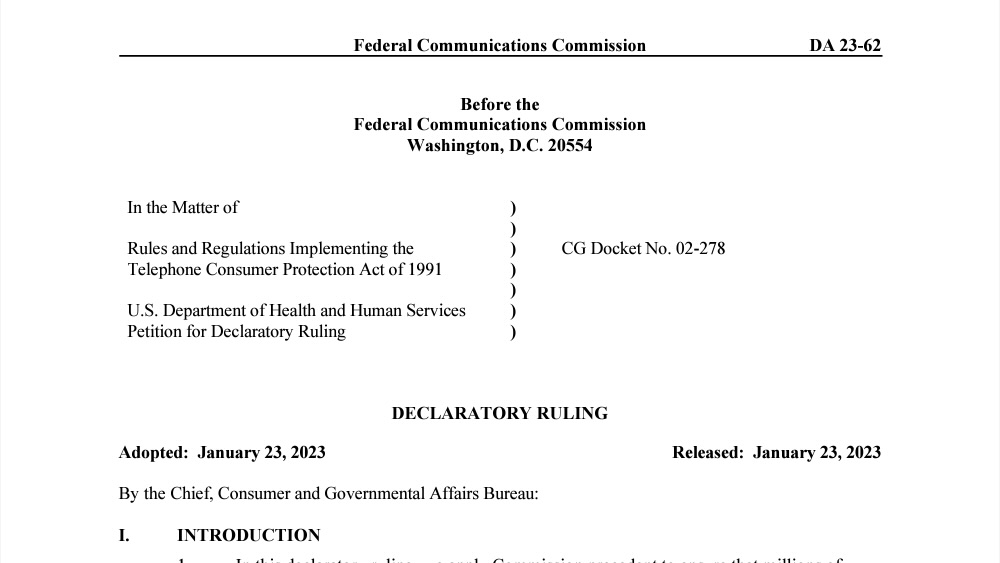
Ruling from the FCC granting the U.S. Department of Health and Human Services (HHS) to confirm that federal and state governmental agencies working in conjunction with local governments, governmental contractors, and managed care entities acting under contract with state governments may, under certain circumstances, make autodialed and prerecorded or artificial voice calls or send autodialed text messages to raise awareness of the eligibility and enrollment requirements for these governmental health care programs without violating the Telephone Consumer Protection Act (TCPA).
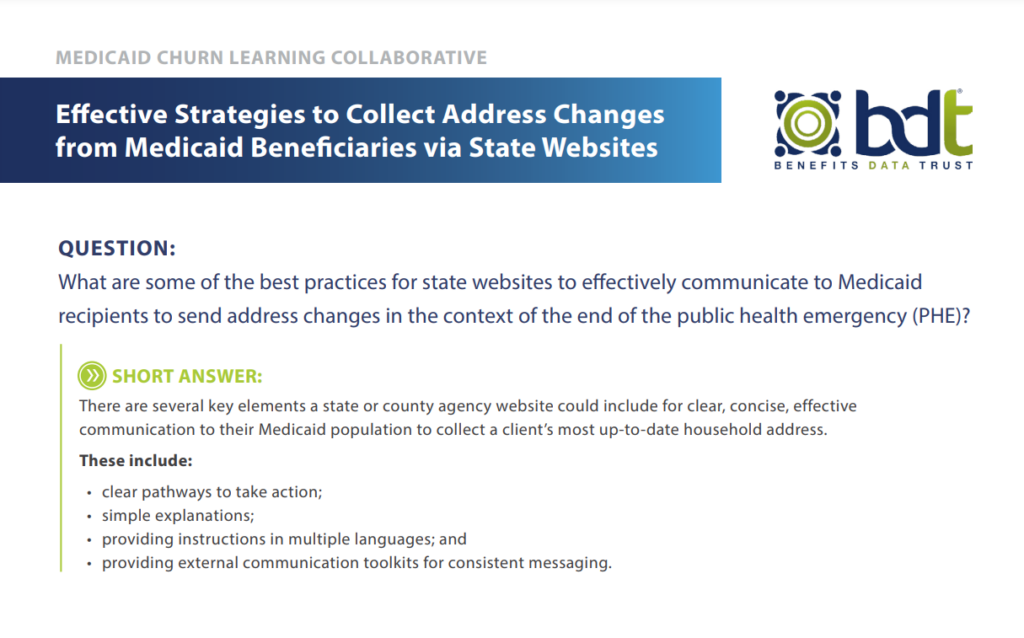
As a part of Benefit Data Trust (BDT)’s Medicaid Churn Learning Collaborative, BDT has created a memo describing strategies for states to collect current mailing addresses of Medicaid beneficiaries in advance of the Medicaid continuous coverage requirement — in effect under the federal public health emergency — unwinding.