The first half of Rules as Code Demo Day was wrapped up with Thomas Guillet who has contributed to Open Fisca France and beta.gouv. He demoed the code for Mes Aides—or My Benefits—which is France’s social benefit simulator that leverages open source rule models for over 600 benefits while keeping the displayed complexity to its minimum.
This article discusses the various benefits of publicly-funded open-source software. These benefits include fairness and transparency, economic stimulus, and support of the Federal Source Code Policy Agenda.
EBT theft has deeply damaged the lives of the lowest-income Americans. The following insights reveal a system that leaves people in the dark and fails to protect a crucial lifeline.
This article examines how applying a Racial Equity Framework reveals systemic inequities in the Earned Income Tax Credit (EITC) program, offering insights into barriers faced by marginalized communities and potential solutions.
This presentation from Steph White, Cross Enrollment Coordinator at the Michigan Department of Health and Human Services offers an in-depth example on implementing cross enrollment with WIC and general tools for cross enrollment.
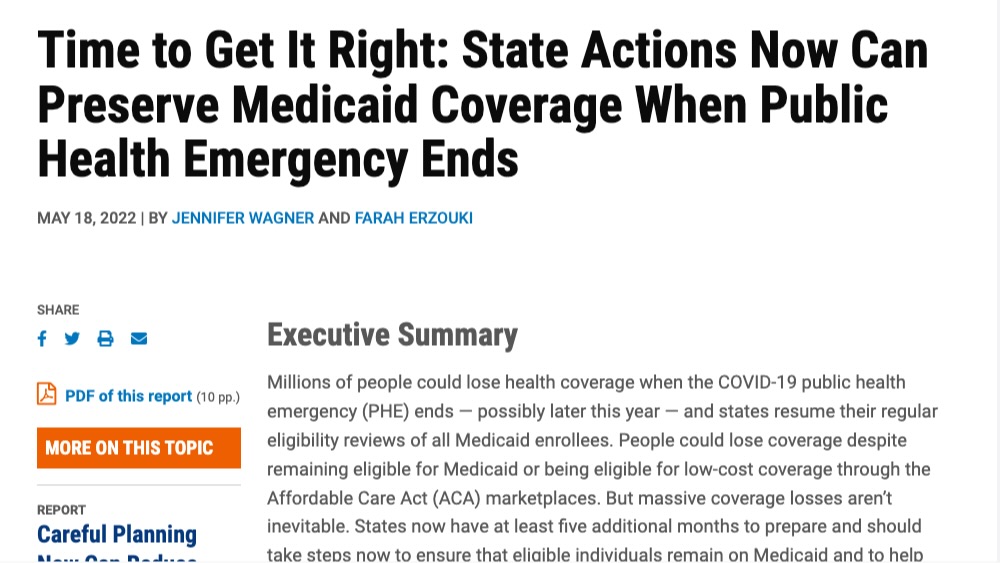
This report outlines critical actions states should take to maintain Medicaid coverage as the COVID-19 Public Health Emergency (PHE) concludes, aiming to prevent widespread loss of health insurance among eligible individuals.
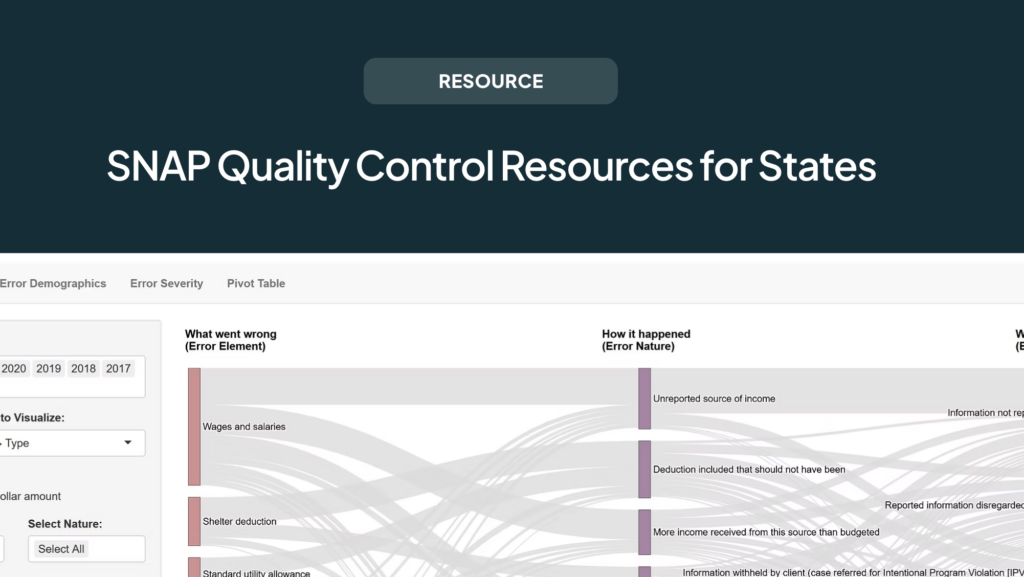
A blog introducing an interactive viewer that helps users explore SNAP Quality Control error data to better understand payment accuracy trends and administrative challenges across states.
This toolkit provides individuals and organizations with guidance, drawn from learning and experience, on how to use administrative and other data to inform program improvements. It collects concrete strategies and practitioner-tested tools designed to advance these efforts. These materials were developed in pilot projects with local Temporary Assistance for Needy Families (TANF) agencies as part of the TANF Data Collaborative (TDC).