An event recap from one of FormFest 2024's breakout sessions featuring speakers from Digital Service Teams across the United States and the Department of Veteran Affairs.
This article offers three human‑centered strategies to help state agencies implement expanded work reporting requirements in SNAP and Medicaid under H.R. 1 with minimal burden on clients and staff.
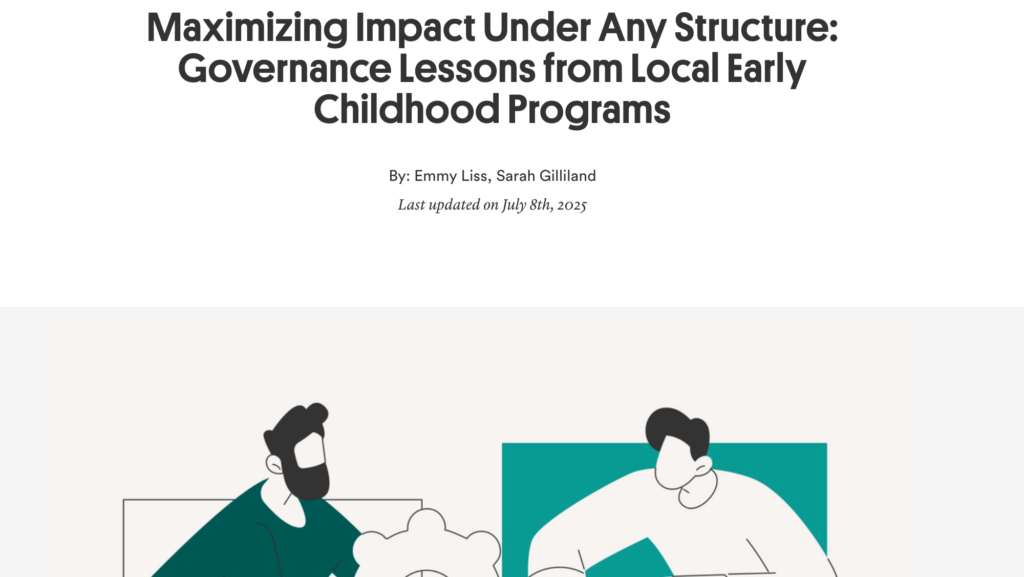
A research report that defines different local early childhood governance models and explains how communities can choose and design governance structures to support effective early care and education systems.
A research report examines how internal workplace conditions in federal agencies influence employee satisfaction and ultimately the quality of services delivered to the public.
A pre-launch survey brief that documents the financial, emotional, and physical well-being of a local child care workforce before the start of a wage boost pilot.
A TLDR of the State CDO Archetypes report—covering how state CDO offices operate and the six archetypes that define them. Written for event attendees and government staff: governor's office, IT and budget leadership, legal and data officials, and legislators who oversee CDO funding and establishment.
This workshop summary synthesizes key takeaways from a convening of nearly 40 research and data analytics staff from 15 states focused on SNAP Quality Control (QC) data modeling.
This presentation focuses on data-driven and analytic strategies for identifying and verifying medical frailty exemptions within Medicaid work requirements.
This research brief summarizes the ideas and recommendations from sessions with dozens of cross-sector stakeholders within the technology ecosystem to identify conditions for better, healthier, more secure digital ecosystems that could help guide the next generation of open protocols and platforms.