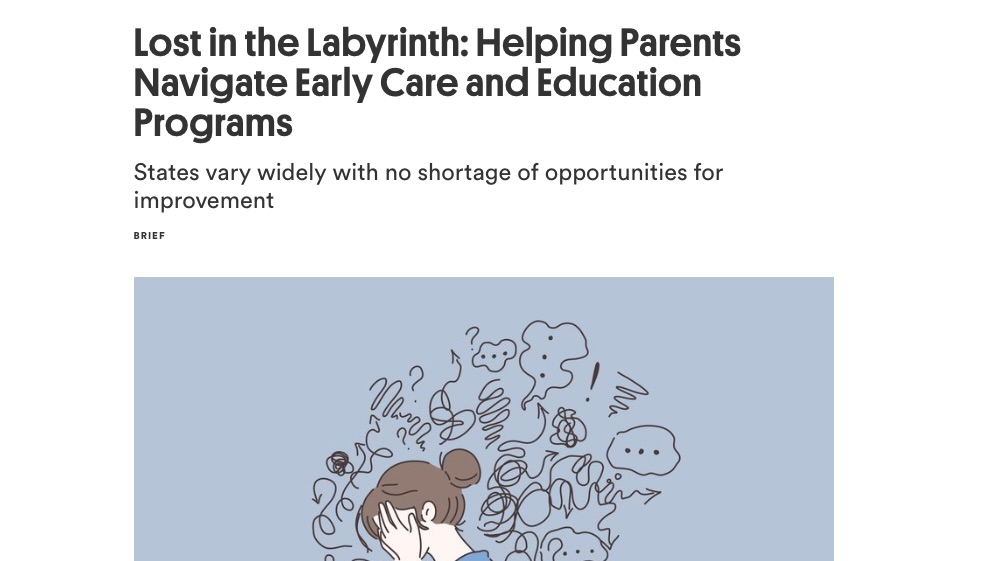
The Lost in the Labyrinth brief examines how fragmented early care and education (ECE) programs across the U.S. create challenges for families seeking services for young children.
This visualized report is a first first-of-its-kind view of the state of benefits applications across the nation from a client perspective, including information on application availability online, combined benefit applications, application completion times, as well as login and identity proofing requirements.
Drawing on interviews and convenings with experts and practitioners from the field of public interest technology, this report contains recommendations across five core priority action areas for cross-sector innovation and collaboration to improve state benefits systems through procurement practices.
Governments and leaders are required to regulate change while mitigating risk, so IFTF's Governance Futures Lab developed this decision-making guide for them. In a world where technologies are transforming faster than we can keep up, anticipatory governance is crucial in order to safeguard against both the intended and unintended effects of technological advances.
This research brief explores the different philosophies and implementation methods of modular procurement, including the advantages and disadvantages of each method, and the cultural and structural changes a procurement office should consider when making the switch to modular procurement.
National Association of State Procurement Officials (NASPO)
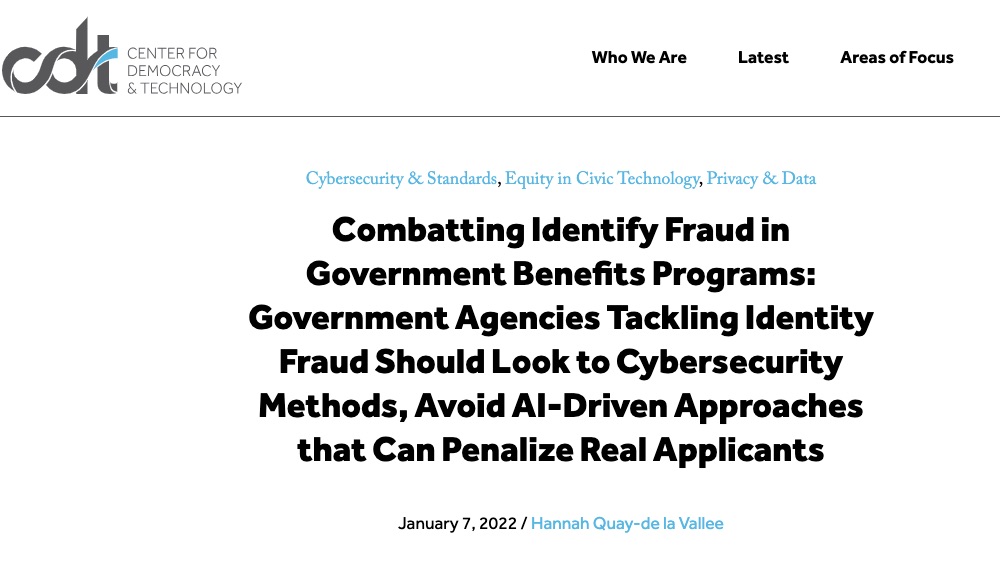
This post argues that for the types of large-scale, organized fraud attacks that many state benefits systems saw during the pandemic, solutions grounded in cybersecurity methods may be far more effective than creating or adopting automated systems.
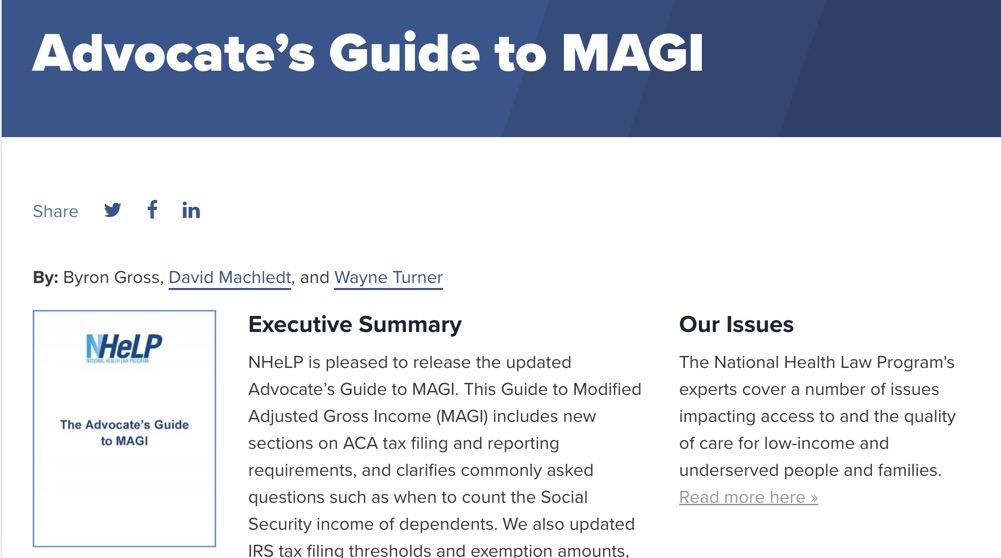
The National Health Law Program released an updated Guide to Modified Adjusted Gross Income, including sections on ACA tax filing and reporting, clarification on commonly asked questions about Social Security Income, and updated IRS tax filing thresholds.
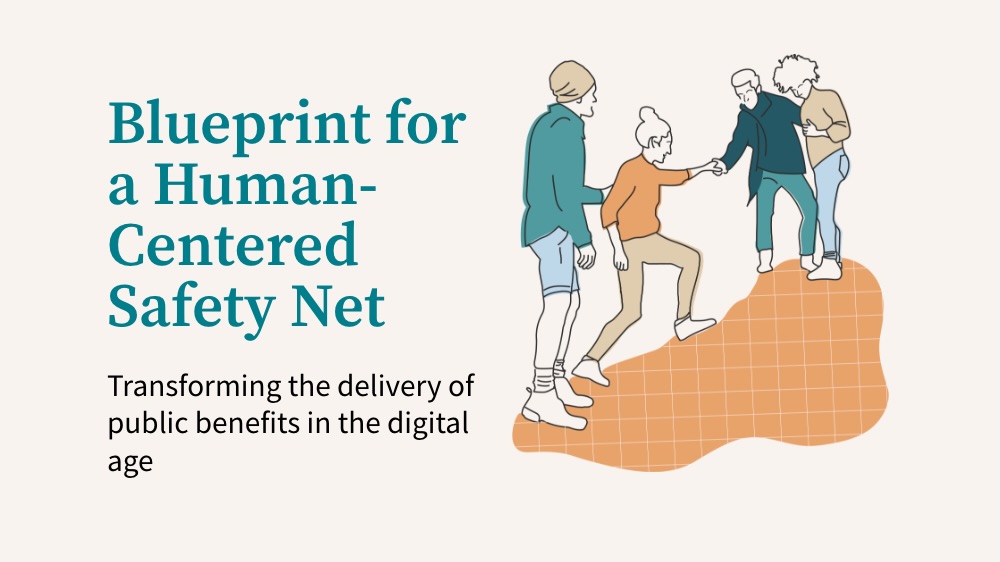
Describes the Principles of a Human-Centered Safety Net: Many Welcoming Doors, Easy to Understand, Clients Can Make Informed Decisions, Responsive to Changing Needs, Simple Actions
The article discusses key takeaways from BenCon 2023, highlighting the importance of creating equitable and ethical public benefits technology. It emphasizes the need for tech solutions that address systemic inequalities, ensure accessibility, and promote inclusivity for underserved communities in accessing public services.
This report analyzes lawsuits that have been filed within the past 10 years arising from the use of algorithm-driven systems to assess people’s eligibility for, or the distribution of, public benefits. It identifies key insights from the various cases into what went wrong and analyzes the legal arguments that plaintiffs have used to challenge those systems in court.