This resource highlights strategies for integrating benefits renewals and correspondence, potentially reducing administrative burdens for both clients and caseworkers.
Professor Don Moynihan discusses how administrative burden is an effective tool to make it difficult for people to access certain types of benefits, noting that this is particularly harmful to communities of color.
This study examines the adoption and implementation of AI chatbots in U.S. state governments, identifying key drivers, challenges, and best practices for public sector chatbot deployment.
This paper introduces a framework for algorithmic auditing that supports artificial intelligence system development end-to-end, to be applied throughout the internal organization development lifecycle.
ACM Conference on Fairness, Accountability, and Transparency (ACM FAccT)
This primer introduces two foundational software types that can support organizations that are committed to accessible benefits information: content management systems (CMS) and application program interfaces (APIs).
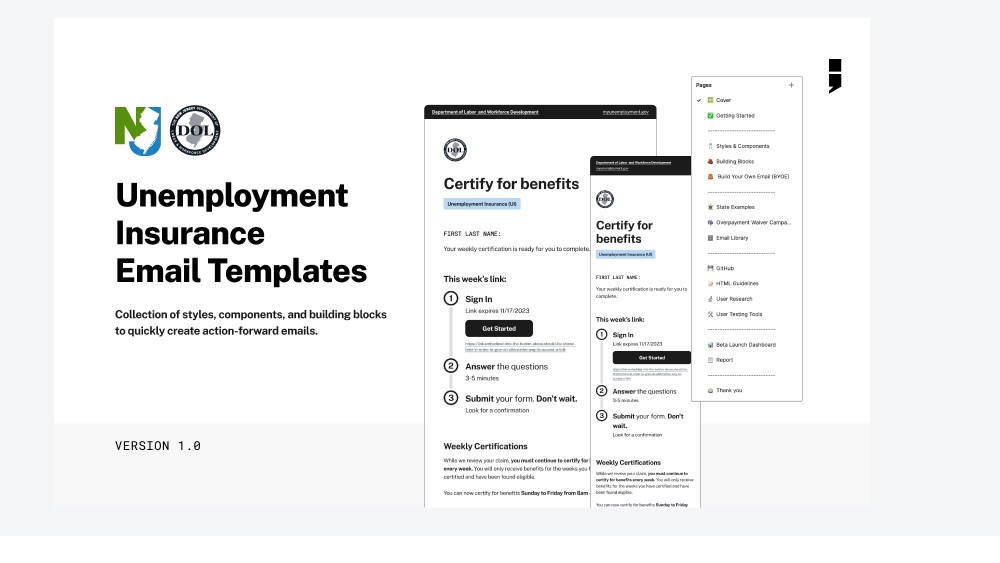
This kit contains a collection of styles, components, and building blocks to quickly create action-forward emails for Unemployment Insurance programs within the U.S.
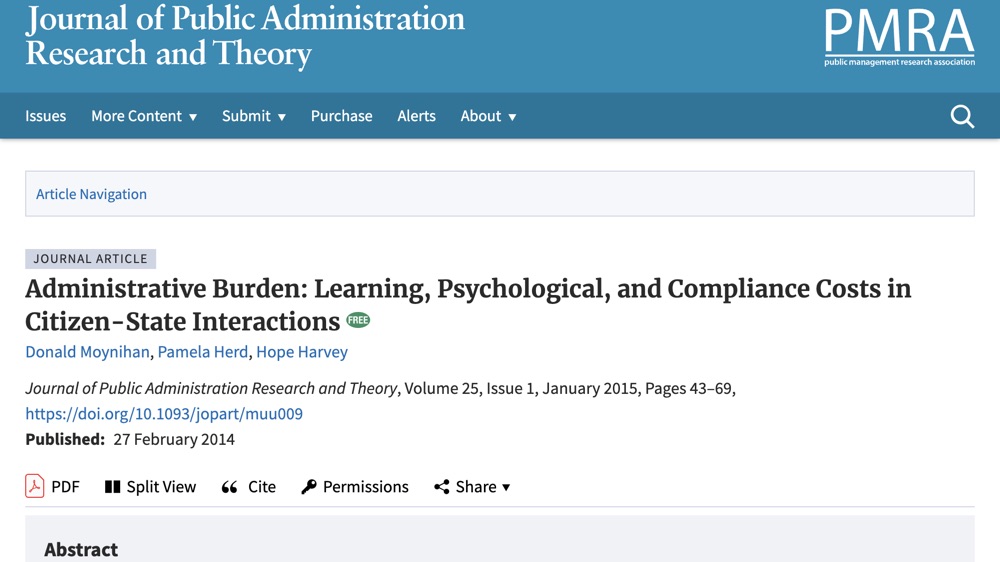
This foundational article develops the concept of administrative burden, defining it as the learning, psychological, and compliance costs individuals face when interacting with government, and argues that these burdens are often shaped by political choices.
Journal of Public Administration Research and Theory
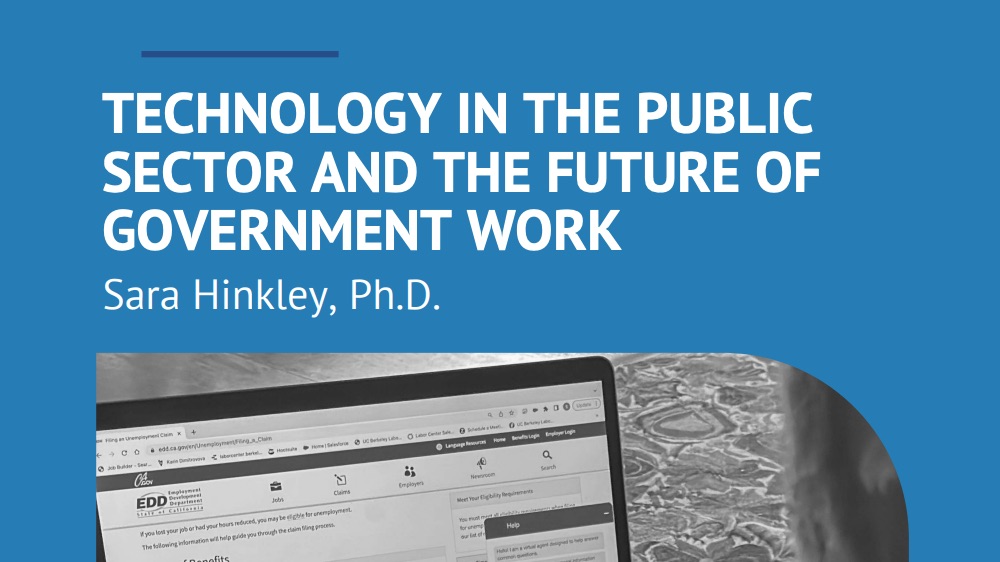
This report explores technologies that have the potential to significantly affect employment and job quality in the public sector, the factors that drive choices about which technologies are adopted and how they are implemented, how technology will change the experience of public sector work, and what kinds of interventions can protect against potential downsides of technology use in the public sector. The report categories technologies into five overlapping categories including manual task automation, process automation, automated decision-making systems, integrated data systems, and electronic monitoring.
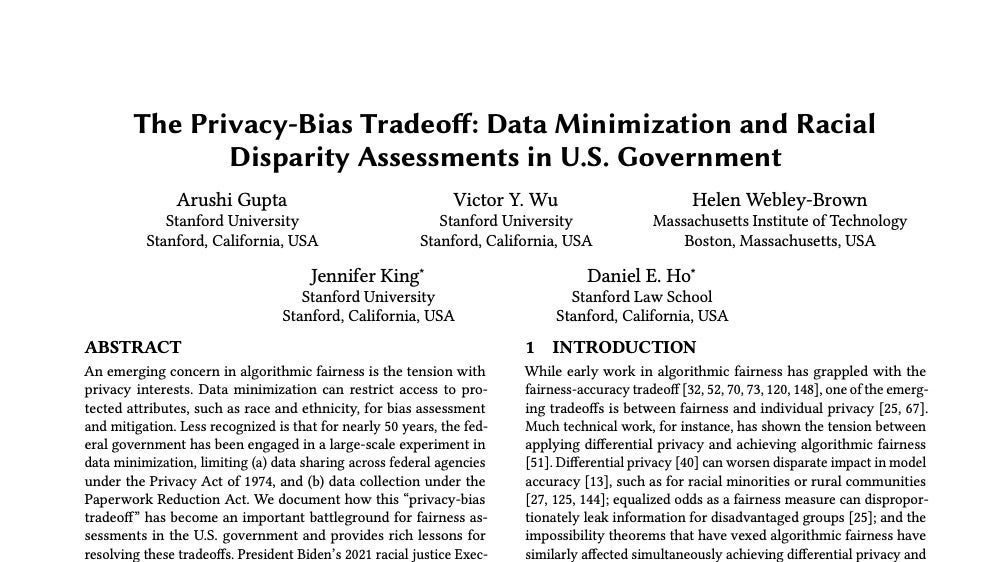
This academic paper examines how federal privacy laws restrict data collection needed for assessing racial disparities, creating a tradeoff between protecting individual privacy and enabling algorithmic fairness in government programs.
ACM Conference on Fairness, Accountability, and Transparency (ACM FAccT)