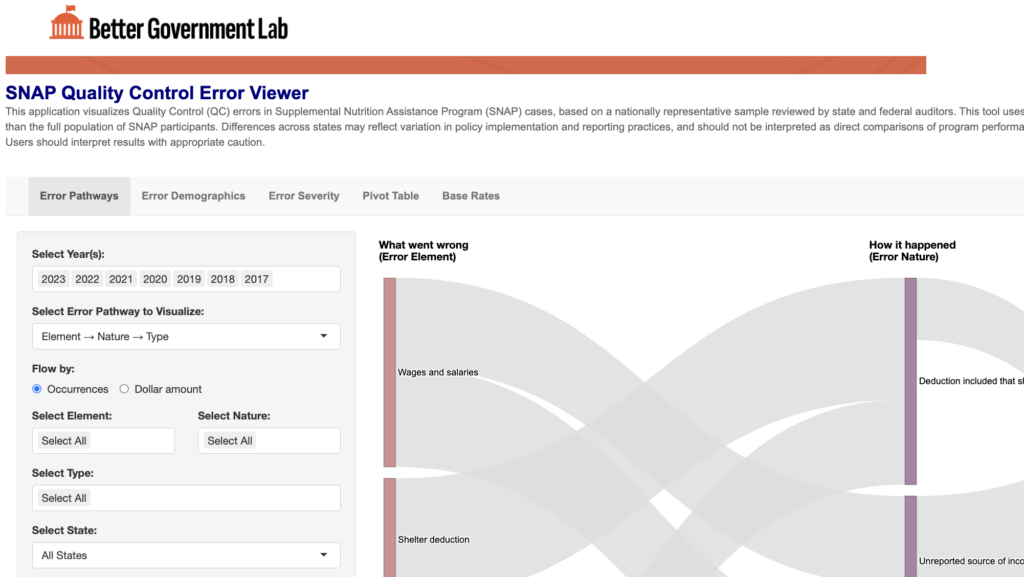
An interactive dashboard that allows users to explore Supplemental Nutrition Assistance Program (SNAP) Quality Control data to better understand payment errors, eligibility issues, and administrative performance across states.
This report evaluates the effectiveness and implementation of a generative AI-powered assistive chatbot designed to help caseworkers navigate complex public benefit programs like Medicaid and SNAP.
Through a field scan, this paper identifies emerging best practices as well as methods and tools that are becoming commonplace, and enumerates common barriers to leveraging algorithmic audits as effective accountability mechanisms.
ACM Conference on Fairness, Accountability, and Transparency (ACM FAccT)
The report examines how current remote identity proofing methods can create barriers to Medicaid enrollment and suggests improvements to ensure equitable access for all applicants.
Annual Computers, Software, and Applications Conference (COMPSAC)
This article explores how anticipatory logics—drawing from foresight, futures thinking, and design—are shaping the future of government by creating space for innovative policy approaches, public participation, and proactive governance.
This guide provides practical insights for benefits administrators on redesigning benefits systems using human-centered design to ensure all eligible residents can access crucial social safety net resources.
The article discusses key takeaways from BenCon 2023, highlighting the importance of creating equitable and ethical public benefits technology. It emphasizes the need for tech solutions that address systemic inequalities, ensure accessibility, and promote inclusivity for underserved communities in accessing public services.
NYC Opportunity collaborated with the Administration for Child Services (ACS) to design a family-centered process for prevention services, addressing confusion and lack of choice in the current system. By creating tools like the Provider Profile and Family Voice booklet, the team empowered families to choose providers based on their needs while ensuring their feedback reaches ACS. The project aims to improve family experiences and communication with ACS, with plans to expand through testing and future innovations like a web portal.
The Digital Service Network (DSN) spoke with Ashley O’Brien, user experience designer for the City of Saint Paul, MN, about the flexible and resourceful approach she took to reach people across the city.
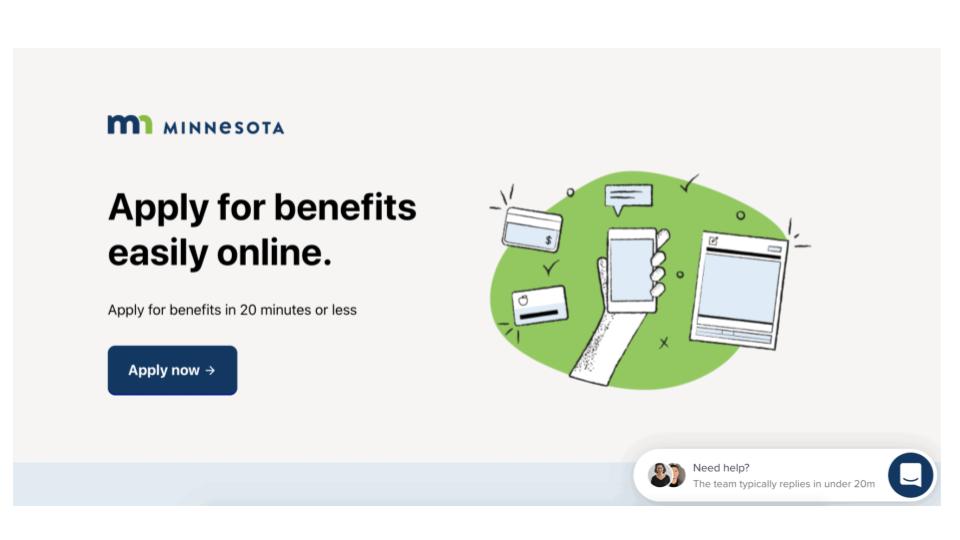
Minnesota is a good example of an organization that started small in its drive to integrate benefits programs. For instance, its recent statewide rollout of its online integrated benefit application website, MNbenefits.mn.gov, started as a pilot in 2020 with Code for America. The pilot encompassed two counties including Hennepin County, where Minneapolis is located. The pilot later expanded to four counties, then 16 and a tribal nation. The final roll out, which took 12 months to implement, included the state’s 87 counties and three tribal nations.
The Digital Service Network worked closely with stakeholders from the Texas Education Academy (TEA) to develop resources for a structured approach in helping identify and better understand core challenges in government digital delivery.