This session from FormFest 2024 focused on how to help people get the assistance they need from the U.S. Department of Health and Human Services’ work on the Low Income Home Energy Assistance Program (LIHEAP) and the Maryland Social Services Administration’s work to improve welfare support for kinship caregivers.
The article examines the impact of digital interfaces on welfare state administration, focusing on the UK's Universal Credit system and the design elements that shape user interactions and behavior in an "interface first" bureaucracy.
This article details the collaboration between Miami-Dade County, community partners, and technologists to enhance climate resilience by allowing residents to report and access information on extreme heat conditions affecting their commutes.
This tip sheet provides guidance for child welfare and social service agencies on how to effectively and respectfully collect SOGIE (Sexual Orientation, Gender Identity, and Expression) data.
U.S. Department of Health and Human Services (HHS)
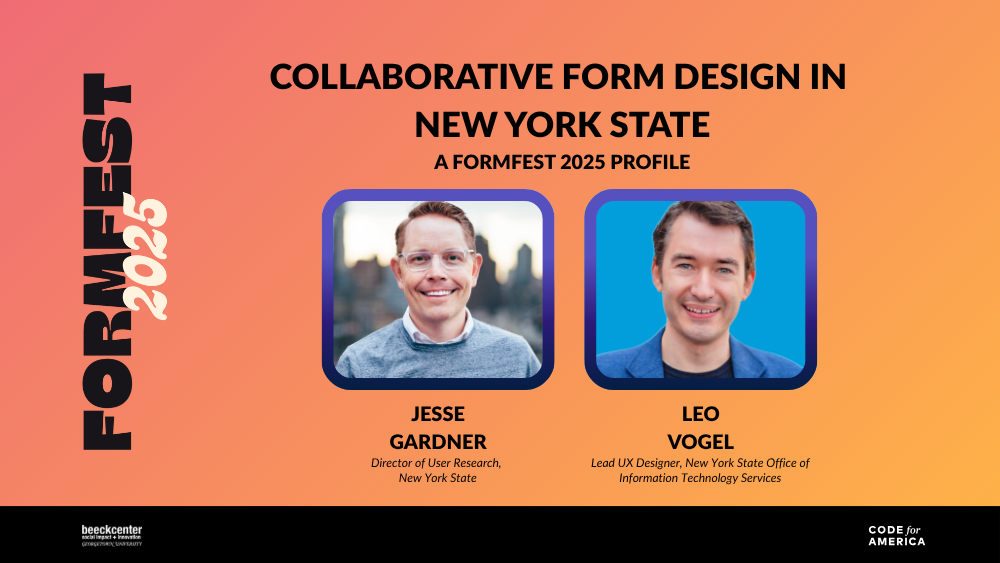
A FormFest profile highlighting how New York State’s design and technology teams are reimagining form creation through collaborative, human-centered design methods that simplify processes and expand participation.
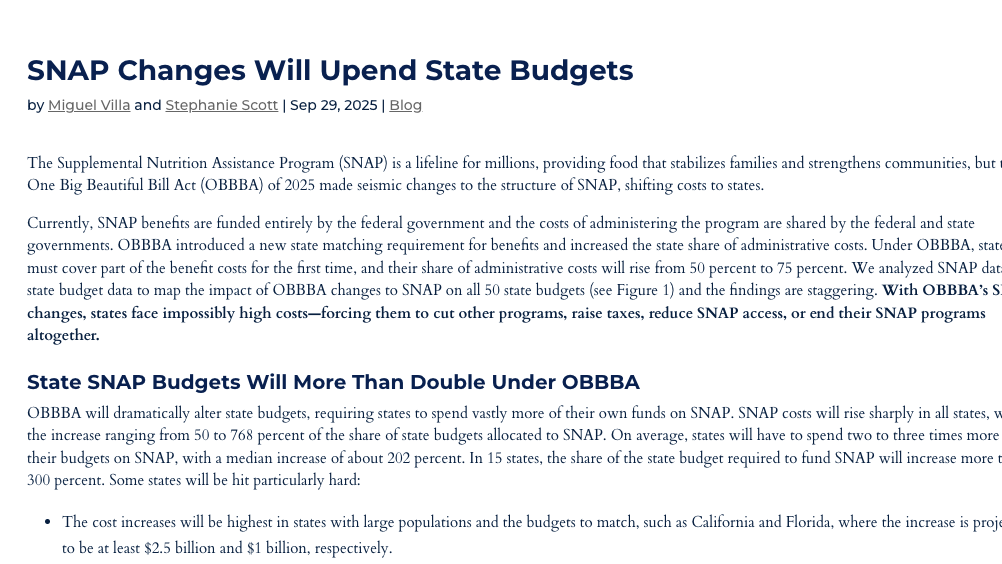
This blog analyzes how the One Big Beautiful Bill Act (OBBBA) will dramatically shift SNAP costs onto state governments, projecting massive budget increases and fiscal strain.
A unified taxonomy and tooling suite that consolidates AI risks across frameworks and links them to datasets, benchmarks, and mitigation strategies to support practical AI governance.
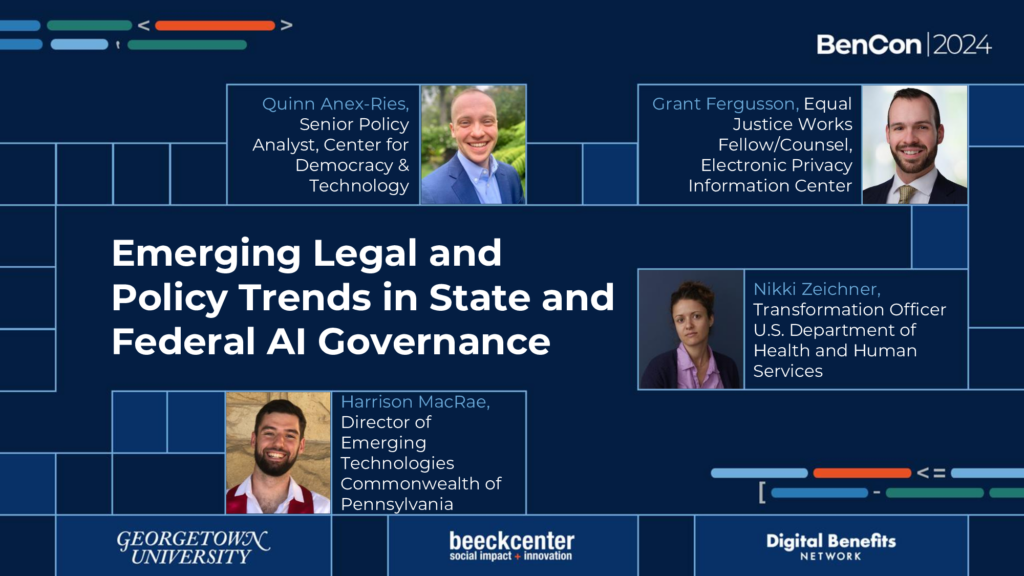
BenCon 2024 explored state and federal AI governance, highlighting the rapid increase in AI-related legislation and executive orders. Panelists emphasized the importance of experimentation, learning, and collaboration between government levels, teams, agencies, and external partners.
This guide is intended to provide a general overview of the national statutory and regulatory landscape governing the legality of sending large volumes of text messages and sharing client information.