This resource contains specific examples that highlight the advantages of designing reusable code components, software tools, or design formats. This guide also illustrates the possibilities for connecting new components to existing system infrastructure.
This brief provides research recommendations to improve programs serving LGBT youth, focusing on homelessness and sexual health education services funded by the U.S. Department of Health and Human Services.
U.S. Department of Health and Human Services (HHS)
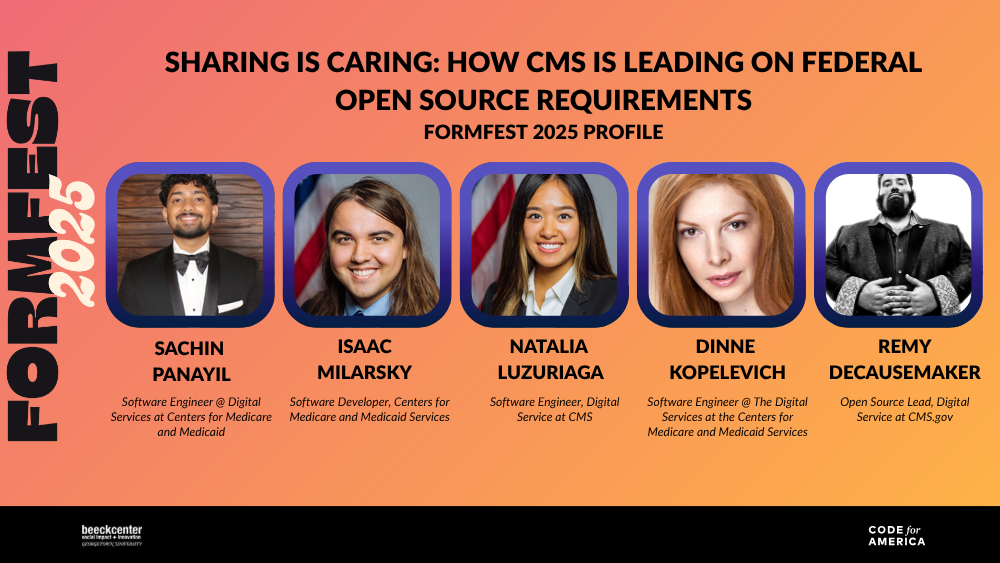
This profile on the Centers for Medicare and Medicaid Services’ (CMS) Open Source Program Office, the first of its kind in the federal government, showcasing how it advances transparency, collaboration, and innovation across agencies through open source software.
This blog summarizes a FormFest session where the Center for Civic Design shared research on how screen reader users navigate voter registration forms and offered guidance for designing more accessible digital and PDF forms.
This blog summarizes an event exploring how the City of Boston and Washington State are designing and implementing Single Sign-On (SSO) systems to simplify access to government services.
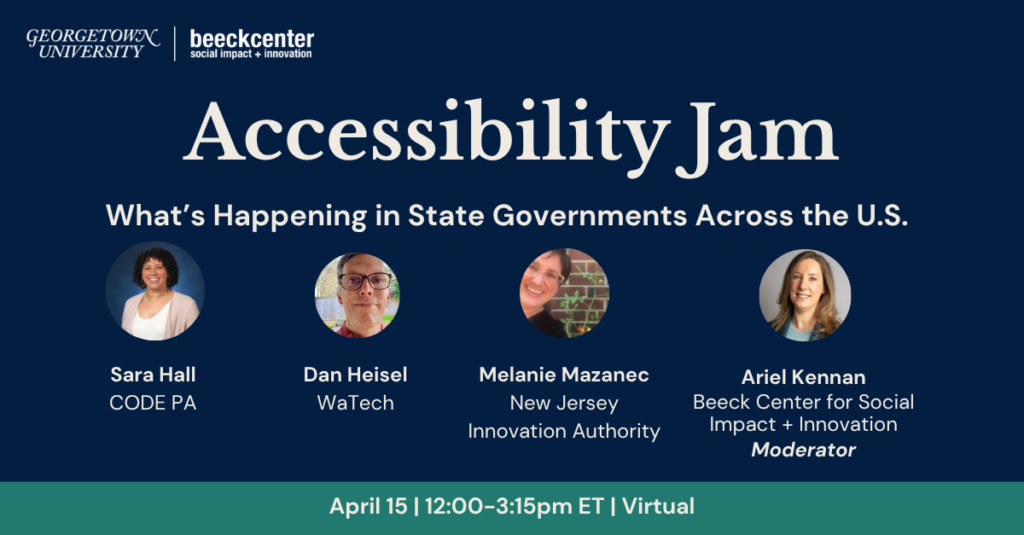
An A11y Jam session on how state agencies prioritize and manage digital accessibility compliance across complex systems using data-driven strategies and cross-agency coordination.
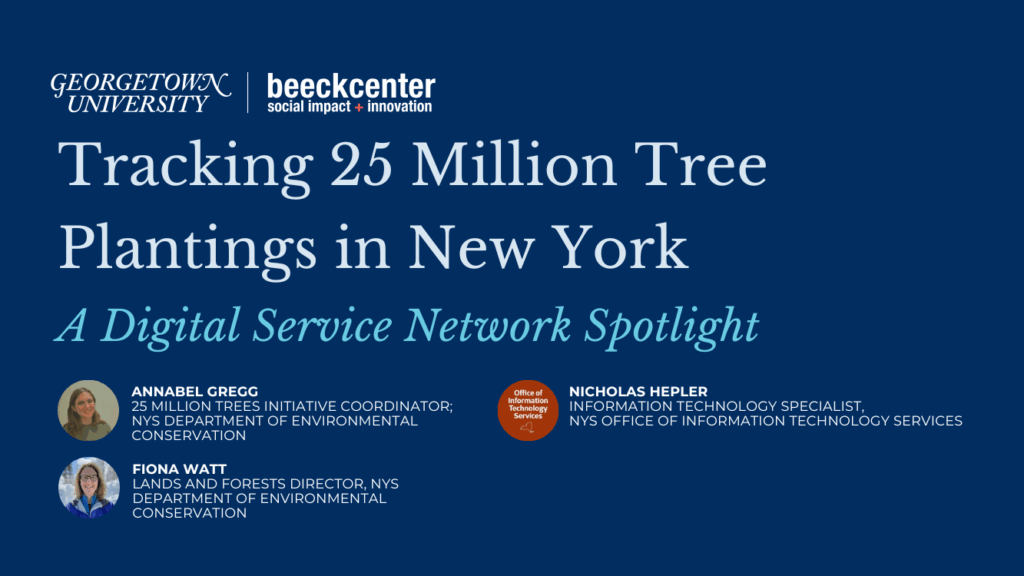
DSN Spotlights are short-form project profiles that feature exciting work happening across our network of digital government practitioners. Spotlights celebrate our members’ stories, lift up actionable takeaways for other practitioners, and put the resources + examples we host in the Digital Government Hub in context.
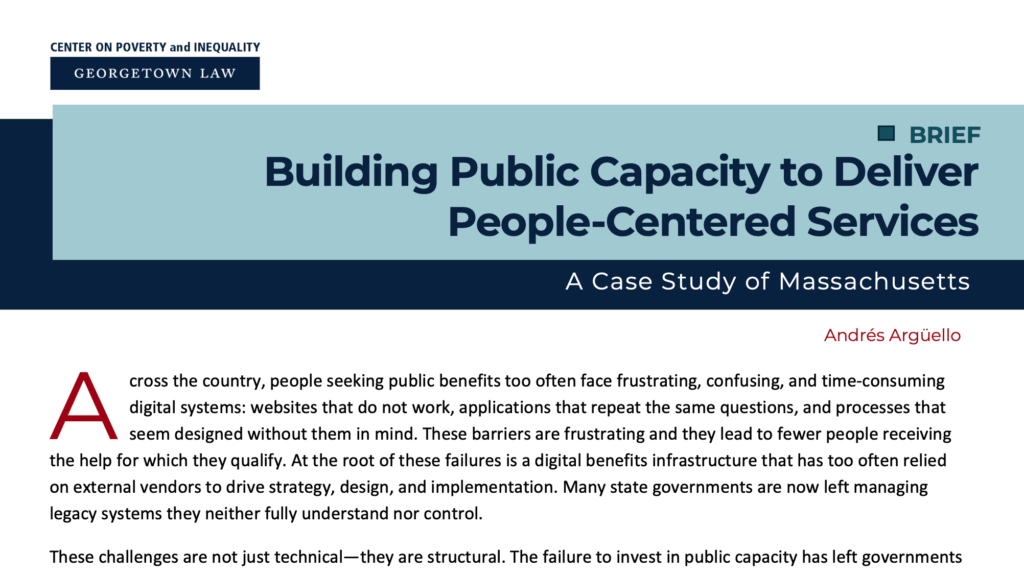
A case study describing how Massachusetts is building long-term public-sector capacity to deliver people-centered digital services by strengthening in-house expertise, shared tools, and agency-embedded support.
This article investigates how users' "metamemory"—specifically their anxiety regarding their own memory capabilities—drives insecure password behaviors.