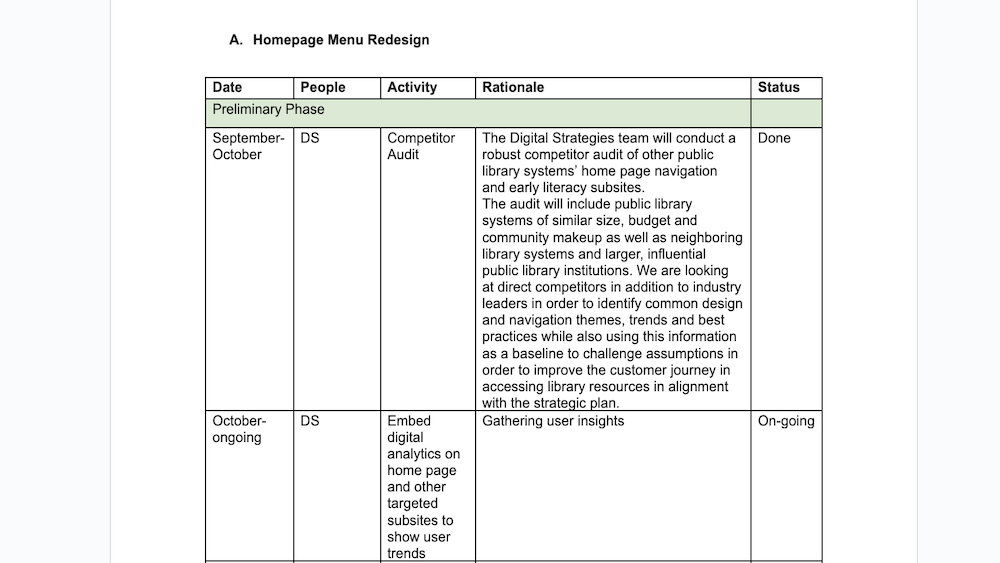
The Montgomery County Public Libraries (MCPL) website redesign plan outlines how to improve user access to resources through inclusive design and better navigation. It also shares goals of best practices in UX design with the public library community to promote digital equity. The project involves collaboration with the MCPL Digital Strategies Team and other partners, focusing on redesigning content for early literacy, teens, and children.
To improve the .gov registrar, 18F and CISA created customer panels to gather feedback, opinions, and suggestions. Using a customer-centric approached enabled 18F and CISA to identify areas for improvement, build a product roadmap, and establish relationships with users.
This report from the Joint Financial Management Improvement Program outlines efforts to use identity verification to reduce improper payments in government programs, while mitigating bias and disparate impacts.
The Joint Financial Management Improvement Program (JFMIP)
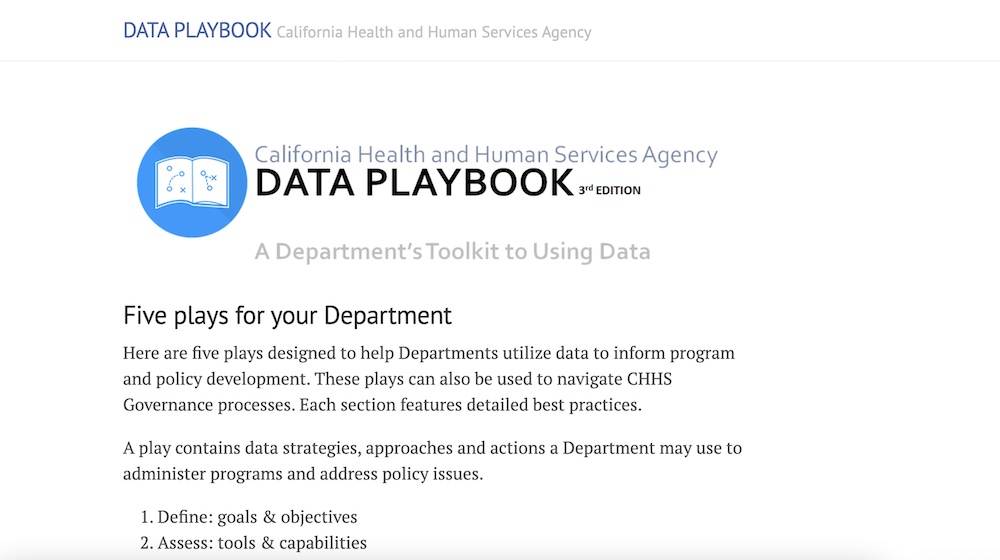
This data playbook created by the California Health and Human services agencies discusses five plays designed to help Departments utilize data to inform program and policy development.
California Health and Human Services Agency (Cal HHS)
The Digital Service Network (DSN) spoke with three staff members from the Digital Transformation Team in Montgomery County Public LIbraries—Maddie Schellhardt, Raymond Bryson, and Emily Lamancusa, to learn more about the county's efforts to advance digital service delivery and inclusion
This memo provides information to child and family service agencies on improving support for intersex children, adolescents, and their families through affirming practices, resources, and partnerships.
U.S. Department of Health and Human Services (HHS)
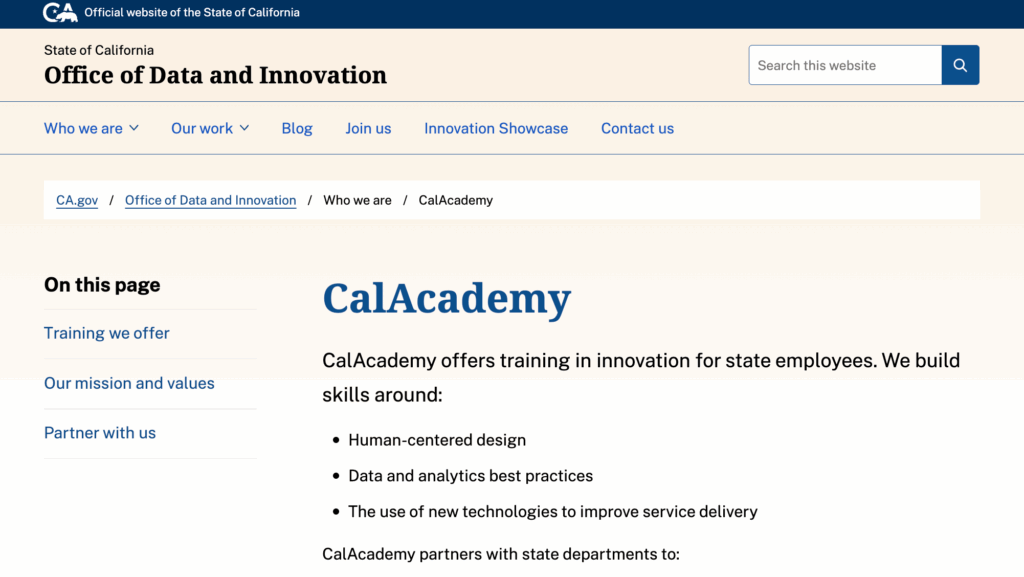
CalAcademy is California’s public sector innovation training program, equipping state employees with modern skills like human-centered design, data analytics, and a product mindset to enhance government services.
This visualized report is a first first-of-its-kind view of the state of benefits applications across the nation from a client perspective, including information on application availability online, combined benefit applications, application completion times, as well as login and identity proofing requirements.
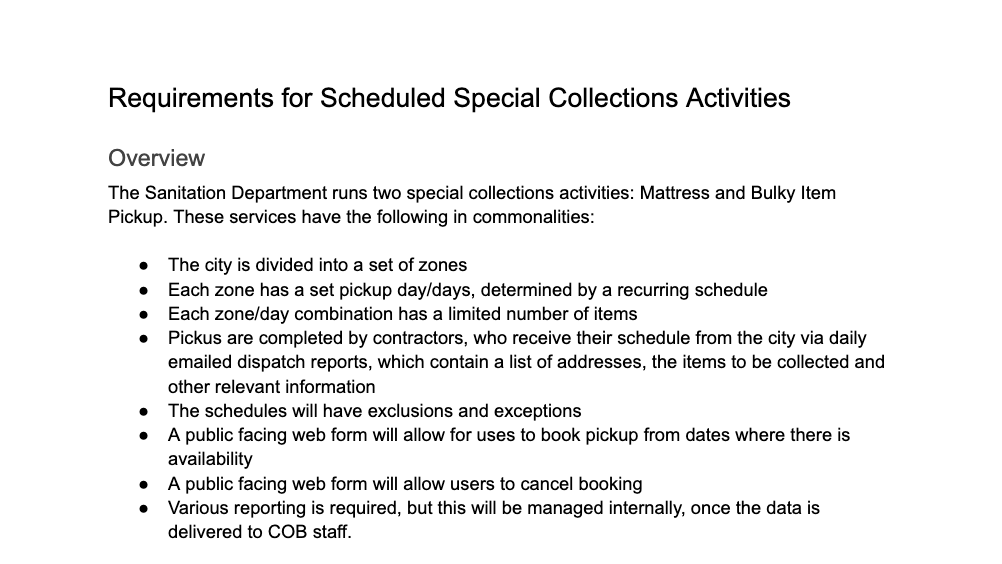
This exploratory brief outlines the City of Boston’s phased plan to build a digital system for scheduling, managing, and reporting mattress and bulky item recycling pickups.
The New Mexico Human Services Department and Department of Health, as part of the Coordinating SNAP & Nutrition Supports program, leveraged data sharing to align SNAP, Medicaid, TANF, and WIC.
American Public Human Services Association (APHSA)