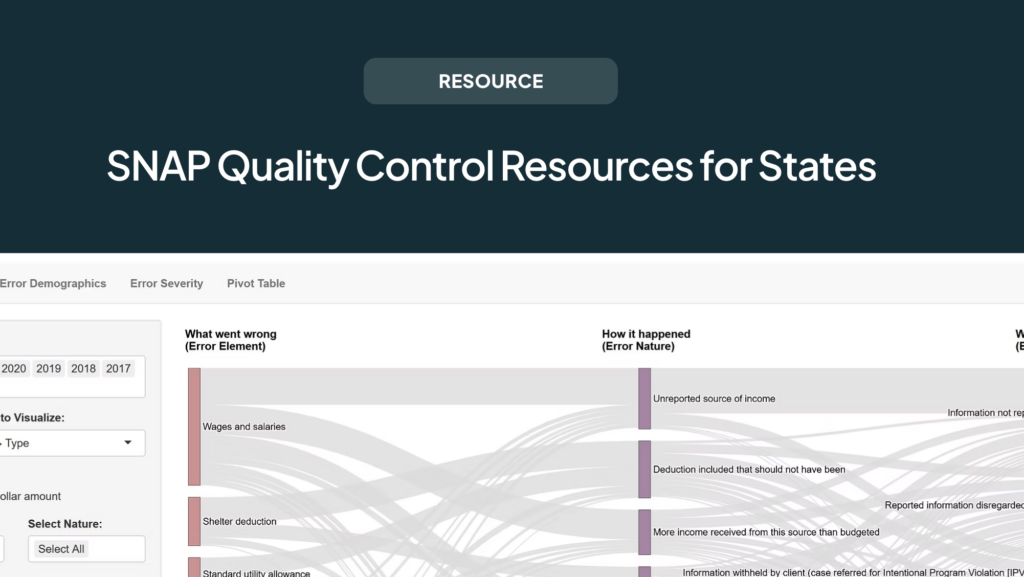
A blog introducing an interactive viewer that helps users explore SNAP Quality Control error data to better understand payment accuracy trends and administrative challenges across states.
This research article explores how framing income eligibility guidelines in either dollar amounts or as a percentage of the Federal Poverty Line (FPL) affects public attitudes toward program access and administrative burdens in Medicaid and SNAP.
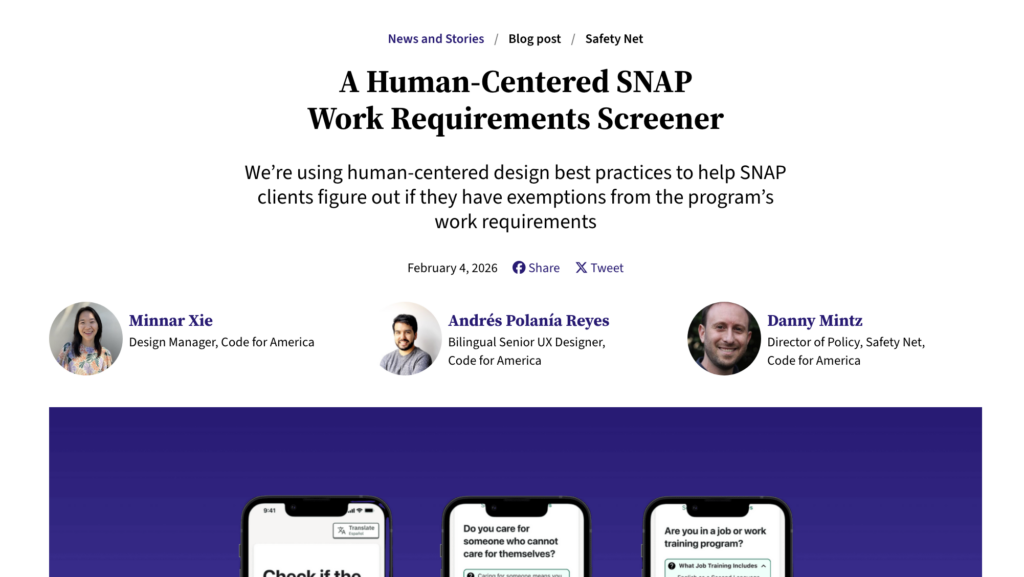
This blog post details the development of a human-centered screening tool designed to help SNAP clients identify and report exemptions from work requirements.
This discussion paper advocates for states to use the implementation of OBBBA (One Big Beautiful Bill Act) as a catalyst to build integrated, cross-agency data systems.
This is a practical, plain-language screening tool designed to help SNAP clients determine if they qualify for exemptions from the program's work requirements.
How can governments use artificial intelligence (AI) to advance digital accessibility? During this roundtable, Andrew Merluzzi, AI Innovation + Incubation Fellow at the Beeck Center for Social Impact + Innovation, shared some applications of AI in digital accessibility. Attendees discussed which applications are most promising, which seem too difficult or risky, and how their agencies could start experimenting with AI.
This workshop summary synthesizes key takeaways from a convening of nearly 40 research and data analytics staff from 15 states focused on SNAP Quality Control (QC) data modeling.
A California Government Code section establishing the Office of Data and Innovation (ODI) and authorizing it to improve digital service delivery, data governance, and modernization across state government.
An overview of direct cash programs and innovations in the U.S., exploring how unconditional cash transfers promote economic stability, mobility, and well-being.
The report reviews the scope and methods of SNAP benefit theft—including card skimming, cloning, phishing, and algorithmic attacks—and examines the effectiveness of state and federal countermeasures.
This report examines federal efforts to connect eligible college students with Supplemental Nutrition Assistance Program (SNAP) benefits and identifies actions needed to improve outreach and program access.