This economic analysis article examines how state-level policy variations have created increasingly wide disparities in Unemployment Insurance (UI) benefit levels and access.
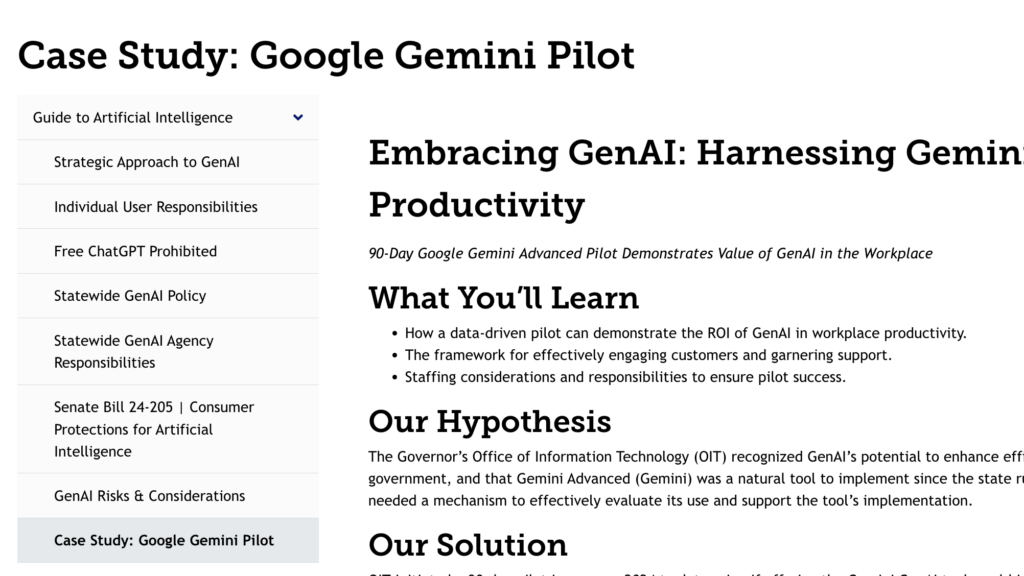
A case study describing how a 90-day generative AI (GenAI) pilot using Google’s Gemini tool was conducted across state agencies to assess productivity, creativity, and responsible use in government work.
Colorado Governor's Office of Information Technology (OIT)
A critical landscape report examining how the AI industry concentrates corporate power, reshapes public institutions, and advances economic and political interests that undermine democracy, labor, and shared prosperity.
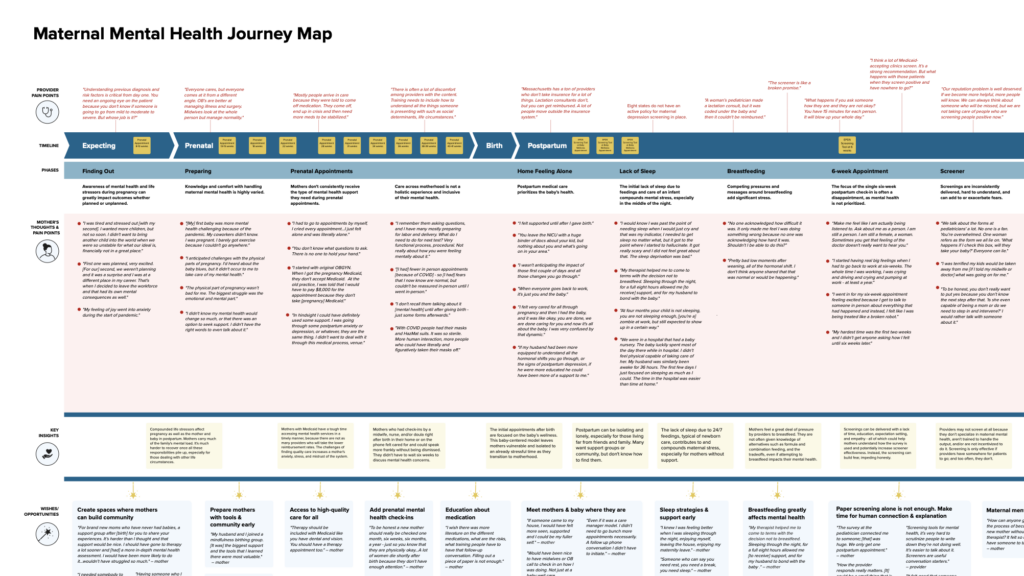
This research visualizes the complex emotional and clinical stages of the maternal mental health experience, from initial pregnancy through postpartum recovery and the return to work.
A practical guide for government teams on how to design, test, and run effective public text message campaigns for benefits and service communications.
DGN Spotlights are short-form project profiles that feature exciting work happening across our network of digital government practitioners. Spotlights celebrate our members’ stories, lift up actionable takeaways for other practitioners, and put the resources and examples we host in the Digital Government Hub in context.
A blog recap of a FormFest session on improving digital form accessibility, with a focus on accessible error handling and WCAG 2.1 compliance under Title II requirements.
A TLDR of the State CDO Archetypes report—covering how state CDO offices operate and the six archetypes that define them. Written for event attendees and government staff: governor's office, IT and budget leadership, legal and data officials, and legislators who oversee CDO funding and establishment.
An internal overview presentation showcasing Austin Transportation and Public Works’ Data & Technology Services team, its structure, values, and approach to delivering modern digital government services.