A strategy outlining a new, outcome-driven, slice-based approach to modernizing Medicaid Enterprise Systems, prioritizing experimentation, measurable outcomes, and cultural transformation over traditional large-scale system replacements.
This publication summarizes a body of research about how state benefits administering agencies build and maintain integrated eligibility and enrollment (IEE) systems. It is an easy to reference guide for state administrators, legislators, advocates, and delivery partners.
This article examines the matrix of vulnerabilities that low-income populations face from the widespread collection of big data and predictive analytics.
A research report examining how privacy and security risks are unevenly experienced across socioeconomic, racial, and ethnic groups, and how digital inequality shapes people’s exposure to harm and access to protective resources.
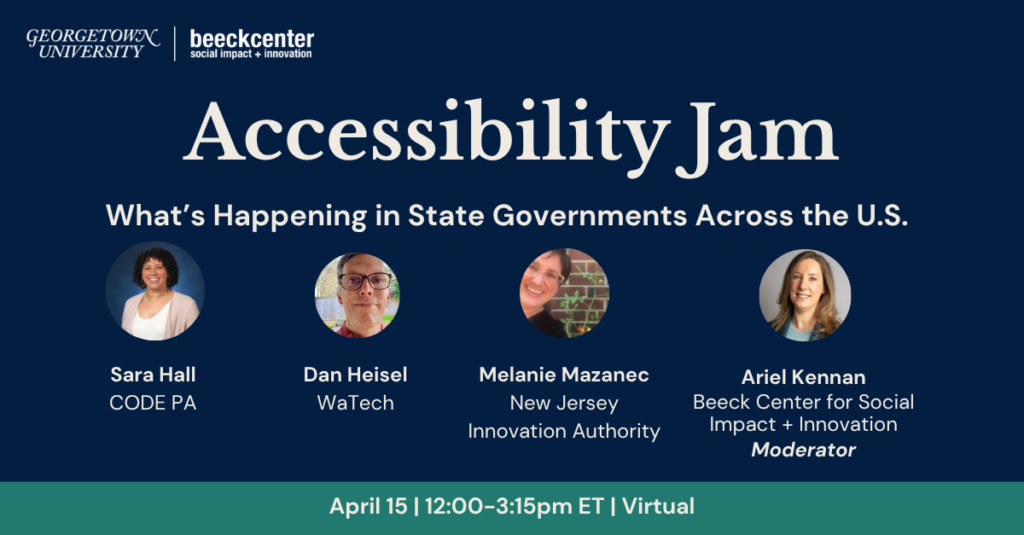
An A11y Jam session on how state agencies prioritize and manage digital accessibility compliance across complex systems using data-driven strategies and cross-agency coordination.
A tool for CDOs advocating for funding, authority, and expansion—and a primer for government leaders unfamiliar with the role. The report establishes shared vocabulary, identifies six CDO office archetypes, and offers cross-state insights on structures, priorities, and challenges.
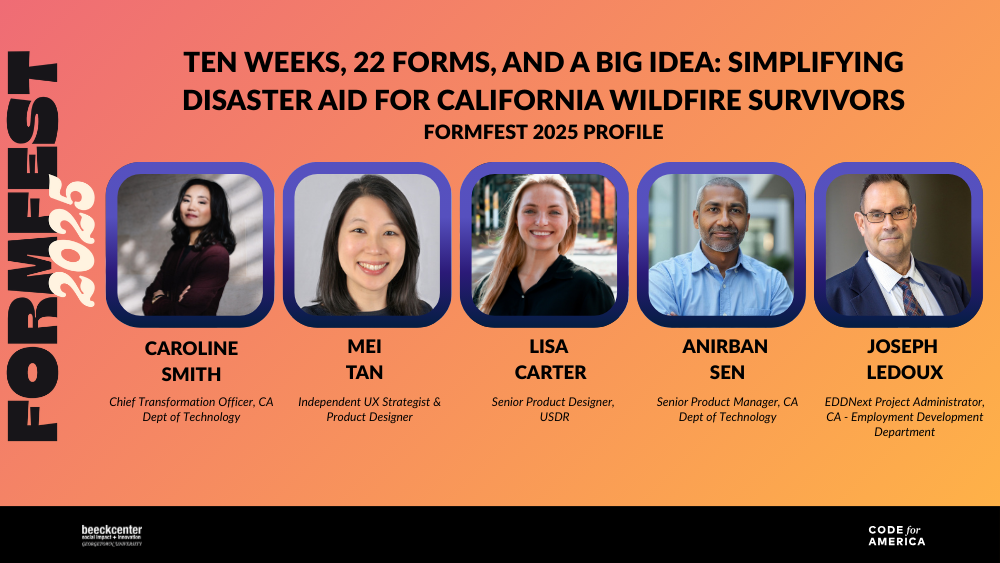
This FormFest profile describes how California rapidly simplified disaster-aid processes for wildfire survivors by auditing 22 forms across eight agencies and developing a concept for a universal eligibility form and relief portal.
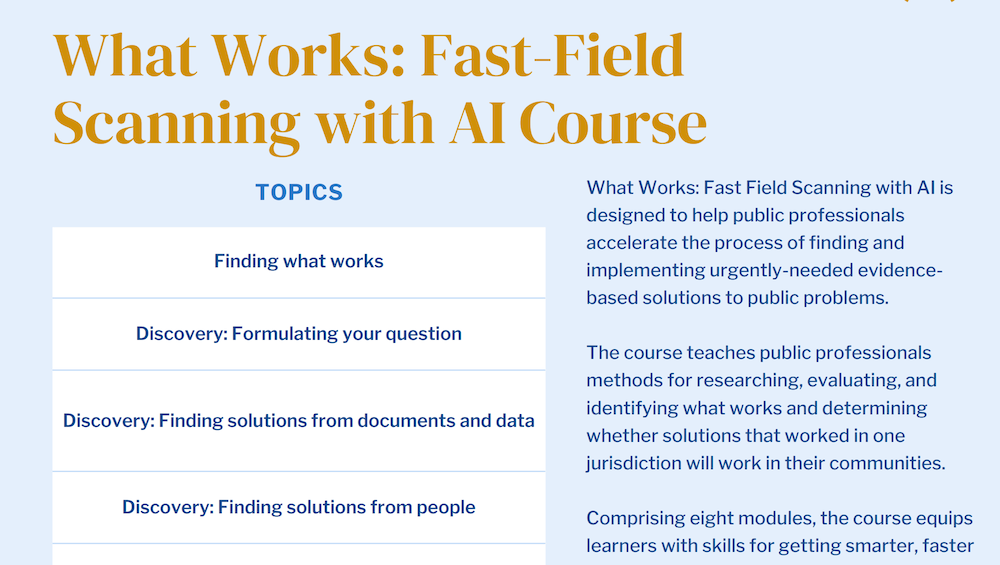
This course is designed to help public professionals accelerate the process of finding and implementing urgently-needed evidence-based solutions to public problems.