This report outlines best practices for developing transparent, accessible, and standardized public sector AI use case inventories across federal, state, and local governments
Guidance on how state agencies should identify, assess, and manage risks associated with deploying high-risk generative AI systems under Executive Order 24-01.
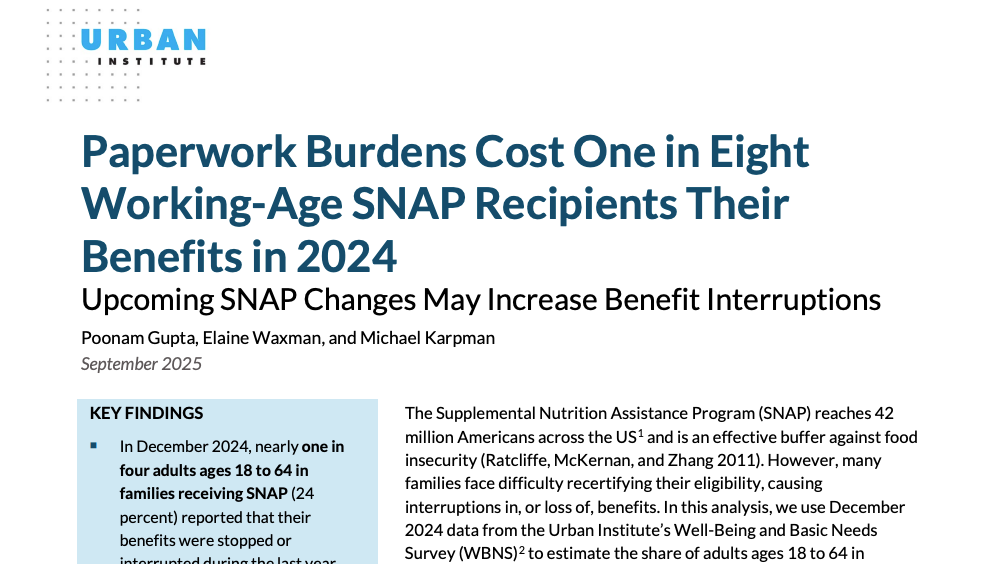
This report analyzes how administrative burdens in SNAP caused one in eight working-age adults to lose benefits in 2024, with future federal policy changes expected to worsen disruptions
A 2025 policy agenda outlining comprehensive federal and state recommendations to eliminate benefits cliffs and strengthen economic mobility for families transitioning off public assistance.
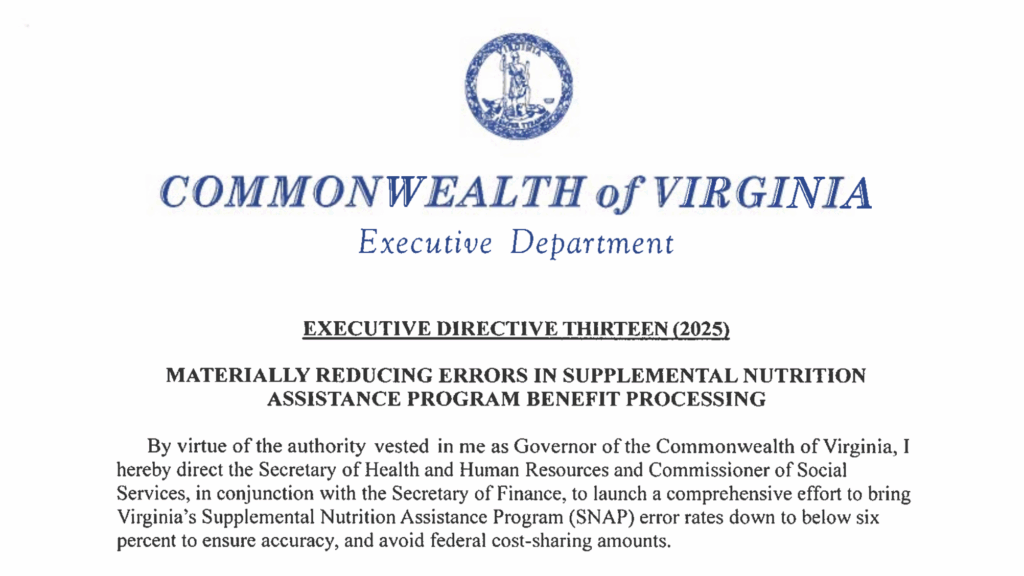
A directive issued by the Commonwealth of Virginia to materially reduce the error rate in Supplemental Nutrition Assistance Program (SNAP) benefit processing among local social services offices.
A comprehensive guide that provides role definitions, hiring guidance, interview materials, and evaluation rubrics for building effective UX design and research teams.
Explore The State of State Digital Transformation—your gateway to the Beeck Center’s landscape research into how states are modernizing government operations and services. This interactive map gives public servants, policymakers, practitioners, and researchers a faster, clearer way to glean insights from our research into the policies, teams, tools, and tactics shaping state digital transformation today.
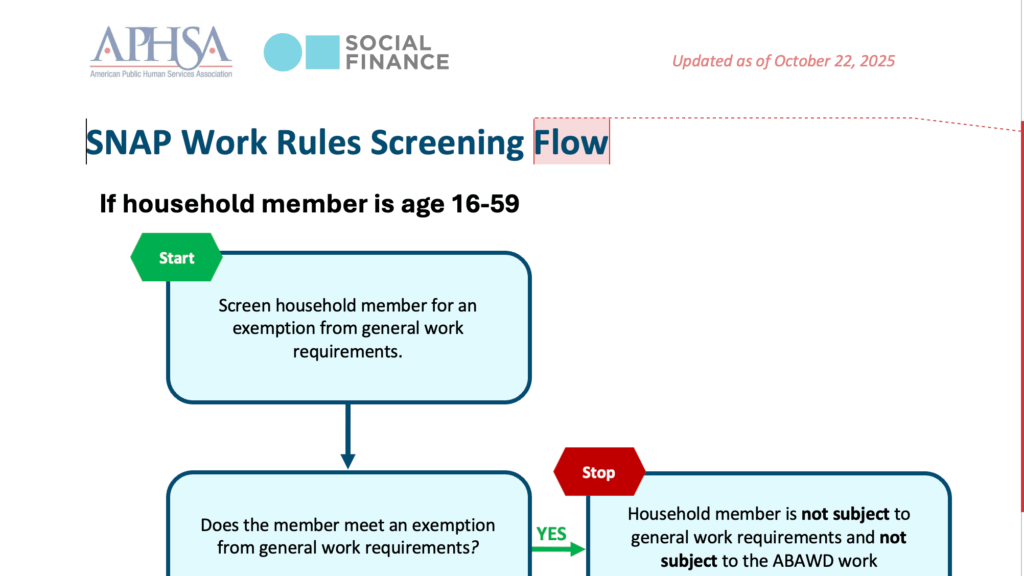
This document is a caseworker-facing flowchart for use in screening SNAP applicants and participants to determine if they are subject to work requirements.
American Public Human Services Association (APHSA)
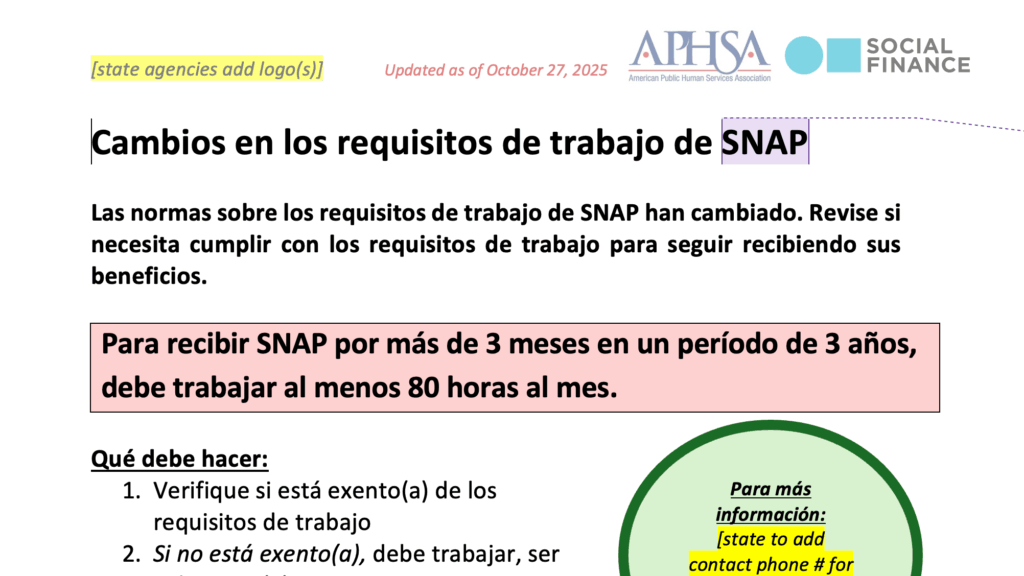
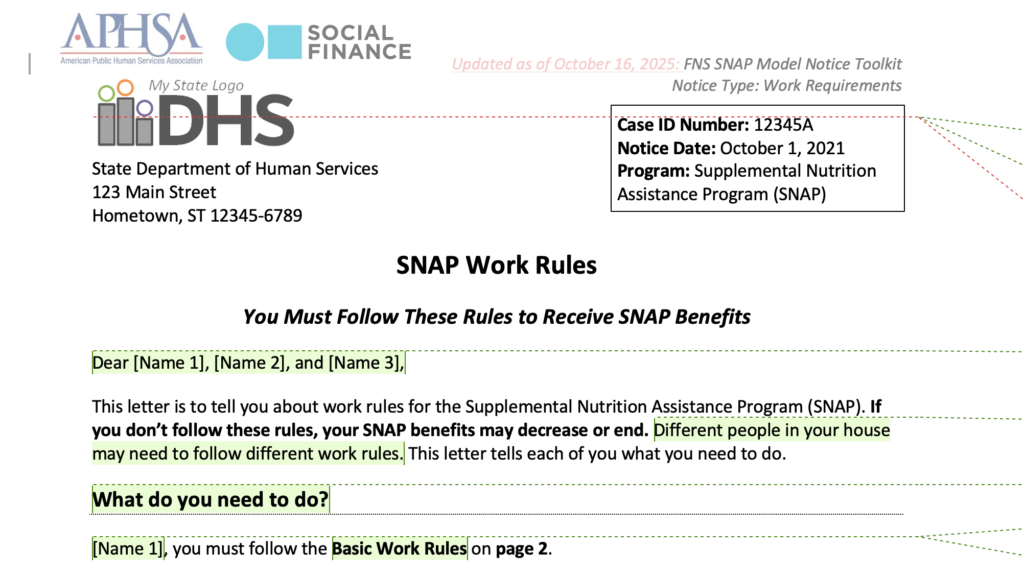
This document provides two Spanish language templates for SNAP agencies to use to communicate SNAP work requirement changes to participants who are newly subject to requirements.
American Public Human Services Association (APHSA)