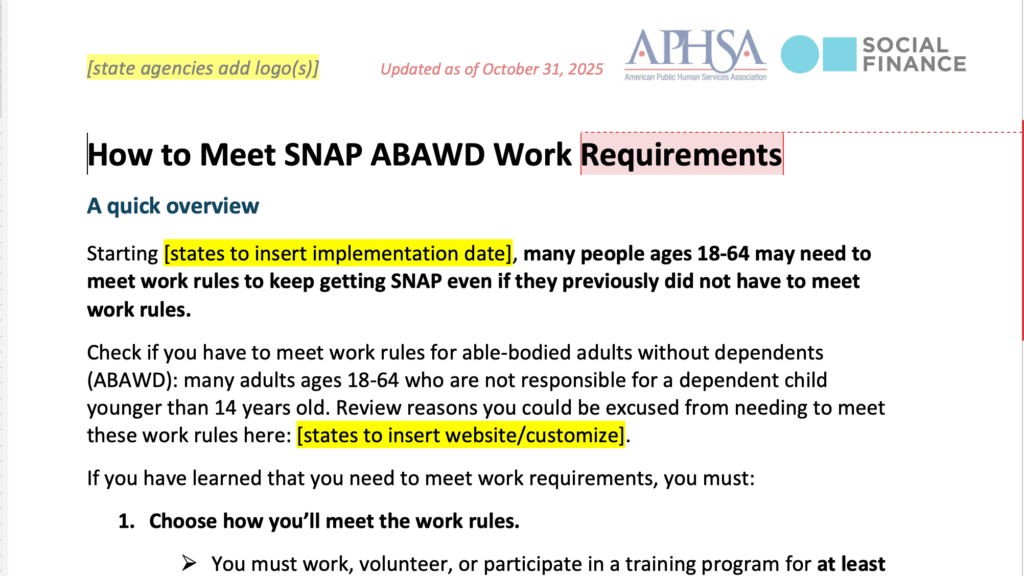
This document provides a template for SNAP agencies to use to communicate how they can meet able-bodied adults without dependents (ABAWD) work requirements.
American Public Human Services Association (APHSA)
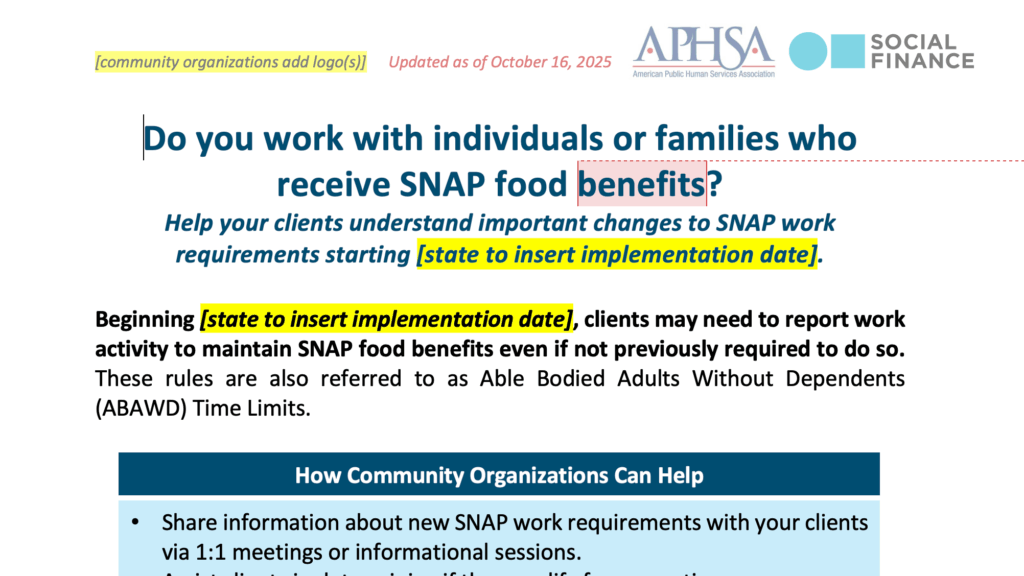
This document is a template for creating a community-based organization (CBO)-facing flyer that explains HR1 work requirements changes and how CBOs can help spread the work and screen SNAP participants and applicants.
American Public Human Services Association (APHSA)
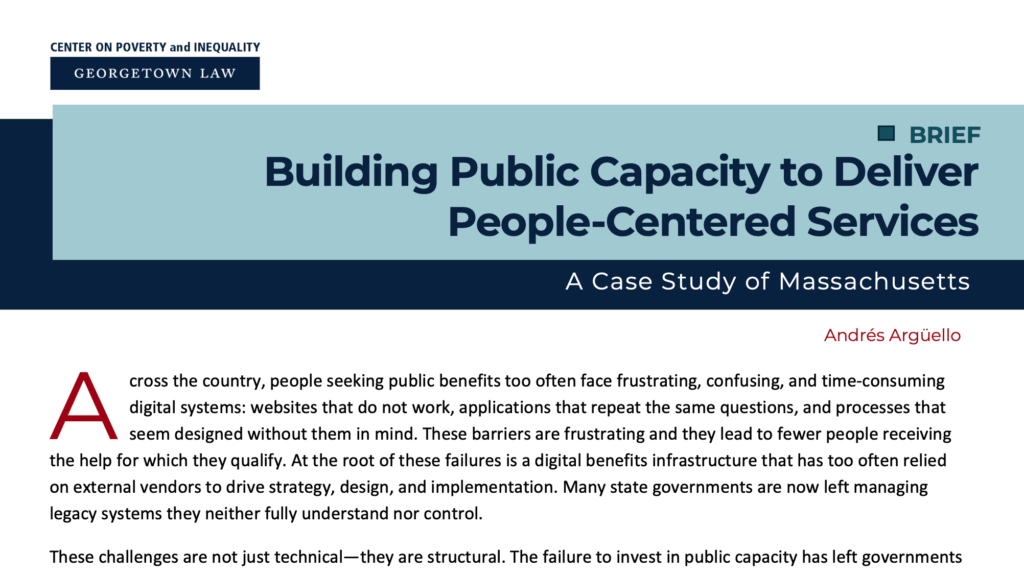
A case study describing how Massachusetts is building long-term public-sector capacity to deliver people-centered digital services by strengthening in-house expertise, shared tools, and agency-embedded support.
A blog post outlining key strategies states can use to lower SNAP payment error rates, a priority given new fiscal penalties tied to error rates under recent federal law.
A policy guidance document outlining practical steps states can take to reduce harm to immigrant communities following major Medicaid eligibility restrictions enacted under federal budget reconciliation legislation.
A nationwide survey capturing how state chief data officers are structured, resourced, and operating, and how the role is evolving to support data-driven government.
National Association of State Chief Information Officers (NASCIO)
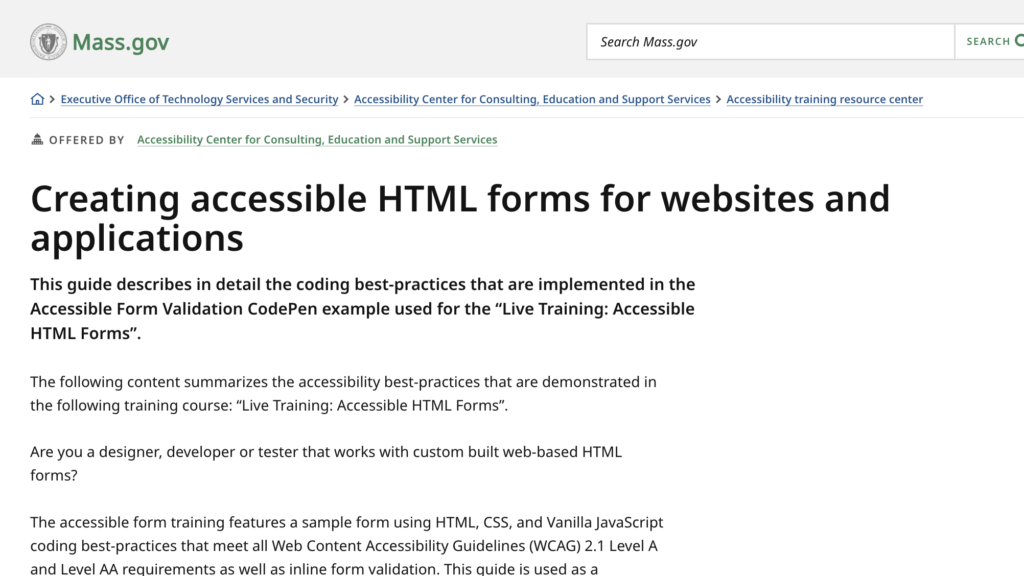
A practical guidance document that explains how to design, code, and test HTML web forms so they are accessible to all users, including people with disabilities.
Recapping the work and achievements of the Digital Benefits Network (DBN), Digital Service Network (DSN), and the State Chief Data Officers Network (CDO) in 2025.
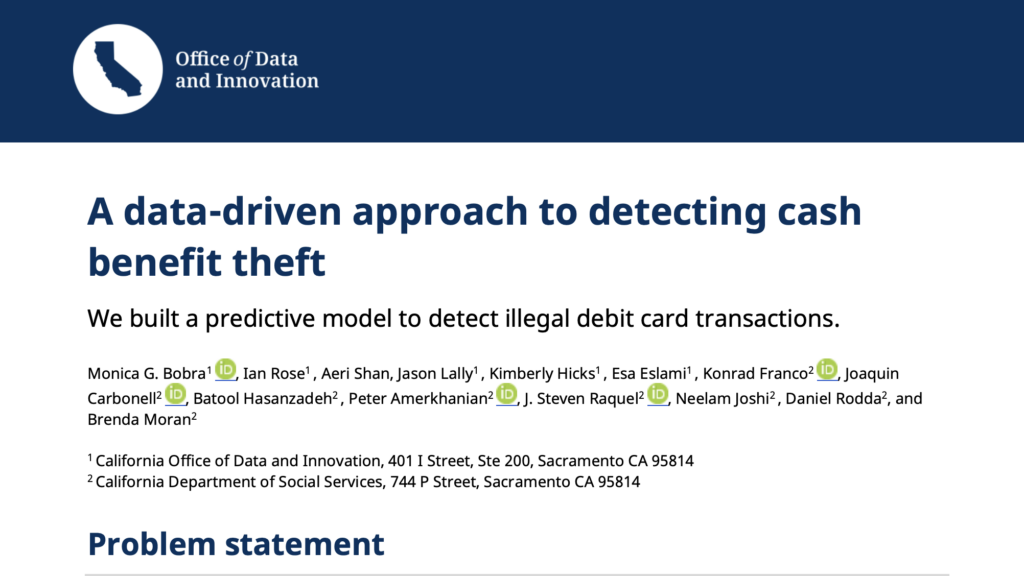
A case study explaining how a predictive, data-driven machine-learning model was developed to detect unauthorized cash benefit withdrawals more quickly and accurately in California.
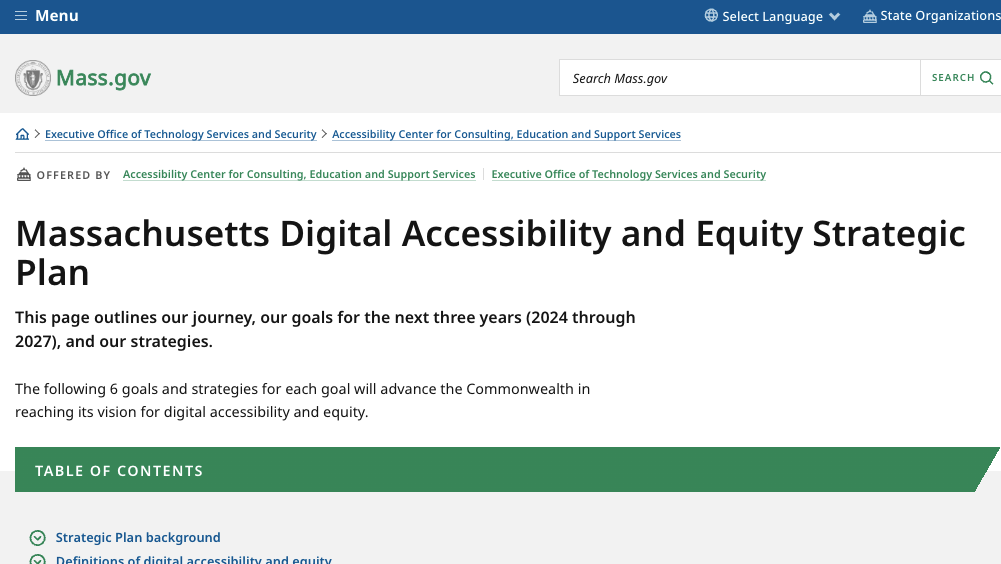
The Massachusetts Digital Accessibility and Equity Strategic Plan is a three-year roadmap designed to ensure that all state digital services, websites, and IT products are fully accessible to residents and employees, particularly those with disabilities.
The Commonwealth of Massachusetts Executive Office of Technology Services and Security (EOTSS)