This report provides a comprehensive analysis of administrative burdens, offering strategies to reduce unnecessary obstacles in public service delivery, with a focus on improving access to government services for underserved and marginalized populations.
This is a monorepo managing the web components of the Government of Canada's Design System, facilitating the creation of consistent and accessible digital services.
This is the summary version of a report that documents four experiments exploring if AI can be used to expedite the translation of SNAP and Medicaid policies into software code for implementation in public benefits eligibility and enrollment systems under a Rules as Code approach.
This tip sheet provides guidance for child welfare and social service agencies on how to effectively and respectfully collect SOGIE (Sexual Orientation, Gender Identity, and Expression) data.
U.S. Department of Health and Human Services (HHS)
This Spanish translated fact sheet provides strategies for organizations to support and affirm LGBTQIA2S+ youth and young adults experiencing homelessness.
U.S. Department of Health and Human Services (HHS)
This brief outlines research recommendations to better understand and improve income support and employment services for low-income and at-risk LGBT populations.
U.S. Department of Health and Human Services (HHS)
This resource provides updated draft digital identity guidelines for identity proofing, authentication, and federation, aiming to improve security, privacy, usability, and equity in digital identity systems.
This report offers best practices for public agencies implementing digital identity verification, emphasizing privacy, equity, and security in the delivery of government services.
This impact report showcases the office's initiatives and achievements in enhancing state government services through innovative, user-centered approaches.
This guide provides practical financing strategies for governments to build, maintain, and expand integrated data systems (IDS) and evaluation capacity using federal and non-federal funding sources.
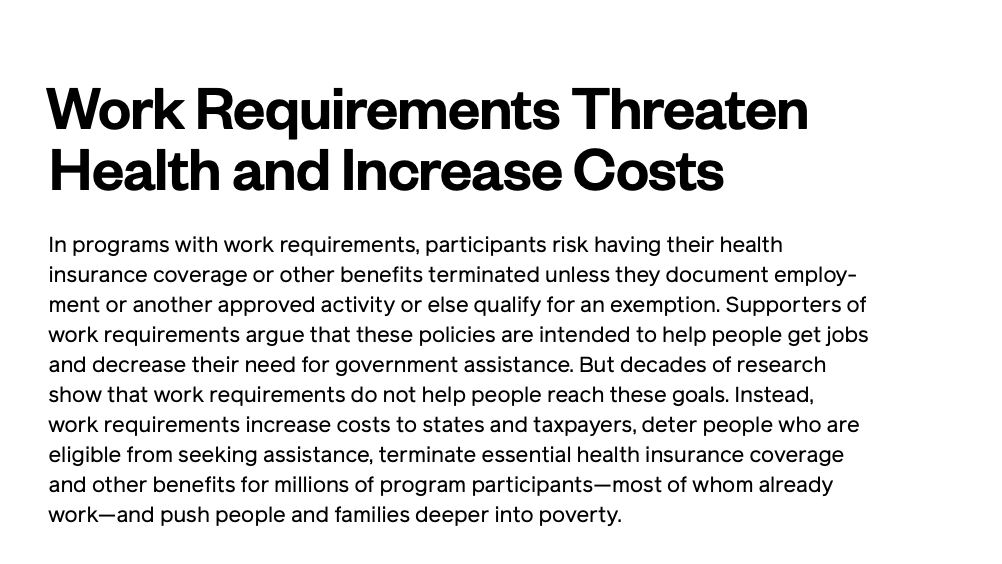
A research brief explaining how work requirements in programs like Medicaid and SNAP reduce coverage, increase administrative costs, and push eligible people deeper into poverty without improving employment outcomes.
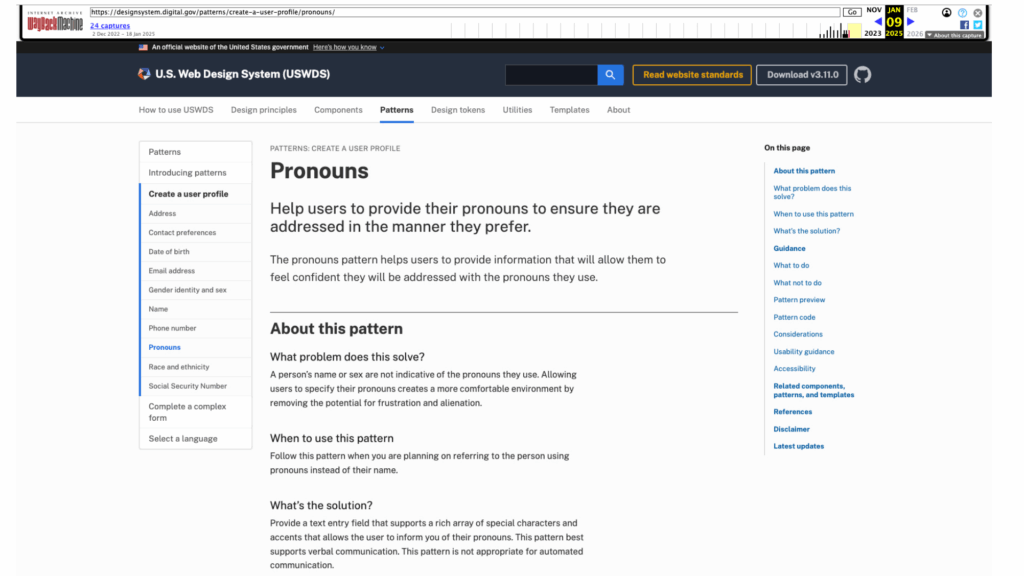
This page provides a U.S. Web Design System pattern for collecting pronoun information in user profiles in a way that respects identity, supports data standards, and promotes inclusion.