This guide outlines key strategies, definitions, and procedures for improving SNAP payment accuracy and reducing quality control (QC) error rates across states.
The article explains that for government agencies to successfully use Agile software development with vendors, they need to make changes in staffing—specifically by creating roles like a product owner and technical lead within the agency.
This is a government catalog of reusable digital service components, templates, and patterns designed to help public sector teams build services more efficiently and consistently.
This presentation, from the Data Sharing Working Group, highlights a Michigan Department of Health and Human Services and Benefits Data Trust project to increase enrollment in the Women, Infants, and Children (WIC) program.
Guidance on how state agencies should identify, assess, and manage risks associated with deploying high-risk generative AI systems under Executive Order 24-01.
Guidance from Washington Technology Solutions (WaTech) outlining the state’s framework for responsibly procuring, deploying, and monitoring generative AI technologies across government agencies.
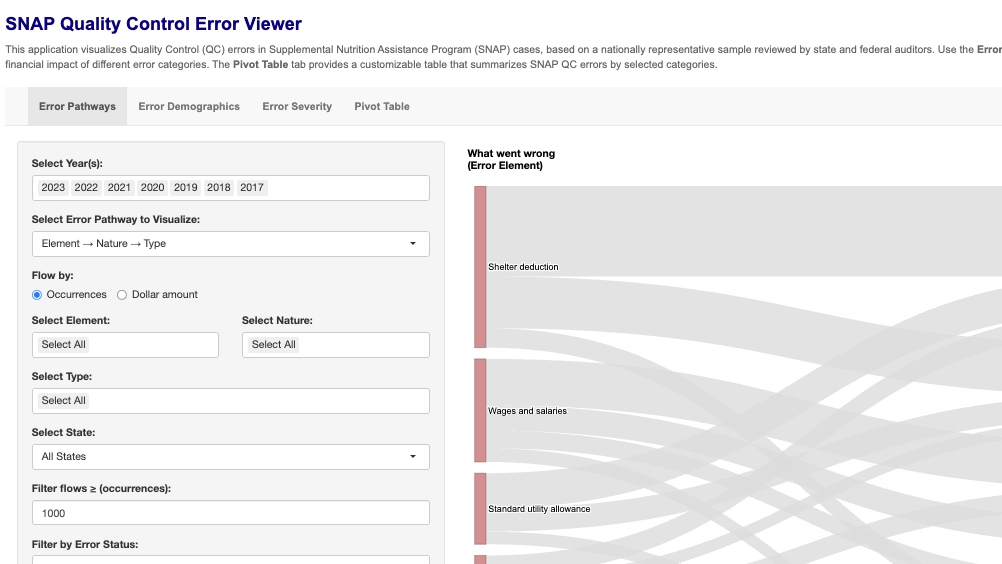
An interactive dashboard that enables users to explore and monitor key metrics of the Supplemental Nutrition Assistance Program (SNAP) Quality Control (QC) system.
A report that defines what effective “human oversight” of AI looks like in public benefits delivery and offers practical guidance for ensuring accountability, equity, and trust in algorithmic systems.
Explore The State of State Digital Transformation—your gateway to the Beeck Center’s landscape research into how states are modernizing government operations and services. This interactive map gives public servants, policymakers, practitioners, and researchers a faster, clearer way to glean insights from our research into the policies, teams, tools, and tactics shaping state digital transformation today.