This resource describes how different agencies have updated their systems to increase online and mobile access to benefits information and applications, including using text messages to share benefits information with residents.
As a part of Benefit Data Trust (BDT)’s Medicaid Churn Learning Collaborative, BDT has created a memo describing strategies for states to collect current mailing addresses of Medicaid beneficiaries in advance of the Medicaid continuous coverage requirement — in effect under the federal public health emergency — unwinding.
This crosswalk compares provisions in H.R. 1 with existing human services policies, focusing on how proposed federal work requirements could affect programs like TANF, SNAP, and Medicaid.
American Public Human Services Association (APHSA)
This report catalogs the policy choices, demonstration projects, and waivers each state uses to administer SNAP, highlighting how states adapt federal rules to local needs.
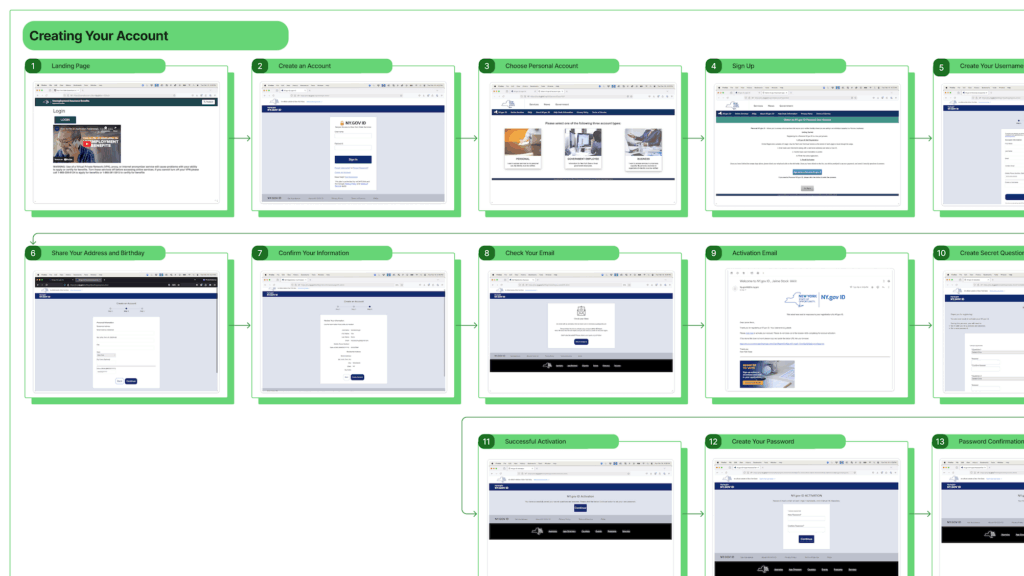
Created for use in the Digital Doorways research project, this design stimuli shows the steps of submitting an application, sharing personal information, and verifying identity for New York's online application for Unemployment Insurance.
A profile on FormFest speaker Karissa Minnich, a civic design manager with The Lab @ DC, whose innovative approach to redesigning government forms has transformed paperwork into a model of human-centered design.
Led by the Digital Benefits Network in partnership with Public Policy Lab, the Digital Doorways research project amplifies the lived experiences of beneficiaries to provide new insights into people’s experiences with digital identity processes and technology in public benefits. This report details the project’s findings, directly highlighting the voices of beneficiaries through videos and photos.
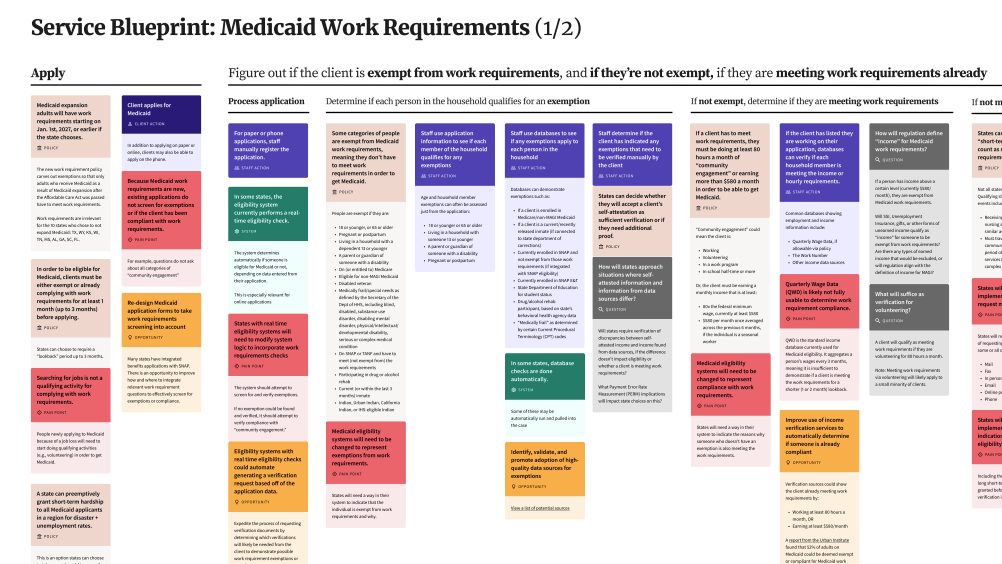
This 11x17 service blueprint visualizes every step, system, and policy decision involved in implementing Medicaid work requirements under H.R. 1—from application to renewal—identifying pain points, questions, and opportunities for states to streamline and humanize the process
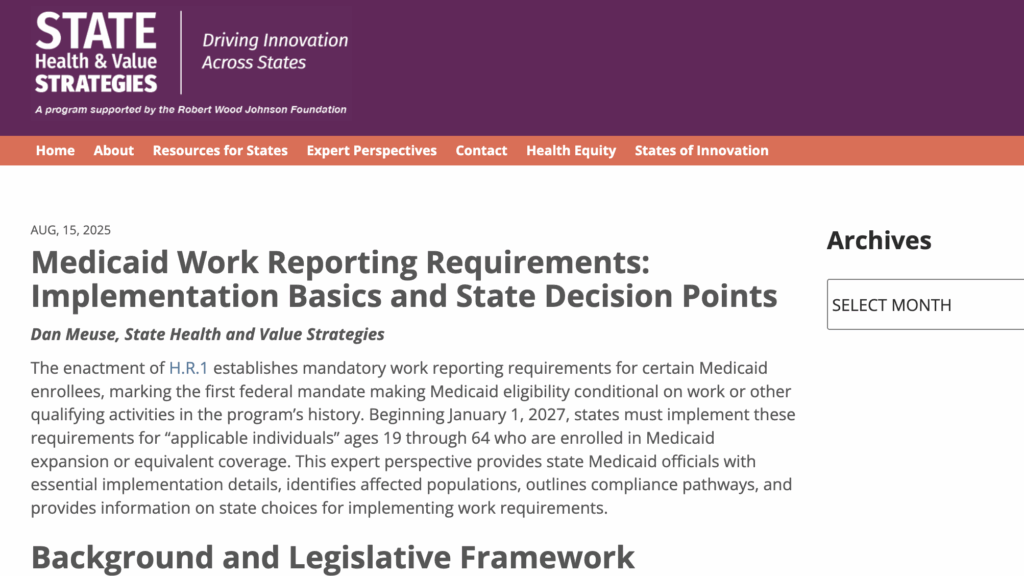
This report outlines the foundational requirements and policy choices that states must consider as they prepare to implement mandatory Medicaid work reporting under H.R. 1.
This report summarizes 21 policy options and waivers across all 53 SNAP State agencies, showing how each implements administrative and eligibility flexibilities permitted under federal law.