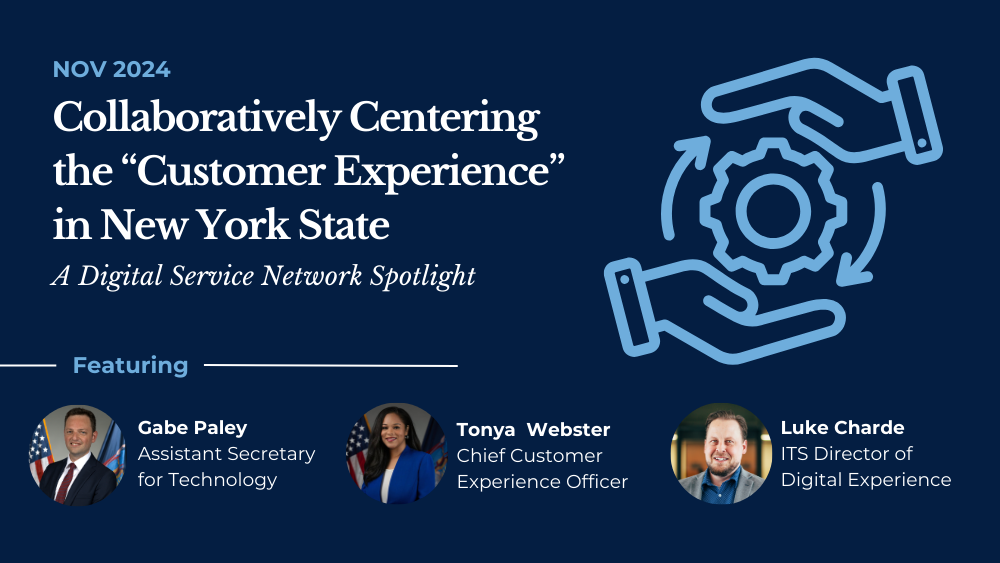
The Digital Service Network (DSN) spoke with three staff members from the New York State Executive Chamber—Gabe Paley, Tonya Webster, and, Luke Charde to learn more about the state's efforts to improve residents’ experiences accessing government programs.
The paper hopes to stimulate discussions towards an ethical protocol for better practice in BI experiments and provide a useful resource to those working on, or interested in, BI research.
This session from FormFest 2024 focused on human centered form improvements from the City of Reykjavik and the German Digital Service’s form simplification project.
This report documents four experiments exploring if AI can be used to expedite the translation of SNAP and Medicaid policies into software code for implementation in public benefits eligibility and enrollment systems under a Rules as Code approach.
Hear perspectives on topics including centering beneficiaries and workers in new ways, digital service delivery, digital identity, and automation.This video was recorded at the Digital Benefits Conference (BenCon) on June 14, 2023.
APHSA's President and CEO reflects on lessons and opportunities the COVID-19 pandemic highlighted and constructs a national narrative around the moment.
American Public Human Services Association (APHSA)
This paper argues that a human rights framework could help orient the research on artificial intelligence away from machines and the risks of their biases, and towards humans and the risks to their rights, helping to center the conversation around who is harmed, what harms they face, and how those harms may be mitigated.
Recording of GOVChats hosted by GTA's Digital Services Georgia, where speakers dive into the artificial intelligence (AI) programs and initiatives unfolding across the states of Georgia, Maryland, and Vermont.