This section of the Building Resilience plan outlines strategies to expand access to unemployment insurance (UI) for underserved populations and improve benefit adequacy through system reform, outreach, and data-driven equity efforts.
This brief examines the treatment of PFML for purposes of state and federal taxation, as well as determining income and eligibility in five means-tested programs.
The Technology Code of Practice is a set of government guidelines for designing, building, and buying digital services and technology to ensure they are efficient, accessible, and cost-effective in the UK.
These guidelines provide UK government organizations with best practices for responsibly and effectively procuring artificial intelligence (AI) systems.
An event recap from one of FormFest 2024's breakout sessions featuring speakers from Digital Service Teams across the United States and the Department of Veteran Affairs.
Executed April 3, 2025, this memo provides federal agencies with government-wide guidance for accelerating AI adoption through innovation, governance, and public trust.
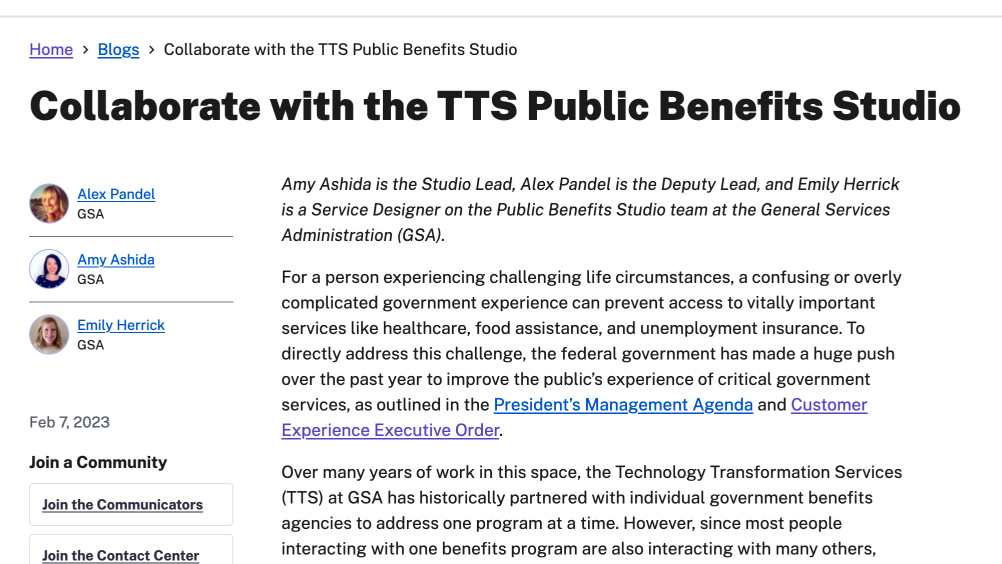
This blog introduces the GSA’s Public Benefits Studio, which partnered with agencies to build shared tools—starting with a multi-channel notifications service—to improve coordination and access across federal public benefits programs.
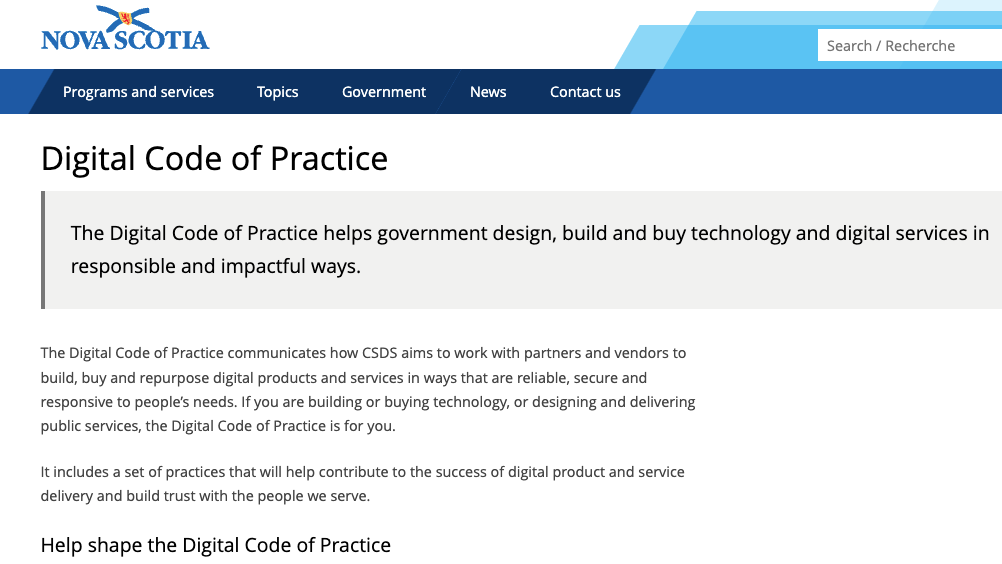
A guiding framework for designing, building, buying, and maintaining digital government services in Nova Scotia that emphasizes trust, inclusivity, sustainability, and public value.
This report shares the progress of the Biden-Harris Administration on health care access, prescription drug affordability, mental health, maternal health, and public health investments.