Through deeply reported case studies and insights from focus groups, this report provides an in-depth look at the impact of pandemic-era government spending on families.
A research brief explaining how work requirements in programs like Medicaid and SNAP reduce coverage, increase administrative costs, and push eligible people deeper into poverty without improving employment outcomes.
This report poses the question of whether states are prepared to meet the new Medicaid work reporting and renewal mandates introduced by HR 1, given ongoing strain from the post-pandemic “unwinding.”
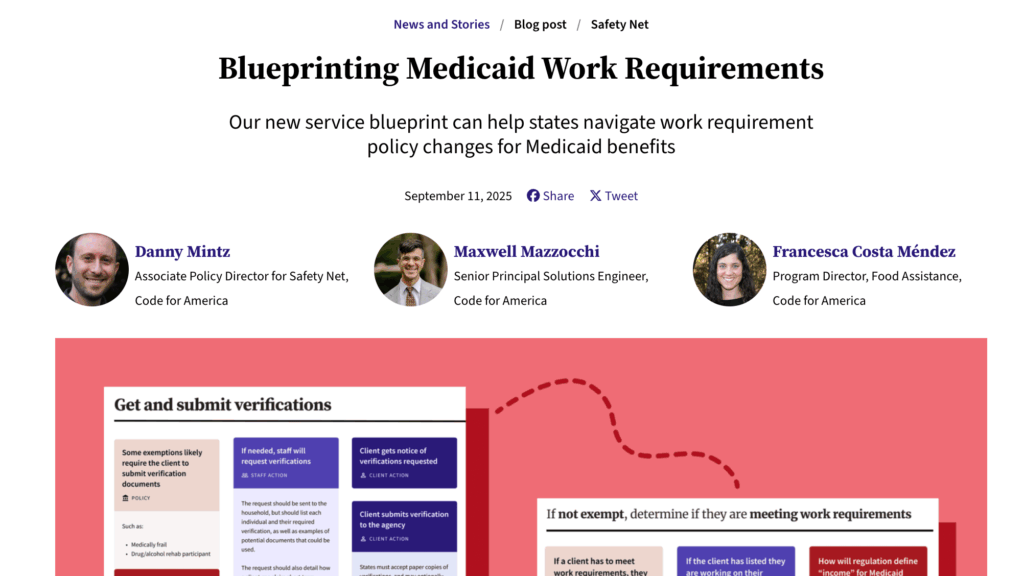
This blog introduces Code for America’s new service blueprint for Medicaid work requirements, highlighting how it can help states map system changes, identify pain points, and prioritize human-centered design.
This report evaluates the effectiveness and implementation of a generative AI-powered assistive chatbot designed to help caseworkers navigate complex public benefit programs like Medicaid and SNAP.
This study examines how bureaucratic interactions differ among public assistance programs—WIC, SNAP, and Medicaid—highlighting variations in participant experiences and the psychological costs associated with each.
The goal of the brief is to encourage policy makers and employers to consider benefits cliffs as they look to create mandatory wage increases, with a look at a legislative action in NYC.
This primer introduces two foundational software types that can support organizations that are committed to accessible benefits information: content management systems (CMS) and application program interfaces (APIs).
This piece highlights promising design patterns for account creation and identity proofing in public benefits applications. The publication also identifies areas where additional evidence, resources, and coordinated federal guidance may help support equitable implementations of authentication and identity proofing, enabling agencies to balance access and security.
This report details findings and lessons from a project to develop a calculator to help people anticipate how a change in earnings from employment would affect their net income and information on their estimated effective marginal tax rate.
U.S. Department of Health and Human Services (HHS)
The Performance.gov team hosted a webinar featuring federal customer experience (CX) changemakers from across government and focused on the nine CX projects that aim to address pain points learned about through human-centered design research.