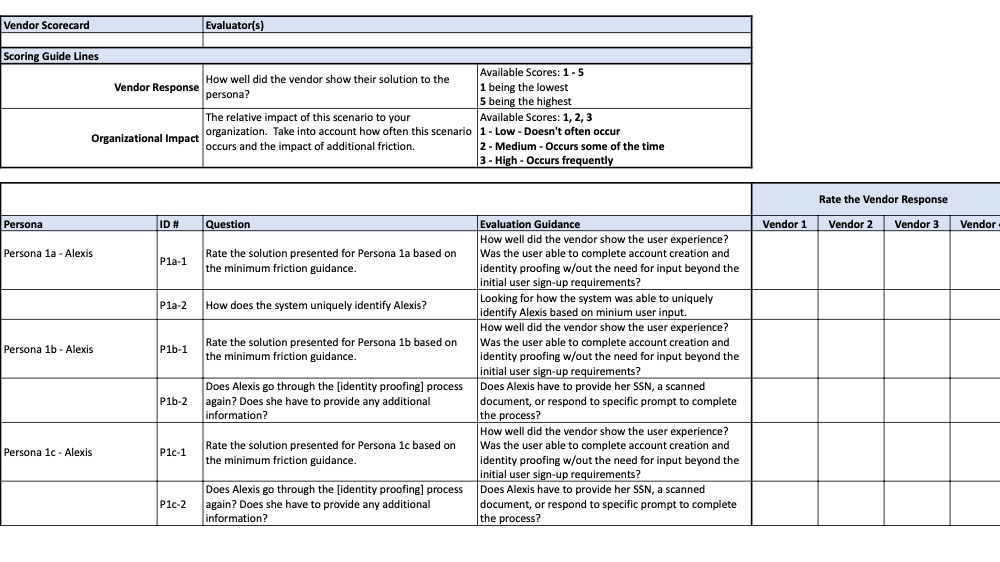
This scoring matrix from the California Employment Development Department (EDD) shows how the agency evaluated vendor proposals for a new identity proofing approach, based on vendors' ability to serve different user personas.
State of California Employment Development Department (EDD)
This profile provides a cross-sectoral profile of the AI Risk Management Framework specifically for Generative AI (GAI), outlining risks unique to or exacerbated by GAI and offering detailed guidance for organizations to govern, map, measure, and manage those risks responsibly.
National Institute of Standards and Technology (NIST)
Government solicitations to procure custom software are often long, complicated, and take months. By using 18F’s agile contract format, agencies can hire an agile software contractor with a quickly-written dozen-page solicitation, allowing for immense savings in time and money.
Artificial intelligence promises exciting new opportunities for the government to make policy, deliver services and engage with residents. But government procurement practices need to adapt if we are to ensure that rapidly-evolving AI tools meet intended purposes, avoid bias, and minimize risks to people, organizations, and communities. This report lays out five distinct challenges related to procuring AI in government.
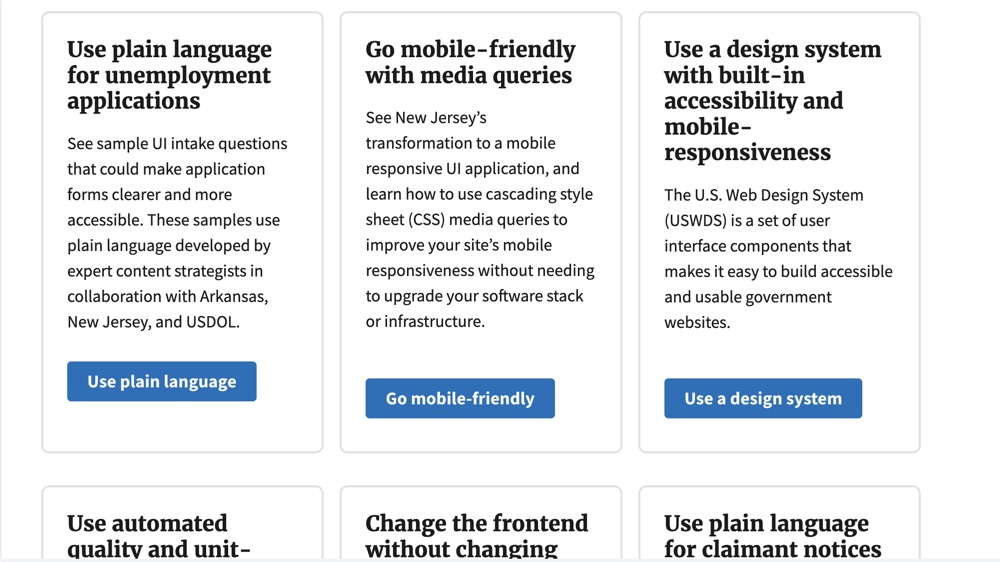
The U.S. Department of Labor is working with states, territories, and the public to develop strategies to continuously improve the nation’s unemployment insurance (UI) systems.
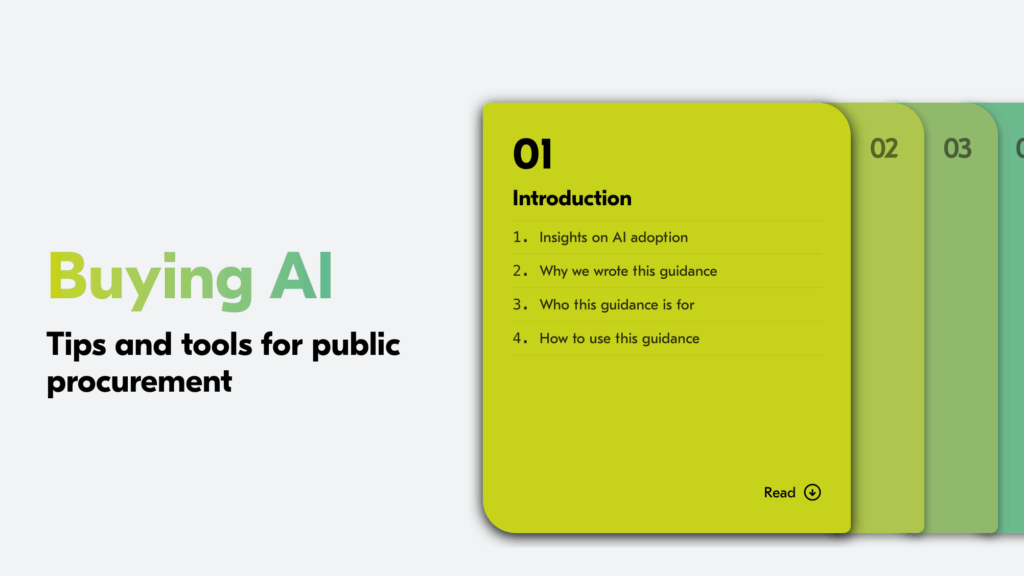
A practical, plain-language guide offering public-sector procurement and technology teams actionable tools and best practices for procuring AI responsibly and effectively.
This publication summarizes a body of research about how state benefits administering agencies build and maintain integrated eligibility and enrollment (IEE) systems. It is an easy to reference guide for state administrators, legislators, advocates, and delivery partners.
A statement of objectives that defines best practices and contract requirements for building modern, user-centered, secure, and agile digital services in government.
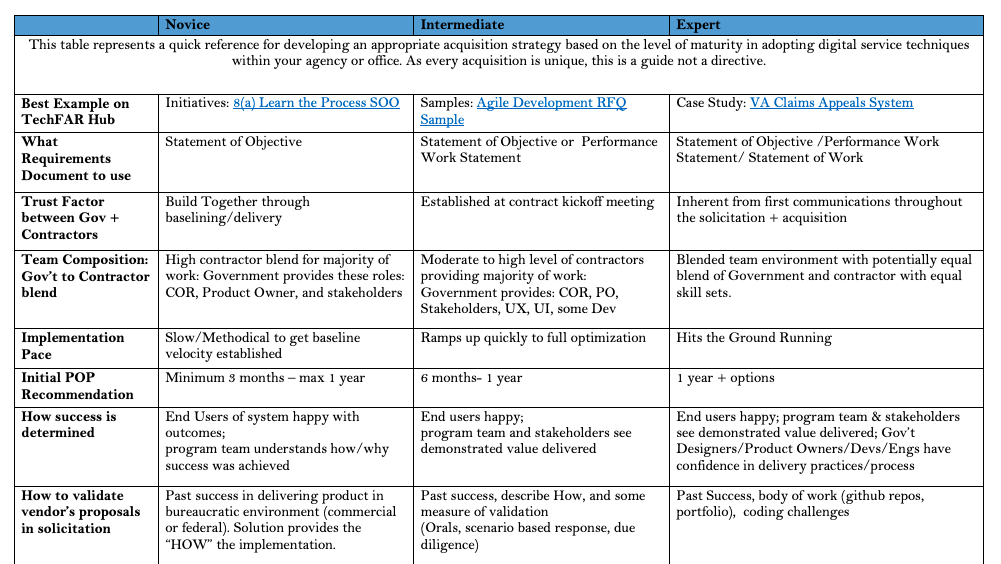
A practical guide that helps agencies choose appropriate acquisition strategies for digital projects based on their maturity with modern delivery practices.
A practical example showing how to estimate and structure firm-fixed-price costs for agile software development task orders using iteration-based pricing and performance metrics.