This report reviews the features of intergovernmental software cooperatives, examines several different examples, looks at different categories of cooperatives and their governance structures, and inventories known cooperatives both within and outside of the United States.
Part of the $1.9 trillion recovery package that Biden signed into law includes a $1 billion grant to the Technology Modernization Fund. The fund’s purpose is to help federal agencies upgrade their cybersecurity and modernize their technology. The TMF is a chance for federal agencies to move toward a responsive model of government, where people quickly and easily access the resources they need.
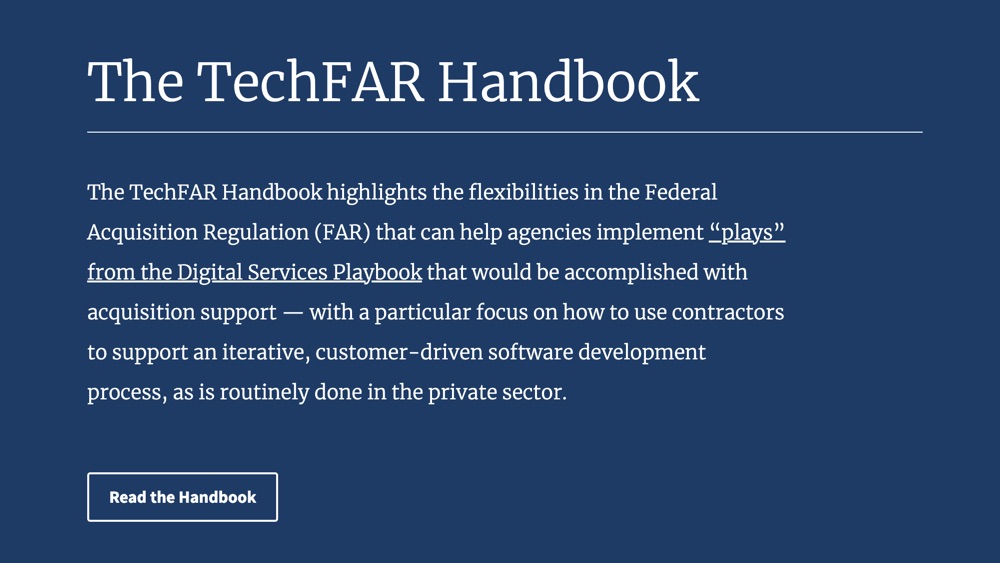
This handbook highlights the flexibilities in the Federal Acquisition Regulation (FAR) that can help agencies implement “plays” from the Digital Services Playbook, with a particular focus on how to use contractors to support an iterative, customer-driven software development process.
Drawing on interviews and convenings with experts and practitioners from the field of public interest technology, this report contains recommendations across five core priority action areas for cross-sector innovation and collaboration to improve state benefits systems through procurement practices.
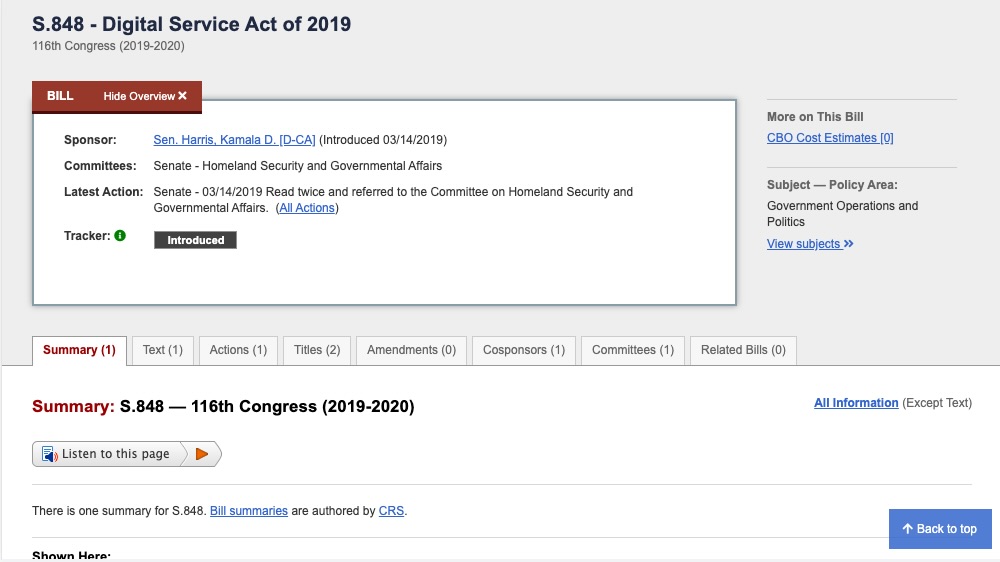
This bill authorizes the U.S. Digital Service to make a grant to a state, Indian tribe, or local government to establish or support a team of relevant experts dedicated to modernizing the delivery of government services to the public through information technology. A state, tribe, or local government may receive up to two such grants.