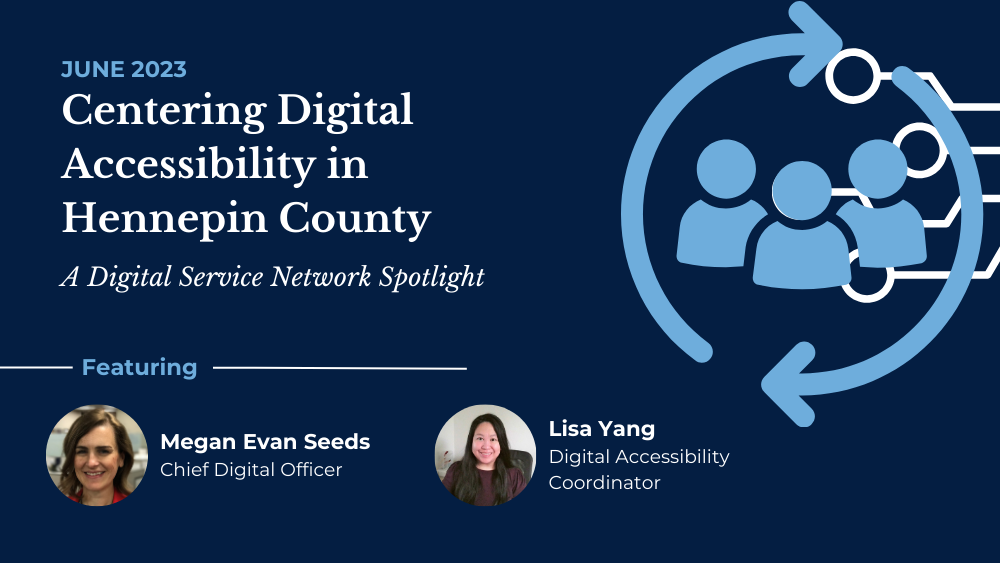
The Digital Service Network (DSN) spoke with staff from ODX — Megan Evans Seeds, chief digital officer, and Lisa Yang, digital accessibility coordinator — to discuss their efforts to help center digital accessibility across Hennepin County government.
This research study analyzes the structural and budgetary layout of eleven US-based Digital Service Teams (DSTs) at the municipal, county, and state levels. In doing so, it sets out to answer the research question: “How are digital service teams structured and funded?”
The report evaluates the feasibility, costs, taxpayer interest, and operational challenges of implementing an IRS-run free direct e-file tax return system, as required by the Inflation Reduction Act.
This toolkit is designed to support government agencies in evaluating the effectiveness of their public participation and community engagement (PPCE) activities.
A collaborative resource document detailing the civic tech support offerings, state and local government resources, and civic tech organizational support.
This impact report showcases how the city used technology to expand digital equity, modernize services, and responsibly deploy emerging tech to better serve New Yorkers.
New York City Office of Office of Technology and Innovation (OTI)
This report shares the progress of the Biden-Harris Administration on health care access, prescription drug affordability, mental health, maternal health, and public health investments.
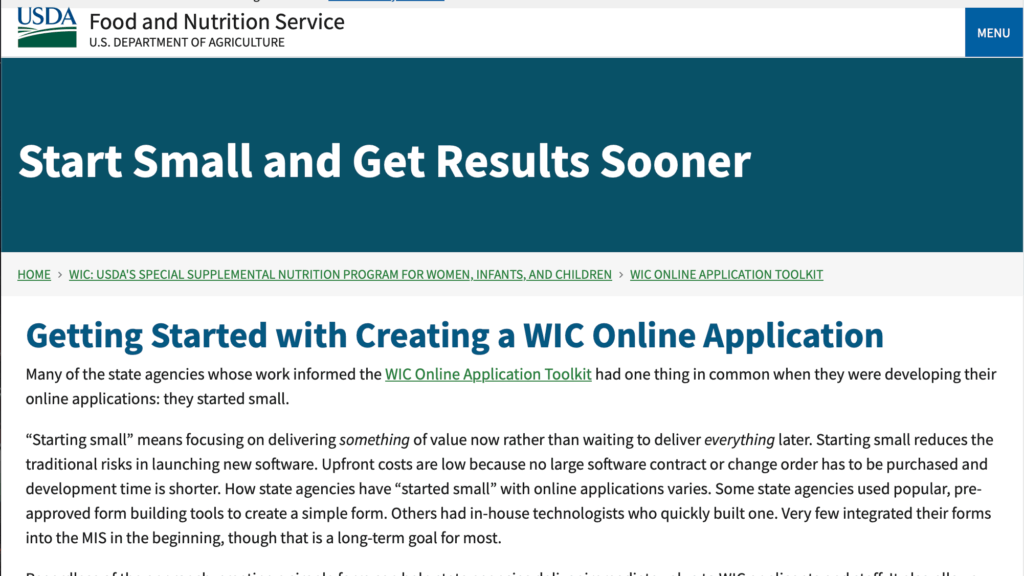
The “Start Small” approach encourages agencies to begin with targeted, manageable improvements in their WIC application process before expanding changes more broadly, fostering easier implementation and measurable early successes.
This budget request details ADES's FY2027 funding priorities—including developmental disability services, child care, IT modernization, and compliance with H.R. 1—and outlines projected fiscal impacts, caseload growth, and programmatic needs across the state
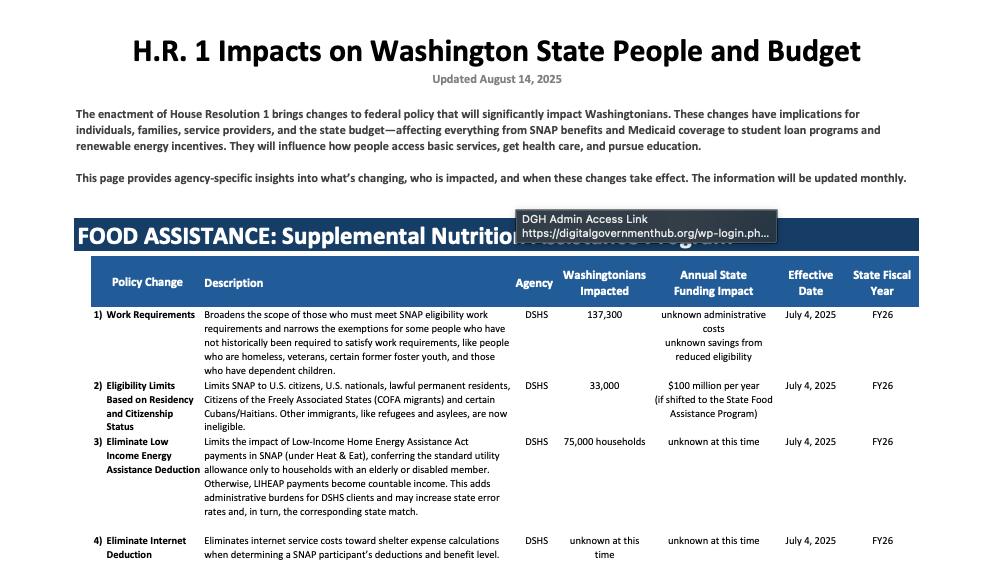
This analysis outlines how the federal H.R. 1 legislation will reshape funding, eligibility, and service delivery across key state programs—including SNAP, Medicaid, higher education, and energy—quantifying projected fiscal and human impacts across multiple agencies
Washington State Office of Financial Management (OFM)