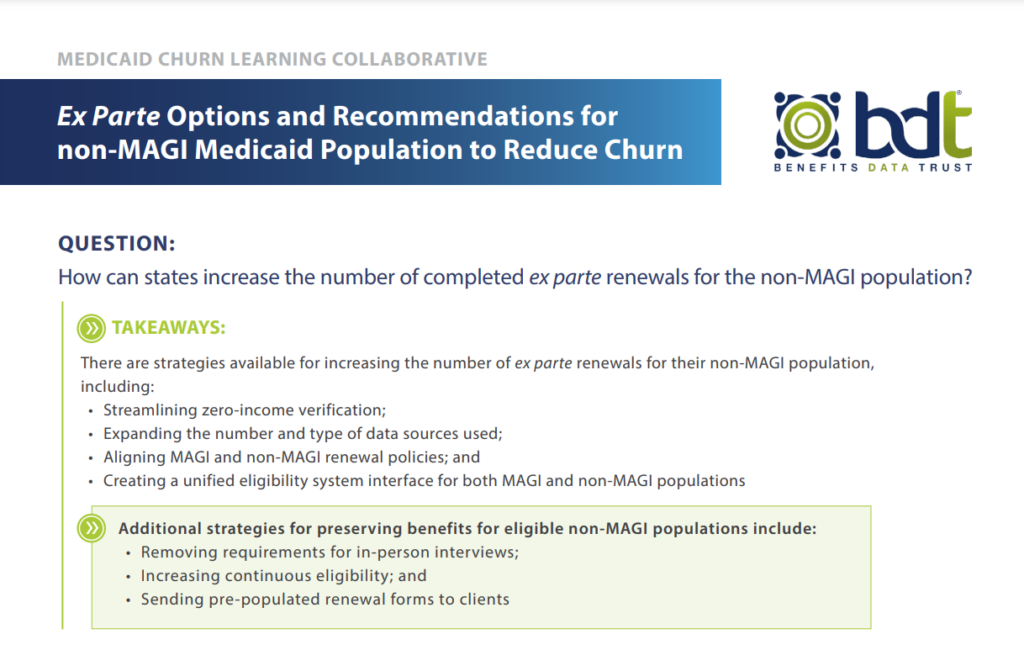
As a part of Benefit Data Trust (BDT)’s Medicaid Churn Learning Collaborative, BDT has created a memo describing policy options and state examples for Medicaid administrators to reduce churn for non-MAGI Medicaid enrollees when the federal public health emergency ends.
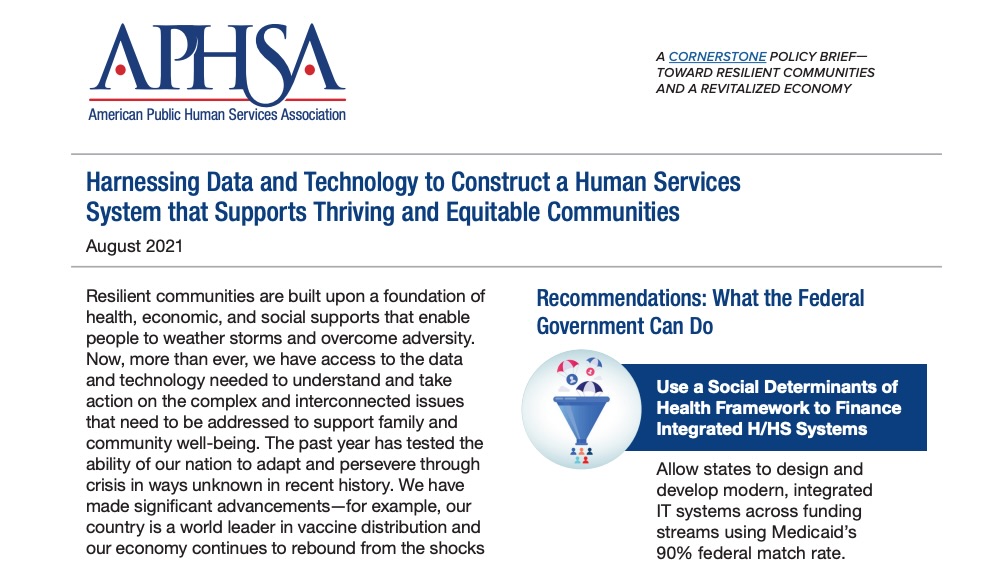
APHSA explains how certain tools and recommendations about when people apply for help, engage in services, and maintain benefits can have a powerful effect to either counter or exacerbate structural barriers to accessing assistance.
American Public Human Services Association (APHSA)
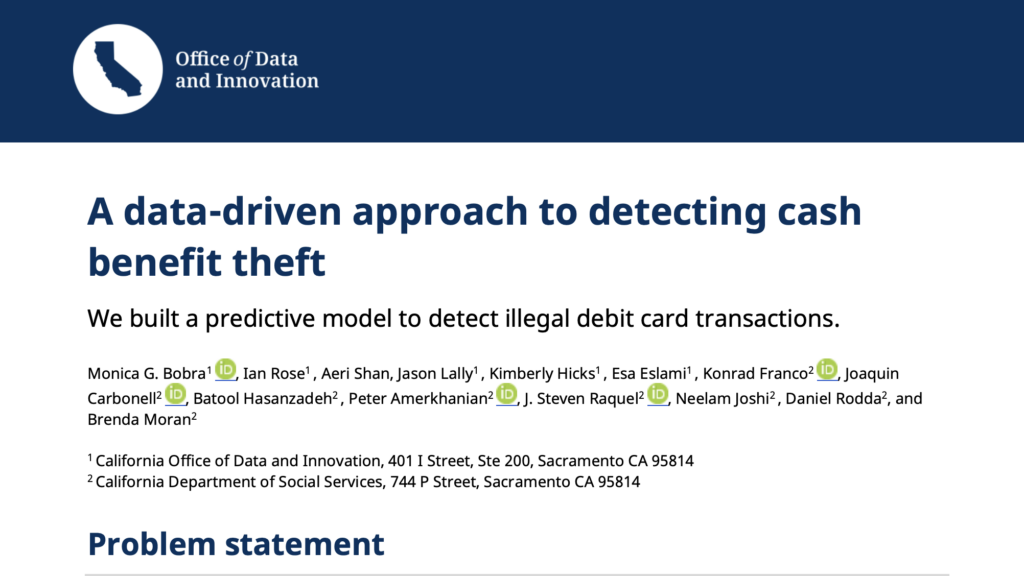
A case study explaining how a predictive, data-driven machine-learning model was developed to detect unauthorized cash benefit withdrawals more quickly and accurately in California.
This article examines the matrix of vulnerabilities that low-income populations face from the widespread collection of big data and predictive analytics.
A research report examining how privacy and security risks are unevenly experienced across socioeconomic, racial, and ethnic groups, and how digital inequality shapes people’s exposure to harm and access to protective resources.
A tool for CDOs advocating for funding, authority, and expansion—and a primer for government leaders unfamiliar with the role. The report establishes shared vocabulary, identifies six CDO office archetypes, and offers cross-state insights on structures, priorities, and challenges.
To assist states in closing digital skill gaps and preparing for digital equity planning, this brief offers key questions and resources for state leaders to consider.
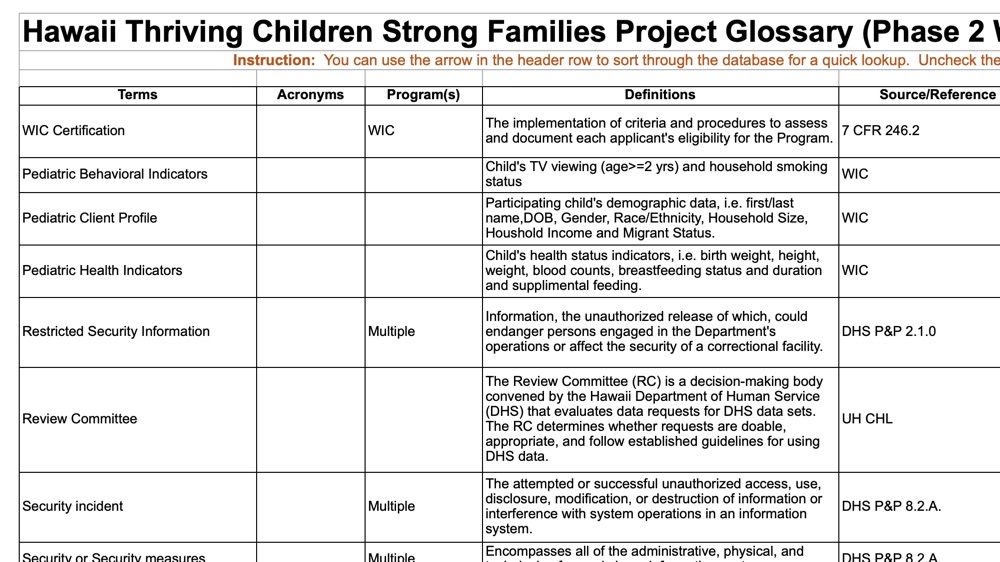
his document defines key terms, acronyms, and data elements used in Hawaii's SNAP and WIC data integration project to support cross-program collaboration and data standardization.
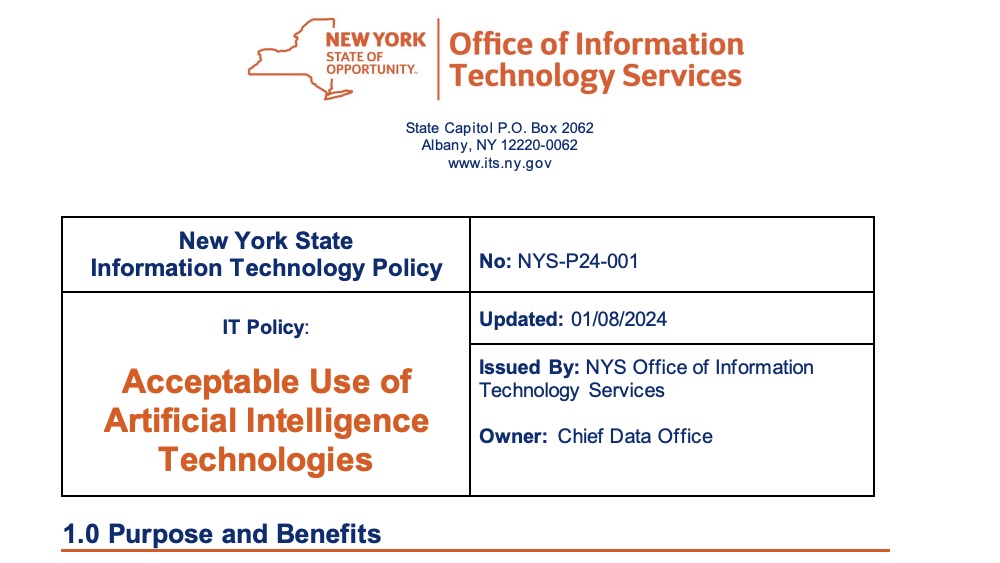
The New York State Office of Information Technology established guidelines for the acceptable and responsible use of Artificial Intelligence technologies by state entities.
New York State Office of Information Technology Services
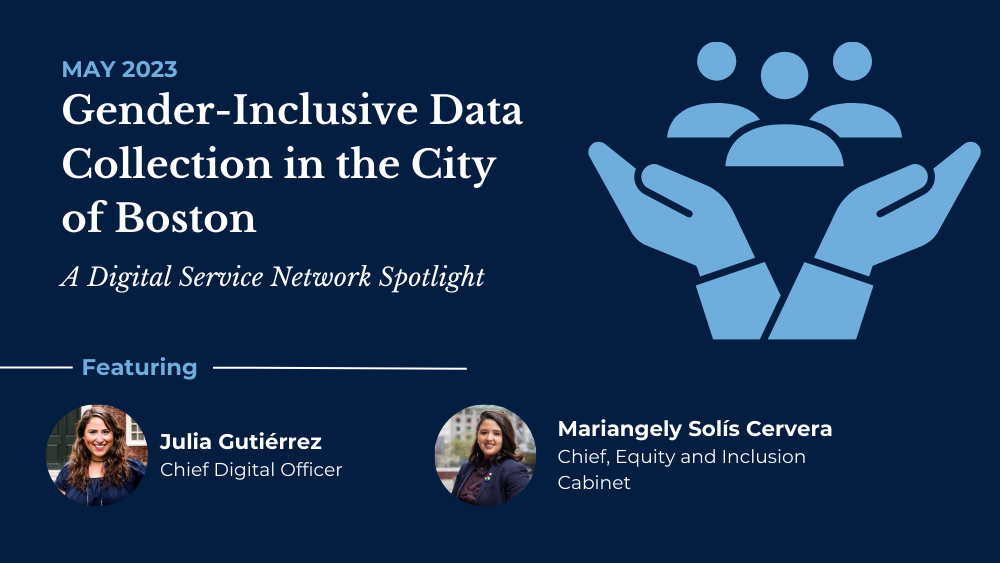
The Digital Service Network (DSN) spoke with Chief Digital Officer (CDO) Julia Gutiérrez of the Digital Services (DS) Team in the Department of Innovation and Technology (DoIT) and Chief Mariangely Solís Cervera of Boston’s Equity and Inclusion Cabinet.