This paper introduces a method for auditing benefits eligibility screening tools in four steps: 1) generate test households, 2) automatically populate screening questions with household information and retrieve determinations, 3) translate eligibility guidelines into computer code to generate ground truth determinations, and 4) identify conflicting determinations to detect errors.
This article discusses the challenges of today’s centralized identity management and investigates current developments regarding verifiable credentials and digital wallets.
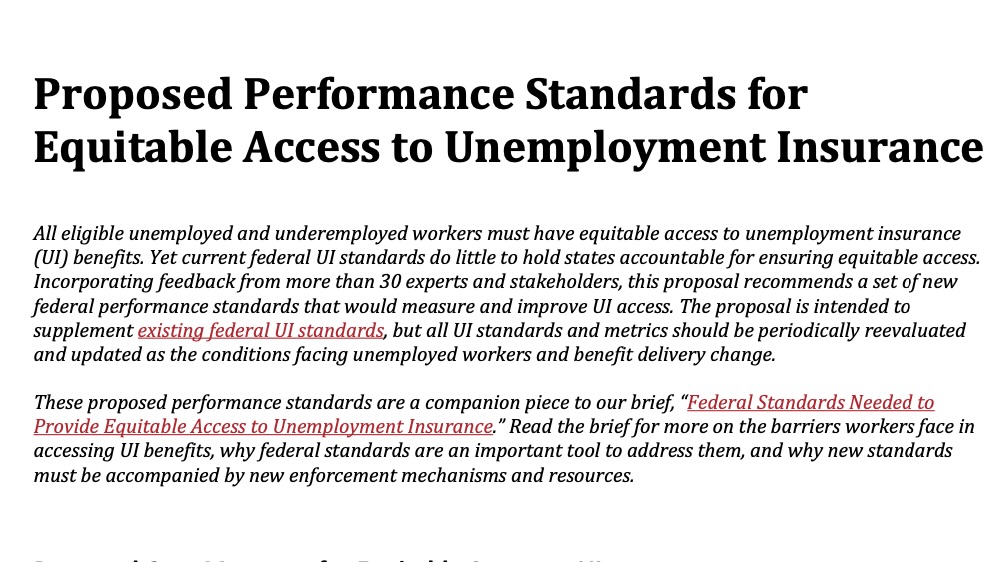
This proposal recommends a set of new federal performance standards that would measure and improve UI access. The proposal is intended to supplement existing federal UI standards, but all UI standards and metrics should be periodically reevaluated and updated as the conditions facing unemployed workers and benefit delivery change.
This case study describes Nava's work with the state of Montana’s Special Supplemental Nutrition Program for Women, Infants, and Children (WIC) agency to build an API prototype, which is part of Nava's larger work inform a national API standard.
This guide consolidates learning and spotlights principles, insights, and emerging practices to guide municipal leaders and public-private partnerships interested in designing basic income programs that are ethical, equitable, rigorous, informative, and consequential for local, state and national policymaking.
This brief examines how state Temporary Assistance for Needy Families (TANF) programs adapted policies during the early stages of the COVID-19 pandemic to address emerging challenges.