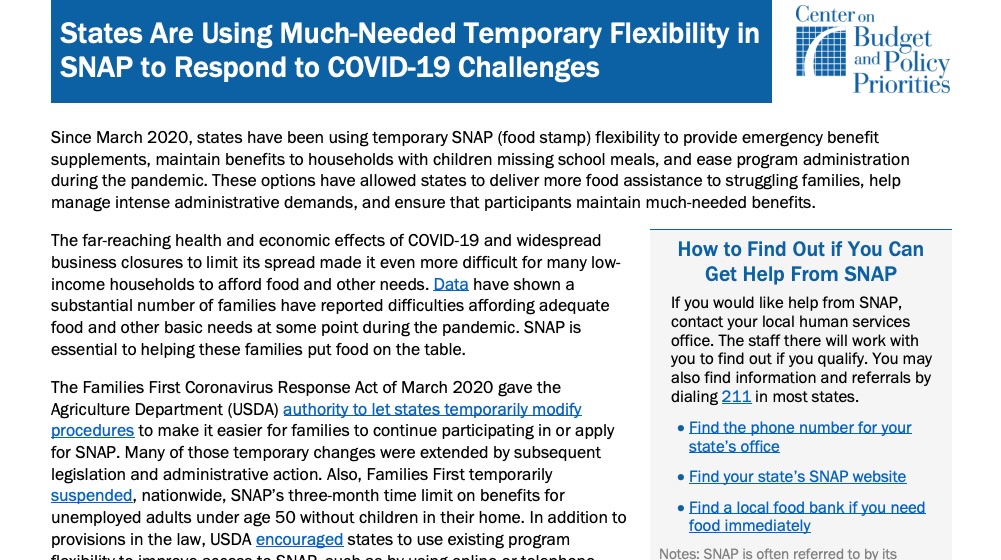
During the COVID-19 pandemic, states utilized temporary Supplemental Nutrition Assistance Program (SNAP) flexibilities to provide emergency benefits and maintain support for households with children missing school meals.
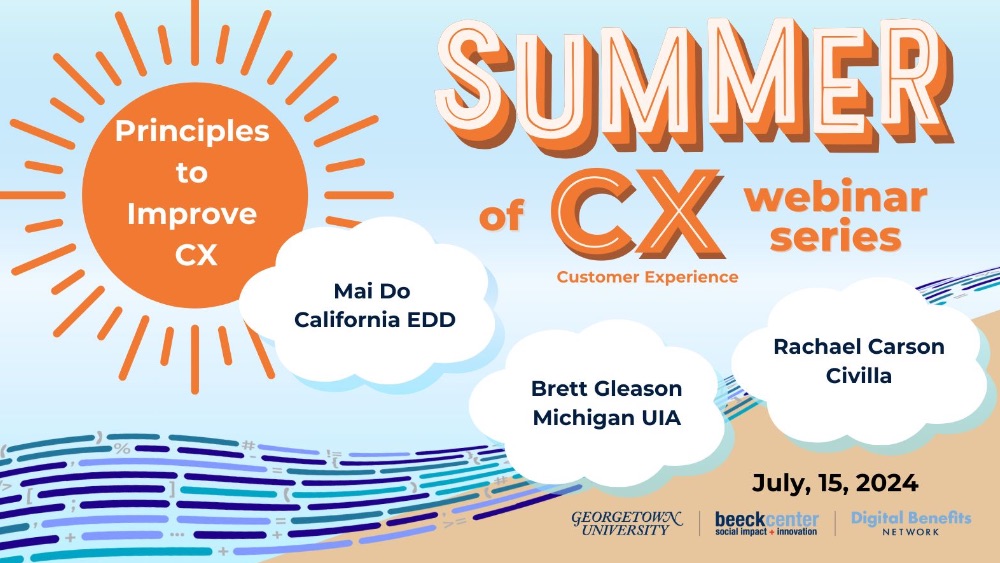
During the call, we heard from two speakers: April Dunlap, Policy Administrator for Arizona’s Department of Economic Security and Professor Michele Gilman, Venable Professor of Law and Associate Dean for Faculty Research and Development at the University of Baltimore School of Law.
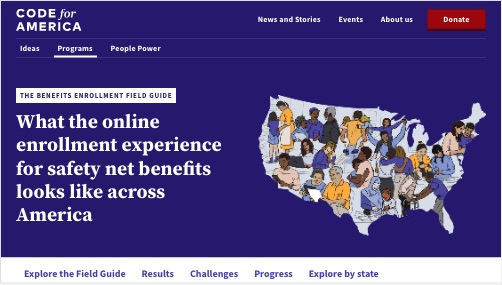
The Benefits Enrollment Field Guide looks at the landscape of America’s safety net benefits experience in 2023 and tracks the differences from our 2019 assessment based on expanded evaluation criteria. It also highlights successful paths to equitable, human-centered experiences. It examines online enrollment for Modified Adjusted Gross Income (MAGI) Medicaid, SNAP, TANF, the Child Care Assistance Program (CCAP), and WIC.
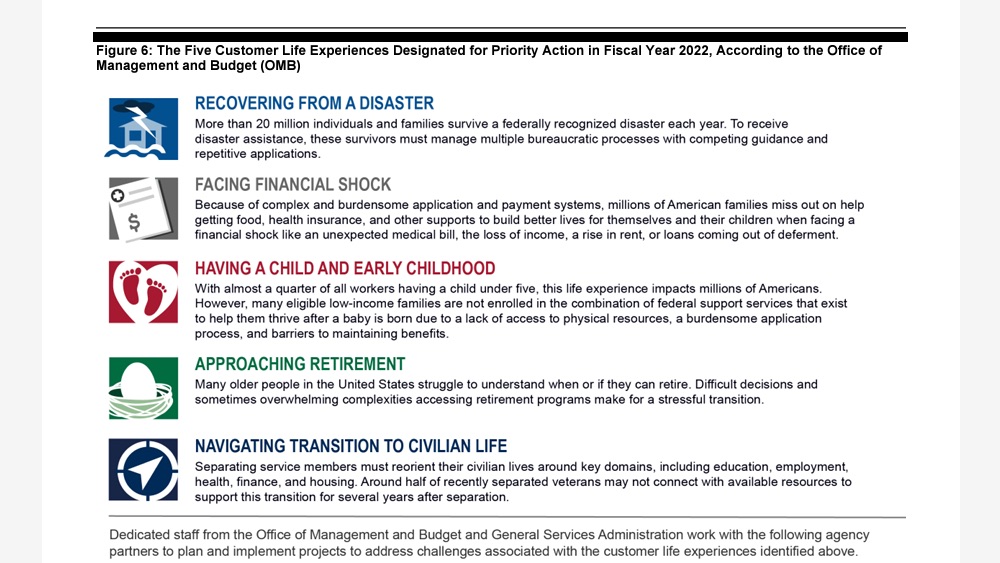
The 2021 President’s Management Agenda identified federal customer experience as a priority area for improvement. GAO was asked to review OMB and selected federal agencies’ efforts to improve federal customer experience.
An interview with Wendy De La Rosa, assistant professor at the Wharton School at the University of Pennsylvania. De La Rosa discusses how the concept of “psychological ownership” can encourage people to take up benefits they are eligible for.
Hear perspectives on topics including centering beneficiaries and workers in new ways, digital service delivery, digital identity, and automation.This video was recorded at the Digital Benefits Conference (BenCon) on June 14, 2023.
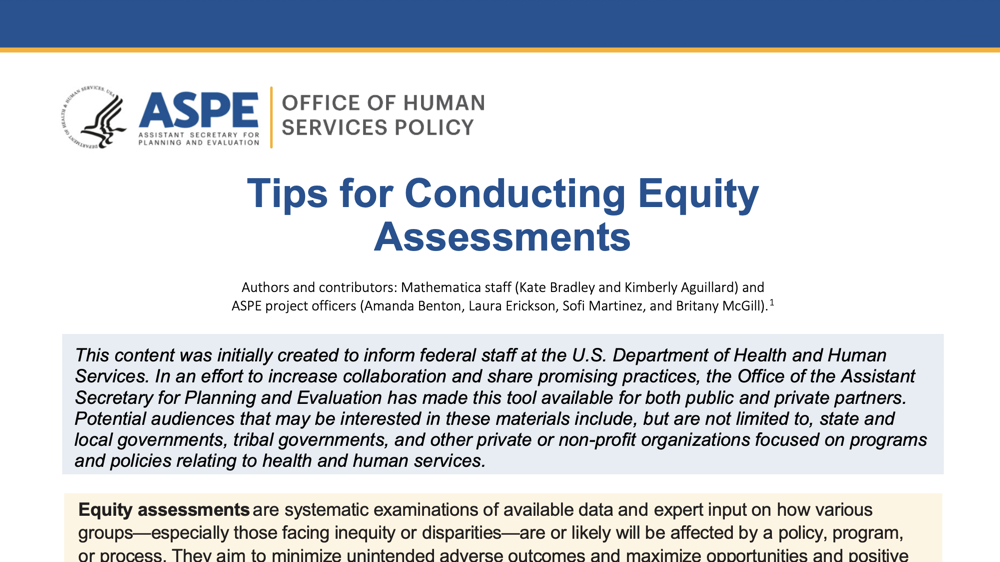
Originally created for use by federal staff at the U.S. Department of Health and Human Services, this tool describes the six steps for conducting equity assessments and provides tips for completing each step.
Office of the Assistant Secretary for Planning and Evaluation (ASPE)
18F describes modular contracting, the process of breaking up large, custom software procurements into a small constellation of smaller contracts. Modular procurement requires agile, product thinking, user-centered design, DevSecOps, and loosely-coupled architecture.