Disparities in Economic Impact Payment (EIP) receipt during the COVID-19 pandemic disproportionately affected low-income households, communities of color, and individuals without tax filing histories.
This case study describes Nava's work with the state of Montana’s Special Supplemental Nutrition Program for Women, Infants, and Children (WIC) agency to build an API prototype, which is part of Nava's larger work inform a national API standard.
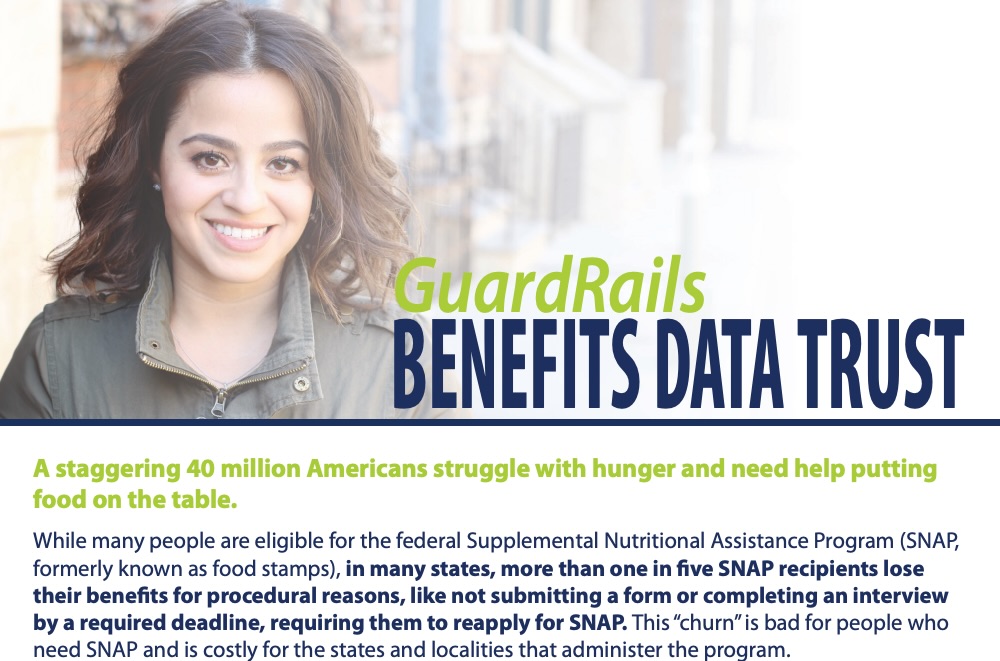
This playbook is designed to help government and other key sectors use data sharing to illuminate who is not accessing benefits, connect under-enrolled populations to vital assistance, and make the benefits system more efficient for agencies and participants alike.
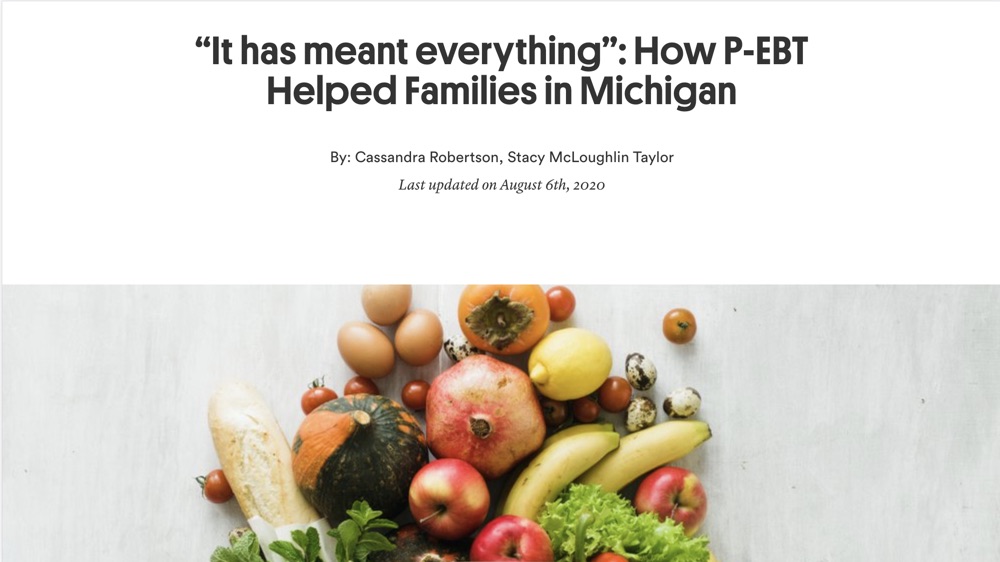
This report explores Michigan’s implementation of the Pandemic Electronic Benefit Transfer (P-EBT) program. Drawing on interviews from individuals within the Michigan Department of Health and Human Services and input from SNAP participants via surveys distributed using the Fresh EBT app, this report provides insights into the strategies that enabled Michigan to roll out an entirely new program quickly and effectively.
USDS partnered with CMCS and state Medicaid agencies to improve eligibility and enrollment systems after the COVID-19 Public Health Emergency ended, focusing on health coverage renewals.
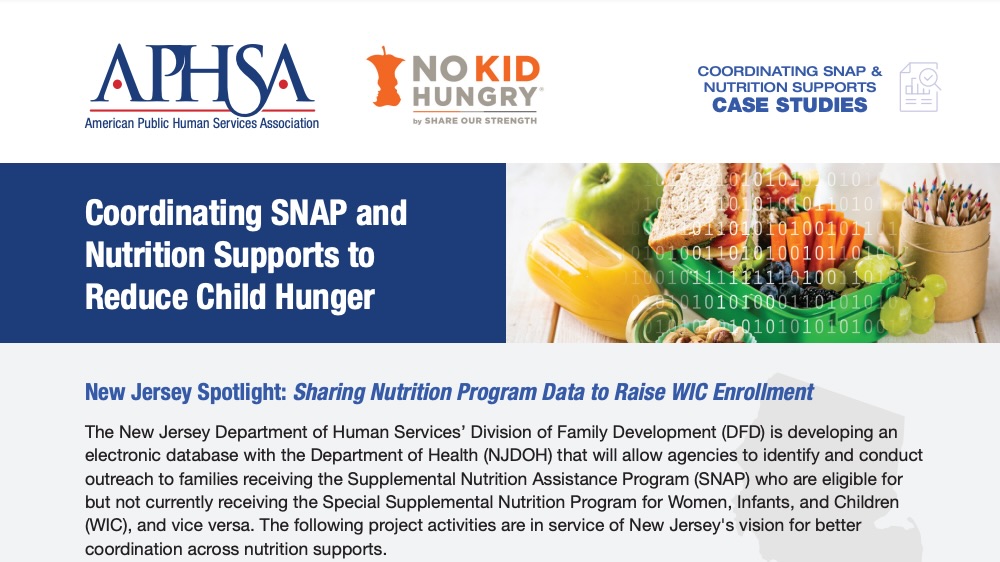
This report outlines how the New Jersey Department of Human Services’ Division of Family Development (DFD) and the Department of Health (NJDOH) are increasing SNAP & WIC co-enrollment through data sharing, outreach, and systems integration.
American Public Human Services Association (APHSA)
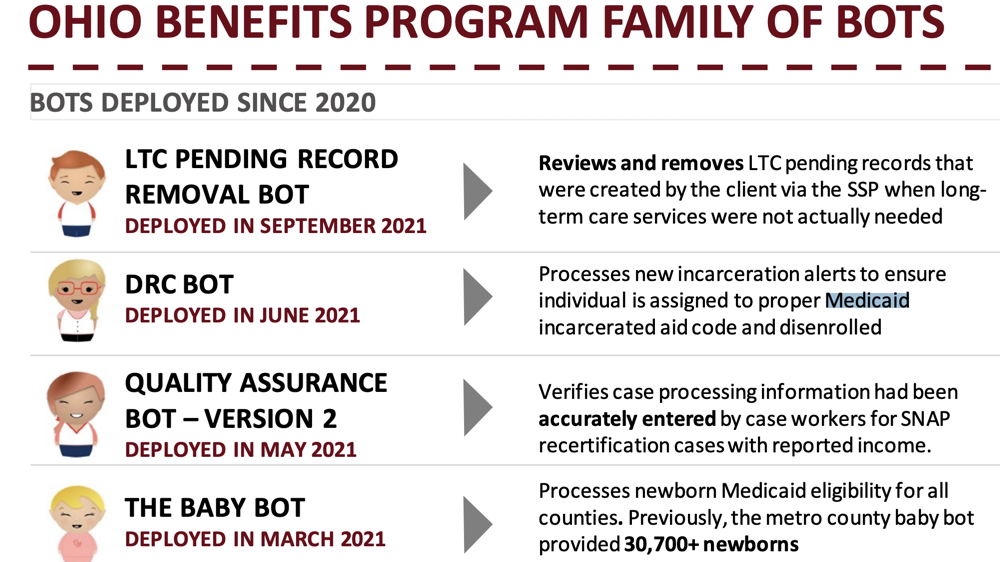
This award documentation from the National Association of State Chief Information Officers (NASCIO) explains how agencies in Ohio used automation to support administration of public benefits programs.
National Association of State Chief Information Officers (NASCIO)
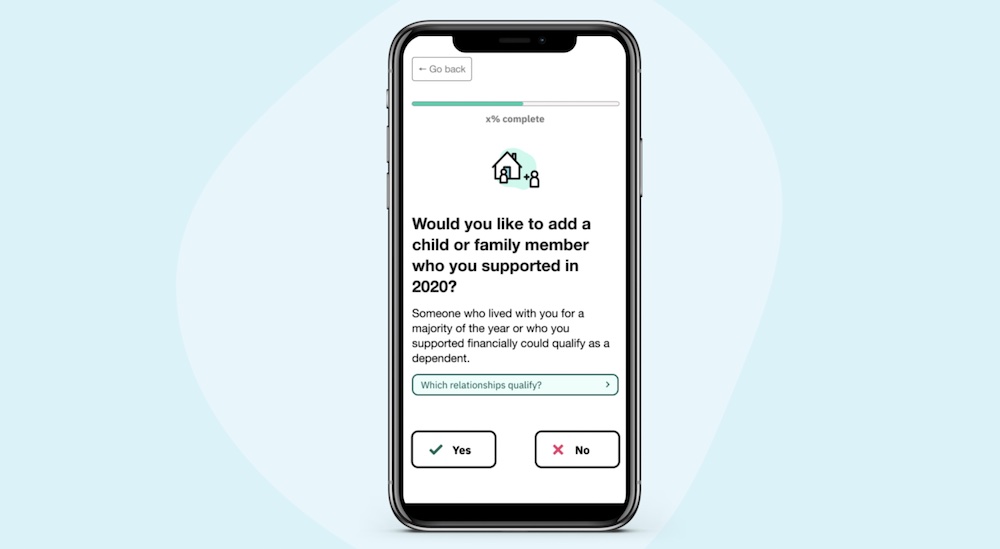
Code for America's GetCTC portal simplifies access to the Child Tax Credit for low-income families by providing a mobile-friendly, bilingual platform for streamlined tax filing.
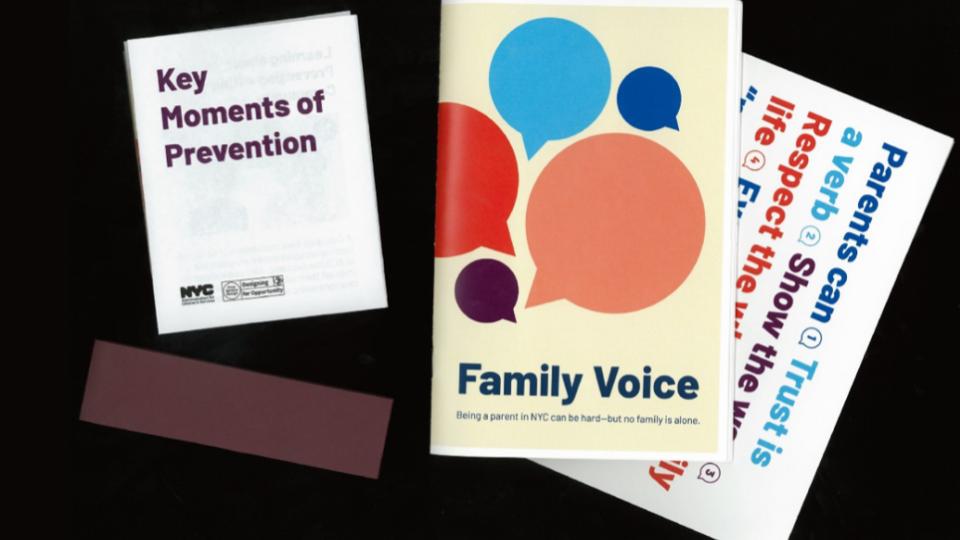
NYC Opportunity collaborated with the Administration for Child Services (ACS) to design a family-centered process for prevention services, addressing confusion and lack of choice in the current system. By creating tools like the Provider Profile and Family Voice booklet, the team empowered families to choose providers based on their needs while ensuring their feedback reaches ACS. The project aims to improve family experiences and communication with ACS, with plans to expand through testing and future innovations like a web portal.
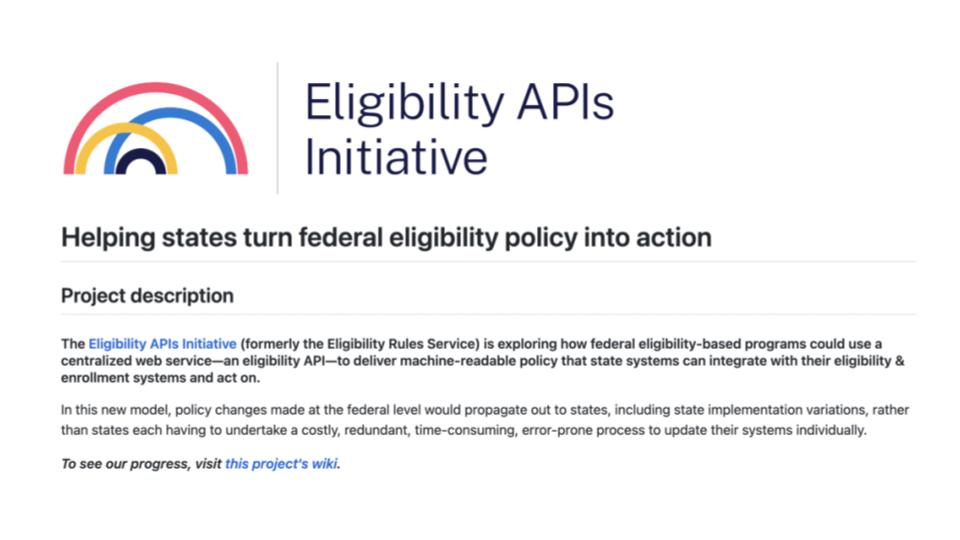
18F, a consultancy within the U.S. General Services Administration, developed a prototype API and pre-screener to model federal SNAP eligibility rules, aiming to simplify benefits access through open-source technology.