This article offers three human‑centered strategies to help state agencies implement expanded work reporting requirements in SNAP and Medicaid under H.R. 1 with minimal burden on clients and staff.
This FormFest profile explores how Philadelphia leveraged cross-department data sharing to launch its Zero Fare program, auto-enrolling eligible residents in unlimited transit benefits while tackling the challenge of outreach and trust-building to deliver passes effectively.
A FormFest profile highlighting how New York State’s design and technology teams are reimagining form creation through collaborative, human-centered design methods that simplify processes and expand participation.
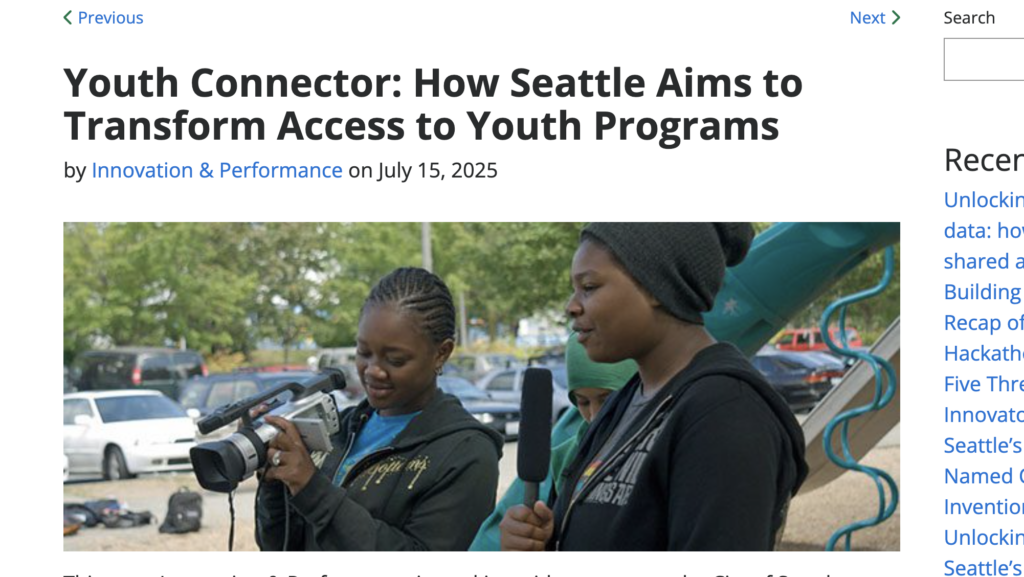
A blog post describing Seattle’s Youth Connector initiative, a city effort to make it easier for young people to discover, access, and connect with youth programs and supports that promote mental health, enrichment, and opportunity.
Adults in the United States who have a disability are statistically less likely than those without a disability to own certain digital devices like laptops and smartphones, and are also more likely to never go online, despite similar rates of home broadband and tablet ownership.
The AI Insights publication series from the UK Government’s Government Digital Service (GDS) provides technical guidance to help public sector organisations understand, implement, and manage artificial intelligence systems safely and effectively.
DGN Spotlights are short-form project profiles that feature exciting work happening across our network of digital government practitioners. Spotlights celebrate our members’ stories, lift up actionable takeaways for other practitioners, and put the resources and examples we host in the Digital Government Hub in context.
County workers typically spend most of their time trying to get income information right during eligibility interviews. This article provides several recommendations for asking about income, accounting for cognitive biases, under-reporting, and complexities in reporting income.
Code for America highlights the importance of recognizing the effects of intergenerational trauma on communities that have been systemically marginalized when conducting research.
This article reviews two examples of how Nava has used open-source technologies to bring human-centered testing practices to government services software.
Better Rules utilizes multidisciplinary teams that include people skilled in policy, legal, business rules, programming, and service design working together in an iterative fashion to develop rules. Several outputs are produced using this approach, each offering an opportunity that can be fed back into that iterative process and re-used to solve other issues.
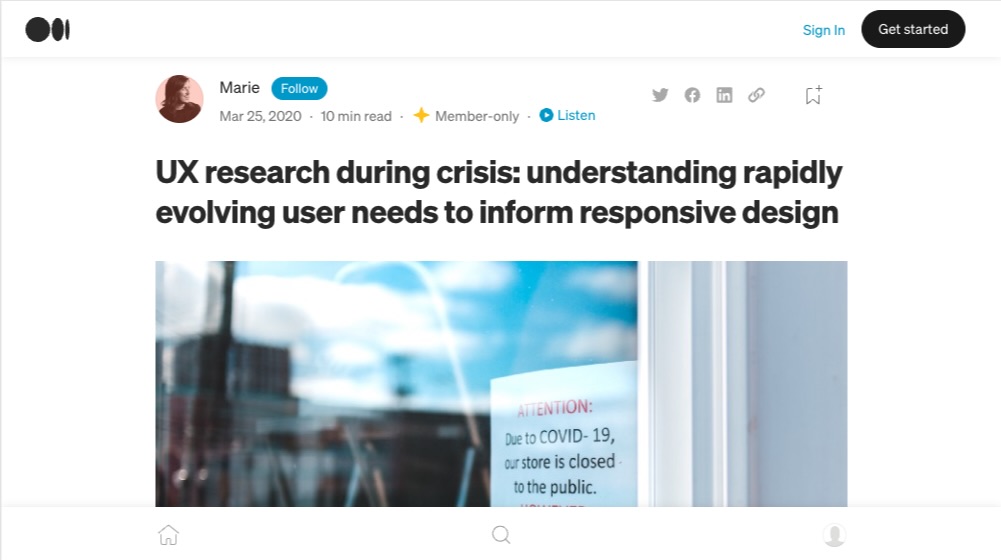
Important considerations for understanding user needs to inform responsive design in rapidly changing contexts are discussed, including how context, threat perception, decision-making, and crisis affects disaster management and UX research.