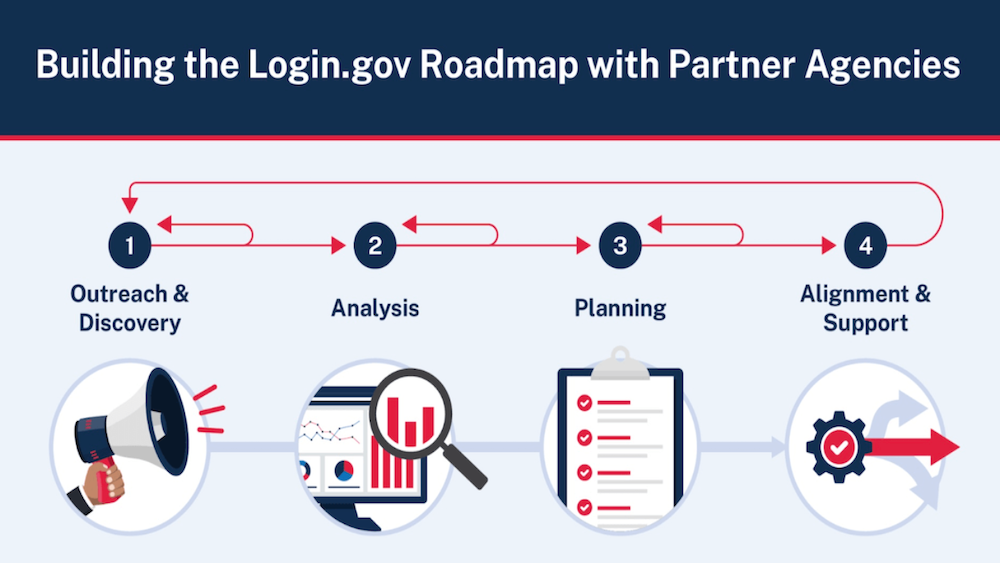
Login.gov created a first-of-its-kind, publicly-visible program roadmap and shares tips on how other programs can build their own roadmaps to improve transparency.
A recap of the two-day conference focused on charting the course to excellence in digital benefits delivery hosted at Georgetown University and online.
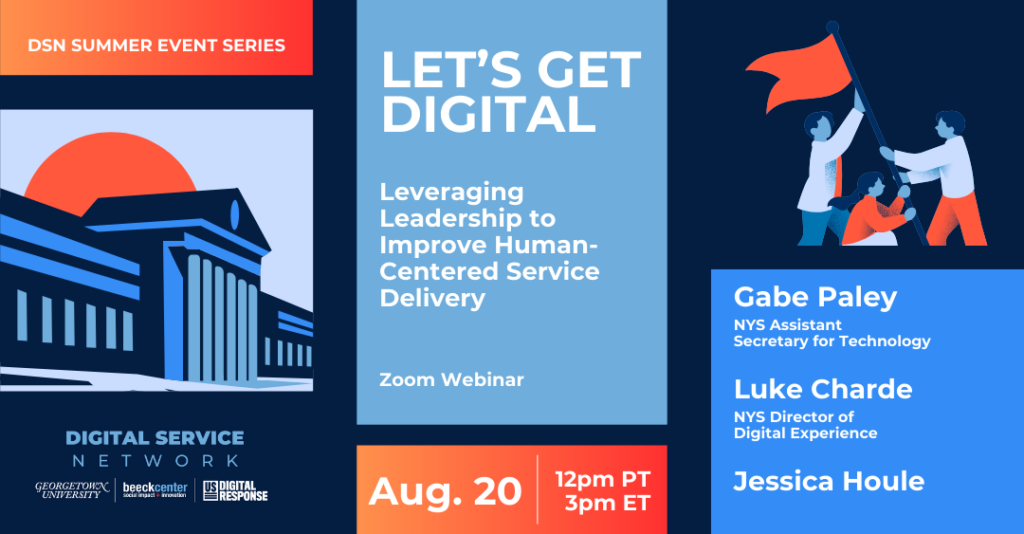
For the Digital Service Network’s (DSN) final installment of its summer event series, Let’s Get Digital, we heard about New York State’s (NYS) human-centered design (HCD) journey and how relationships between leadership and digital service teams have been pivotal in advancing user-centric service delivery.
This article emphasizes the need for local leaders to prioritize disability equity in advancing upward mobility, addressing systemic barriers that hinder disabled individuals' escape from poverty.
Plain language unemployment insurance claimant notices developed in collaboration with state agencies to serve as models of clear, accessible communication.
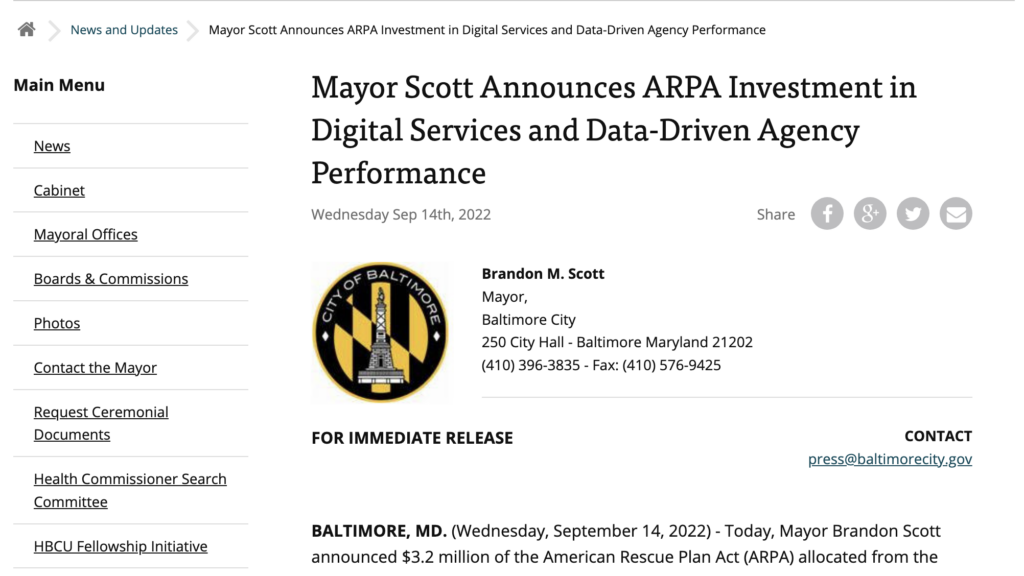
A Baltimore City press release announcing American Rescue Plan Act (ARPA) investments in digital services and data infrastructure to modernize city operations and improve resident access to government services.
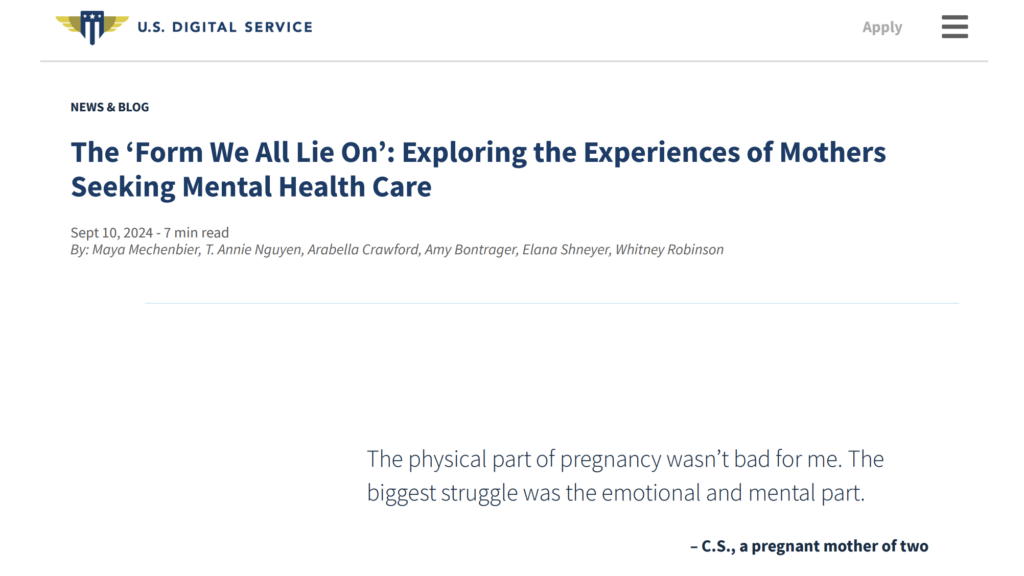
A U.S. Digital Service blog report exploring the lived experiences of mothers seeking mental health care during pregnancy and postpartum, highlighting barriers in screening, diagnosis, and access to treatment.
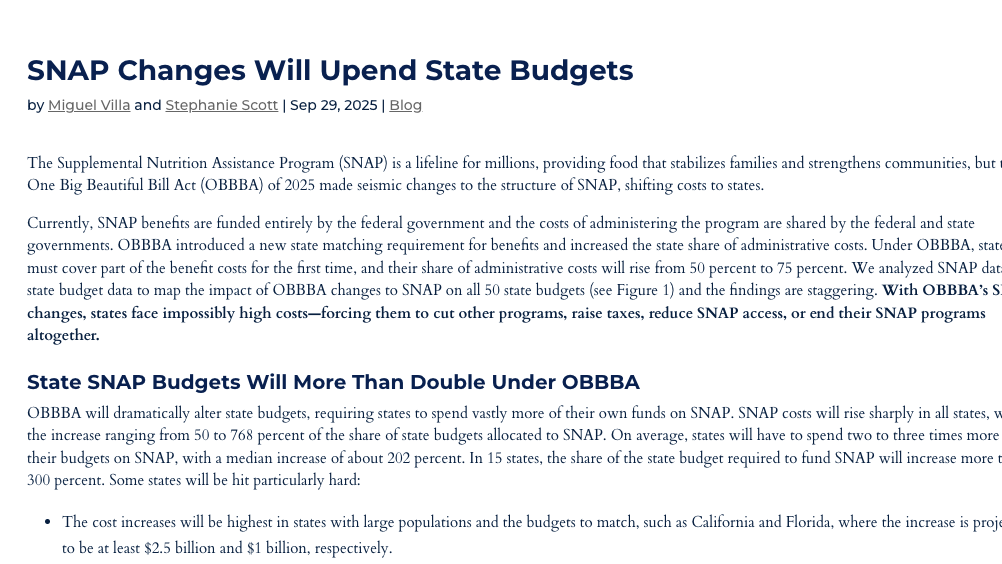
This blog analyzes how the One Big Beautiful Bill Act (OBBBA) will dramatically shift SNAP costs onto state governments, projecting massive budget increases and fiscal strain.
In this interview, Code for America staff members share how client success, data science, and qualitative research teams work together to consider the responsible deployment of artificial intelligence (AI) in responding to clients who seek assistance with three products.