This blog summarizes a FormFest session where the Center for Civic Design shared research on how screen reader users navigate voter registration forms and offered guidance for designing more accessible digital and PDF forms.
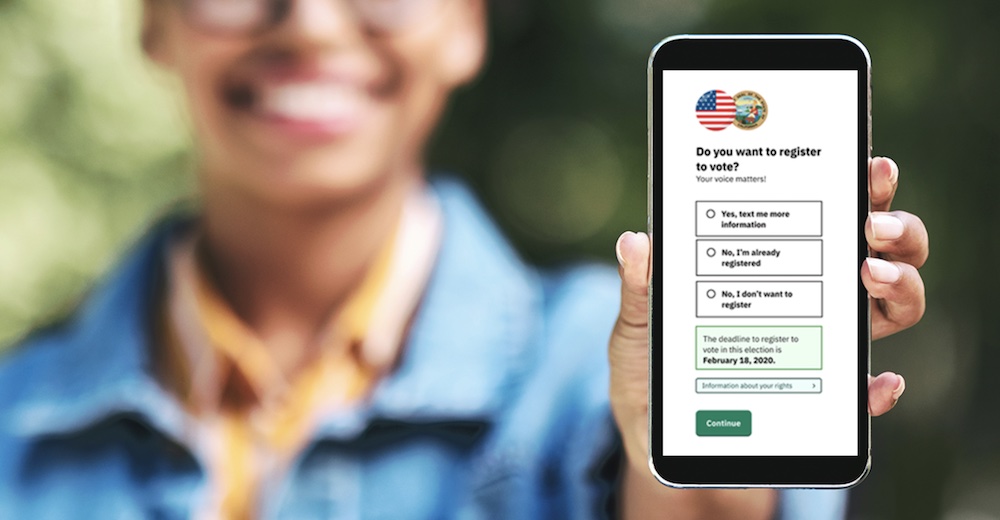
The GetCalFresh team, the California Department of Social Services, and the California Secretary of State’s office worked together to create a simplified, accessible voter registration experience with clients. When people come to GetCalFresh.org, they are looking to apply for food assistance, so the state of California did not want voter registration to become an obstacle to the goal of getting food assistance. Thus, rather than directing clients to anther website, they offered to text clients a link to the CA Secretary of State’s voter website with directions on how to register.
This research brief summarizes the ideas and recommendations from sessions with dozens of cross-sector stakeholders within the technology ecosystem to identify conditions for better, healthier, more secure digital ecosystems that could help guide the next generation of open protocols and platforms.
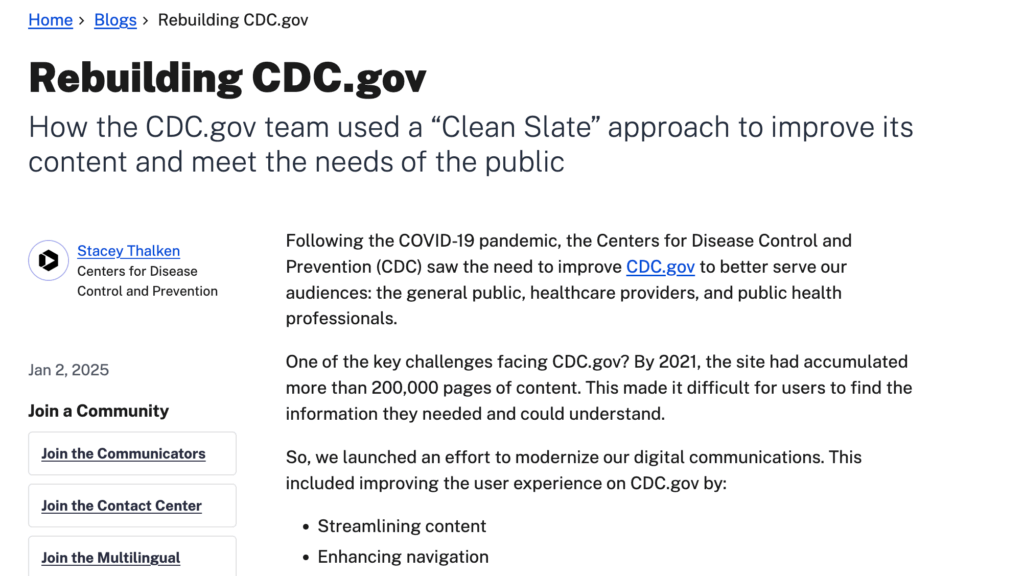
This blog describes how the CDC relaunched its website through a “Clean Slate” redesign—streamlining content, improving navigation, refreshing visual design, and adopting a new CMS—to better meet user needs and rebuild trust in public health communication.
This blog post shares findings from the February 2025 AI Trust Study on Canada.ca, revealing how Canadians perceive government AI and what builds trust.
The Digital Service Network worked closely with stakeholders from the Texas Education Academy (TEA) to develop resources for a structured approach in helping identify and better understand core challenges in government digital delivery.
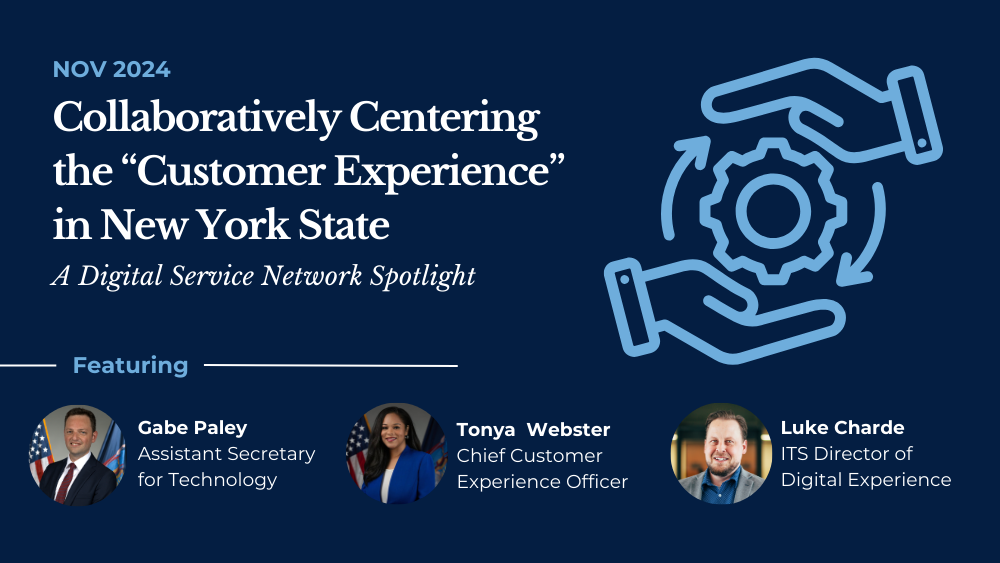
The Digital Service Network (DSN) spoke with three staff members from the New York State Executive Chamber—Gabe Paley, Tonya Webster, and, Luke Charde to learn more about the state's efforts to improve residents’ experiences accessing government programs.
The first edition of this storytelling series explores the critical role of cognitive accessibility in digital government services through the personal experiences of a scholar and a mother navigating a complex bureaucracy.
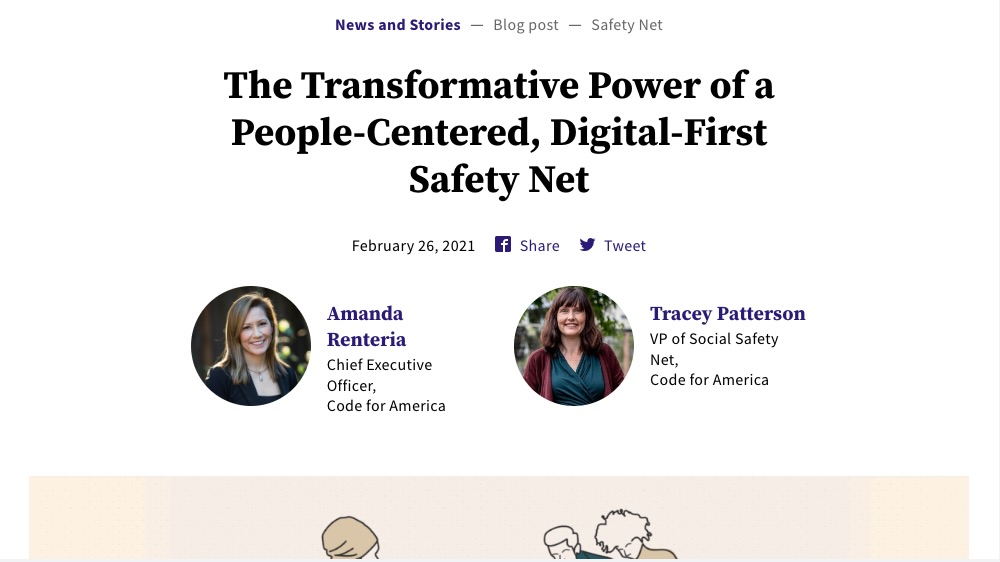
Code for America discusses the importance of a people-centered, digital-first safety net. Tools of technology, policy, and good implementation can advance a bold vision that will allow the nation to push through the end of the COVID-19 crisis.
Defining a product in government digital services is crucial, as it serves as the means through which a service is delivered to the public, and understanding its attributes ensures effective and continuous improvement.
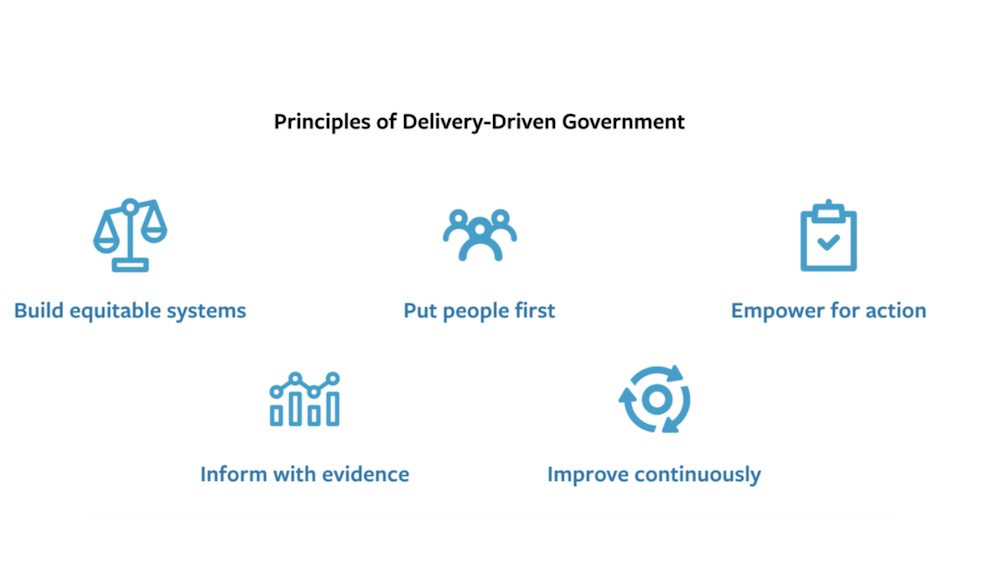
Code for America initially introduced the concept of Delivery-Driven Government in 2018. This article refreshes its original principles and expands on what the organization has learned to make its concepts clearer.