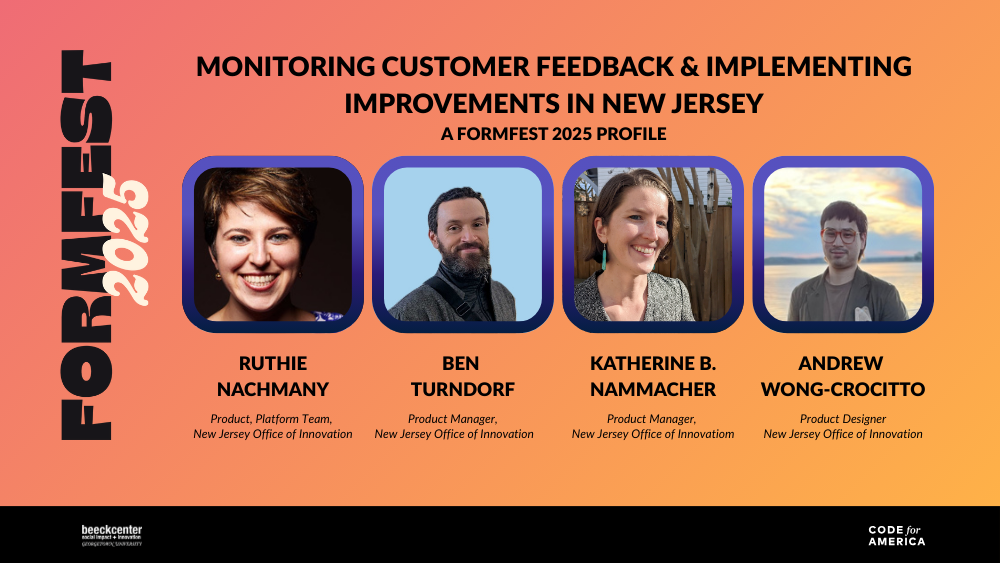
This FormFest profile spotlights the New Jersey State Office of Innovation’s Feedback Widget team, which collects resident input across state websites to improve services and empower agencies to act on real-time feedback.
This Code for America article discusses how tax filing can be a powerful tool for economic justice, highlighting efforts to make the tax system more accessible and equitable for low-income individuals.
Understanding the strengths and weaknesses of the available low-code/no-code tools will help you pick the right tool for the job and balance their sometimes significant weaknesses with their tremendously valuable strengths.
This project portfolio page details a human-centered service design partnership with the Michigan Unemployment Insurance Agency (UIA) to revitalize and streamline the state's unemployment benefits system following crisis-level strain.
An event recap from one of FormFest 2024's breakout sessions featuring speakers from Digital Service Teams across the United States and the Department of Veteran Affairs.
Technology enables governments to engage in “pilot” projects to see where they are headed and course-correct along the way, as opposed to evaluating the results over the course of multiple years. Delivery-driven government utilizes technology and “pilot” projects to see institutions and processes through the eyes of users, allowing for more effective service delivery.
An event recap from one of FormFest 2024's breakout sessions featuring speakers from South Bend Indiana and others working on creating accessible legal forms.
Digital IDs can improve convenience, but they risk surveillance, data misuse, and exclusion if not designed with privacy, security, and accessibility safeguards.
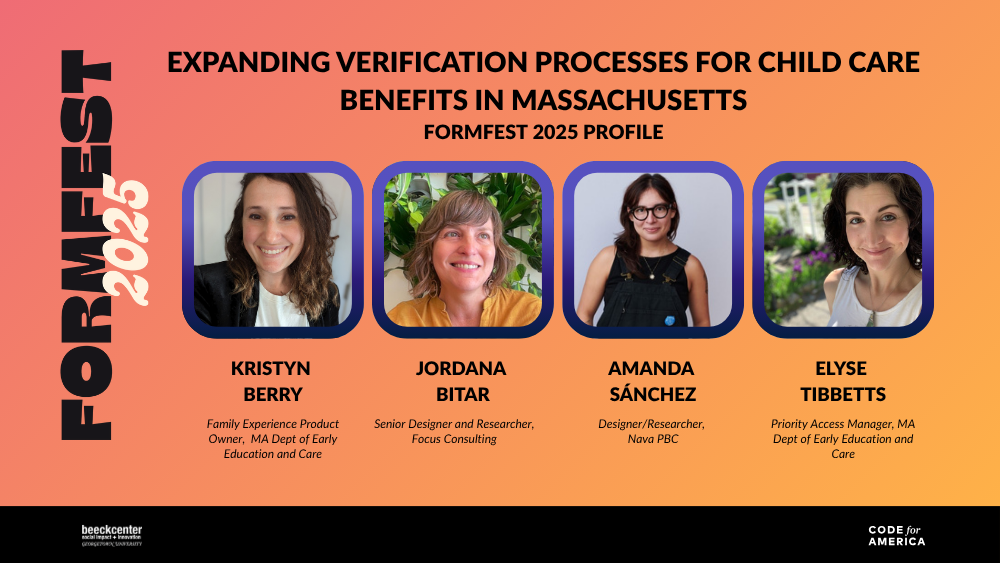
This FormFest profile examines how Massachusetts’ Department of Early Education and Care is modernizing its child care benefits system through human-centered design, making verification and application processes simpler, more compassionate, and more efficient for families and staff.