This article reviews two examples of how Nava has used open-source technologies to bring human-centered testing practices to government services software.
Better Rules utilizes multidisciplinary teams that include people skilled in policy, legal, business rules, programming, and service design working together in an iterative fashion to develop rules. Several outputs are produced using this approach, each offering an opportunity that can be fed back into that iterative process and re-used to solve other issues.
APHSA's President and CEO reflects on lessons and opportunities the COVID-19 pandemic highlighted and constructs a national narrative around the moment.
American Public Human Services Association (APHSA)
This analysis explores the dual nature of mobile state IDs, highlighting their potential to enhance digital identity verification while raising significant privacy and equity concerns.
The Modern Government Leaders program brought together federal executive innovators to share best practices and drive service delivery and process modernization.
The Seattle.gov website's new Assistance and Discounts page centralizes information on city benefits and services, offering a user-friendly and consistent experience across 7,000 pages.
Governor Kathy Hochul announced a new client feedback initiative in partnership with Code for America to improve New York's WIC program by implementing live online chat to gather input from participants, streamline enrollment, and increase access to healthy food for eligible families.
DSN Spotlights are short-form project profiles that feature exciting work happening across our network of digital government practitioners. Spotlights celebrate our members’ stories, lift up actionable takeaways for other practitioners, and put the examples we host in the Digital Government Hub in context.
This Urban Institute report examines how public investments in children's health, education, and welfare yield significant short- and long-term benefits for both individuals and society.
The RFI summary report consolidates submissions received from the open-source software community and details twelve activities that members of the OS3I plan—or have completed—in 2024-2025.
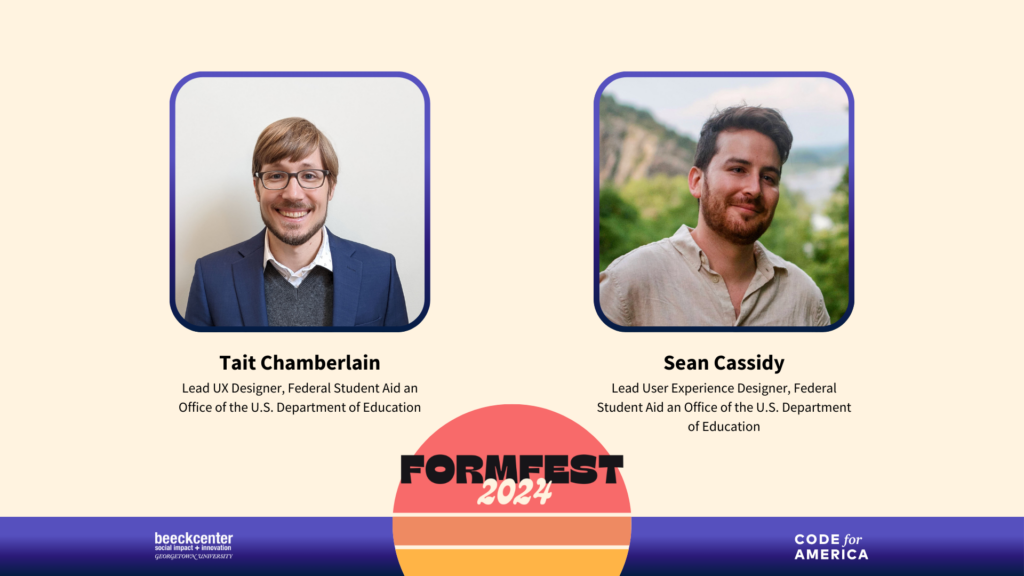
A profile on FormFest speakers Tait Chamberlain and Sean Cassidy, featuring stories about their motivations for working on public sector form innovation.
This blog post discusses the importance of prototyping in the public sector, focusing on how it helps test assumptions, gather user feedback, and refine ideas before making significant investments in building or launching a product or service.