This blog post outlines how address validation tools can improve delivery of critical benefits by ensuring mailing addresses are accurate and up-to-date.
An event recap from one of FormFest 2024's breakout sessions featuring speakers from South Bend Indiana and others working on creating accessible legal forms.
A profile on FormFest speakers Sarah Rodriguez, Emily Lippolis, and Verenice Ramirez, featuring stories about their motivations for working on public sector form innovation.
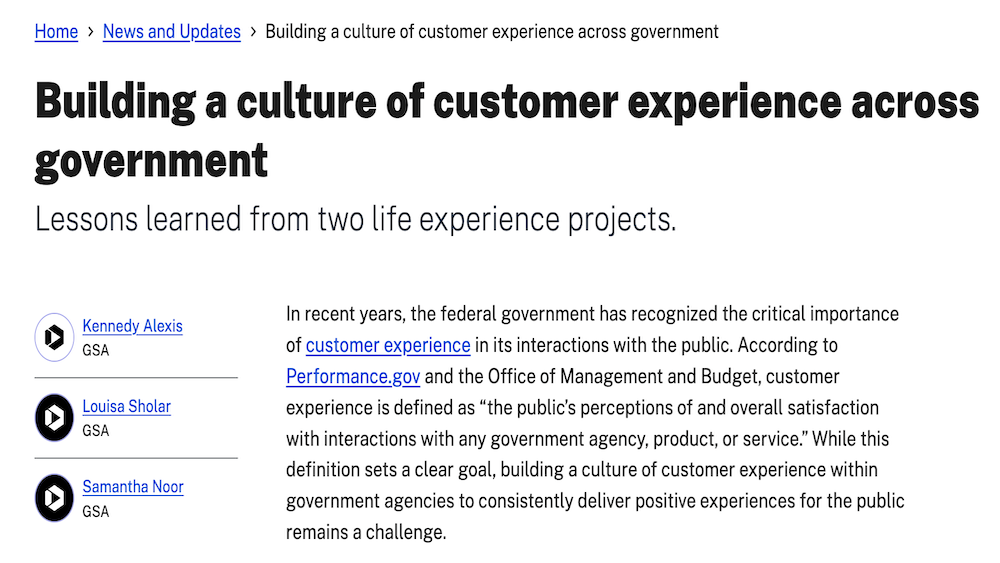
The article highlights the federal government's efforts to improve customer experience through collaborative, human-centered approaches and lessons on embracing risk, partnerships, and user-focused design.
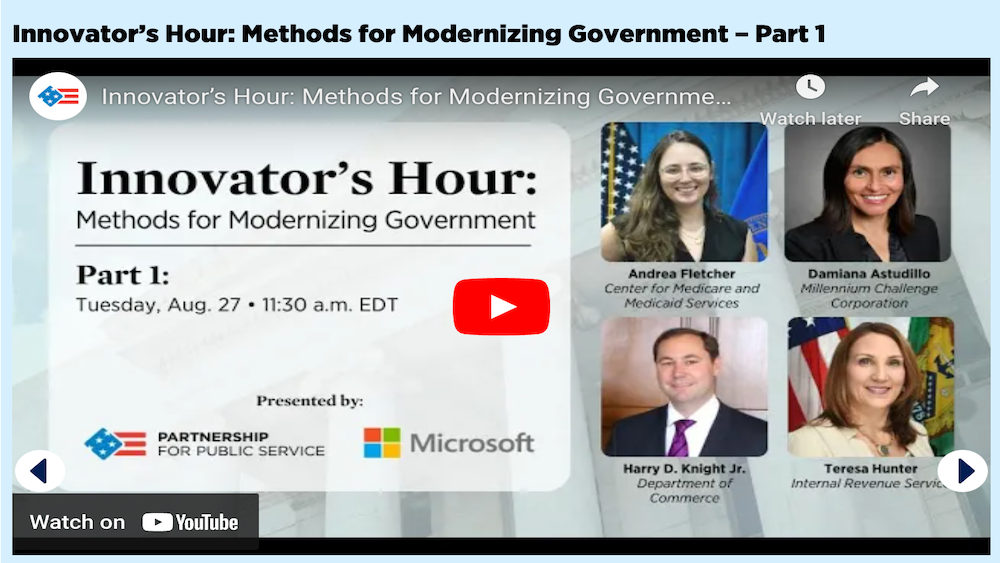
The Modern Government Leaders program brought together federal executive innovators to share best practices and drive service delivery and process modernization.
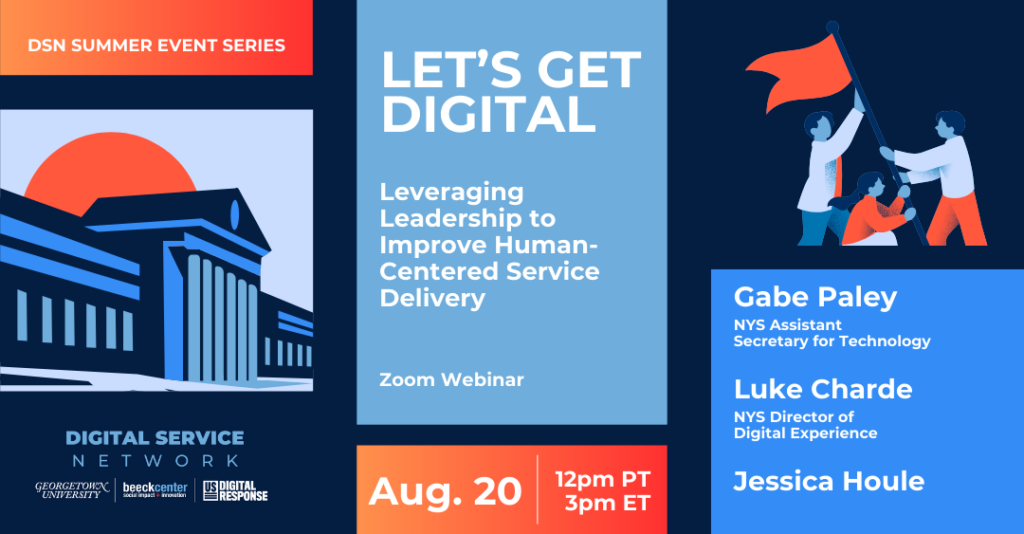
For the Digital Service Network’s (DSN) final installment of its summer event series, Let’s Get Digital, we heard about New York State’s (NYS) human-centered design (HCD) journey and how relationships between leadership and digital service teams have been pivotal in advancing user-centric service delivery.
This article emphasizes the need for local leaders to prioritize disability equity in advancing upward mobility, addressing systemic barriers that hinder disabled individuals' escape from poverty.
An event recap from one of FormFest 2024's breakout sessions featuring speakers from the Canadian Digital Service and the National Head Start Association.
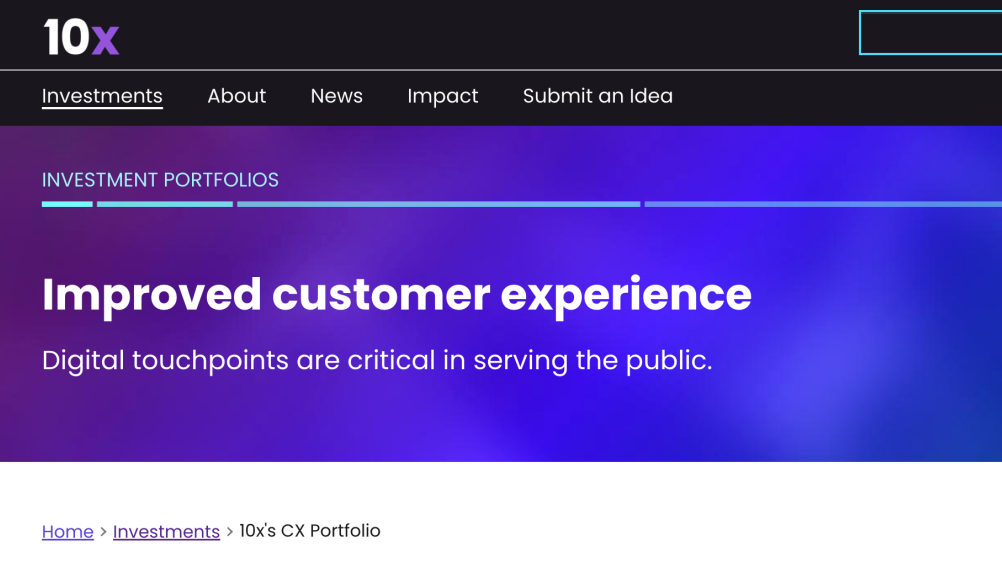
The portfolio page outlines federal projects focused on elevating how people interact with government services by prioritizing user needs, accessibility, equity, and consistency across agencies.
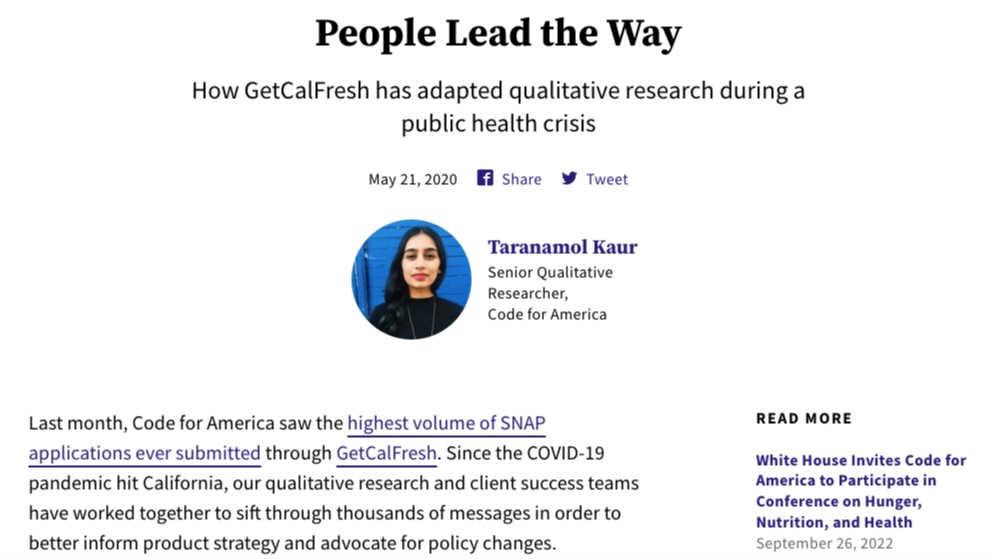
This article describes how Code for America conducted qualitative research within its GetCalFresh application by asking families to tell them about their familial, housing, and financial situations. From client messages, they gathered information regarding how to make changes to their product to keep their work people-centered.
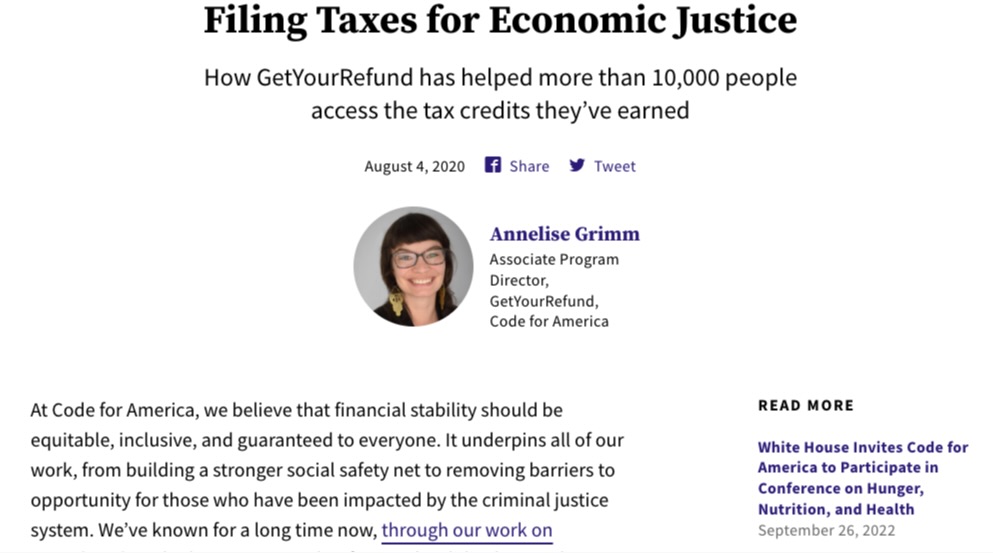
This Code for America article discusses how tax filing can be a powerful tool for economic justice, highlighting efforts to make the tax system more accessible and equitable for low-income individuals.
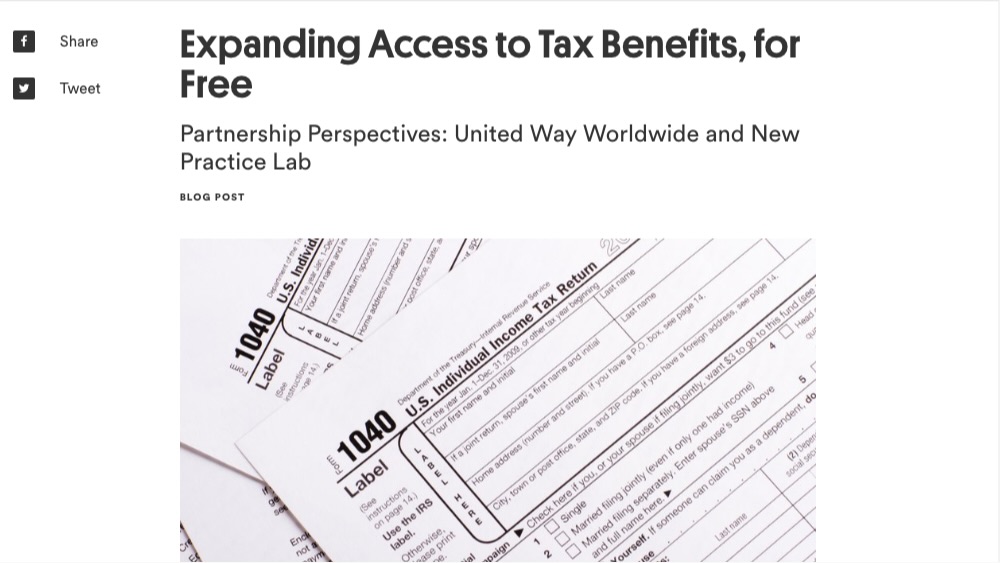
Expanding access to free tax assistance through virtual Volunteer Income Tax Assistance (VITA) programs can help low-income filers claim essential tax benefits without incurring preparation fees.