The GSA’s Service Design program implemented a data-driven evaluation process to enhance digital experiences, improve compliance, and streamline its website portfolio, achieving significant cost savings and customer-centric digital transformation.
The story of Andrew Petrisin and the FLOW system demonstrates how the U.S. DOT successfully overcame barriers in government tech by building a collaborative, user-centered logistics platform that provided value to stakeholders during the 2021 supply chain crisis.
This blog discusses the importance of phased rollouts for government software products, emphasizing the benefits of starting small, gathering real-world user feedback, and resolving issues before a full public release.
This blog post discusses the importance of prototyping in the public sector, focusing on how it helps test assumptions, gather user feedback, and refine ideas before making significant investments in building or launching a product or service.
This publication shares ten ways states can improve start-to-finish customer experience for unemployment insurance claimants. These approaches can increase overall equitable access and system integrity for UI administration.
This article examines how the City of Long Beach, California, collaborated with TOPC to develop a digital tool aimed at enhancing community engagement and expanding urban tree canopy coverage.
An introduction to digital accessibility, emphasizing the importance of designing digital content to be usable by individuals with various disabilities, and guidelines and assistive technologies that support inclusive digital interactions.
An event recap from one of FormFest 2024's breakout sessions featuring speakers from the state of Maryland's Department of Social Services and the U.S. Department of Health and Human Services (HHS).
This blog explains how to provide culturally and linguistically appropriate services to individuals who have experienced trafficking, emphasizing the importance of cultural competence and the CLAS Standards.
U.S. Department of Health and Human Services (HHS)
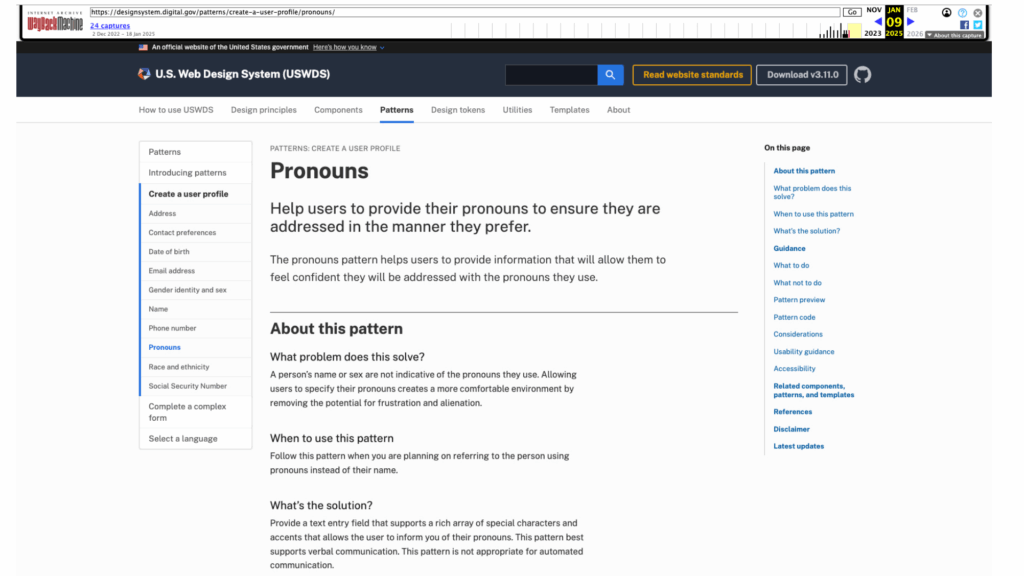
This page provides a U.S. Web Design System pattern for collecting pronoun information in user profiles in a way that respects identity, supports data standards, and promotes inclusion.