APHSA established a working group to identify strengths, barriers, and opportunities for better system alignment in human services for young parents and children, leading to the development of a roadmap to support meaningful systems-level changes.
American Public Human Services Association (APHSA)
This report explores how state and local agencies can enhance customer service in health and human services by implementing technologies such as web-based tools, mobile applications, and call center innovations, aiming to streamline processes and improve client interactions.
A practical guide for advocates that explains how automated benefit notices are generated, where common notice failures originate, and how to push for effective fixes.
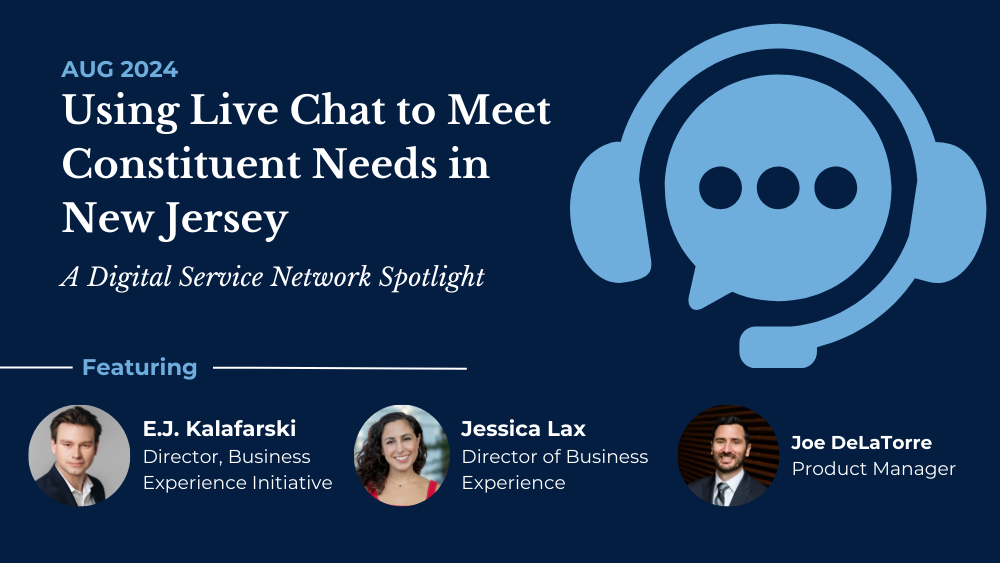
The Digital Services Network (DSN) spoke with the director of OOI’s Business Experience Initiative, E.J. Kalafarski, the director of Business Experience for the State, Jessica Lax, and product manager, Joe DeLaTorre, to learn about Business.NJ.gov’s live chat feature.
This is a community-based project focused on creating and maintaining a resource for researchers and research operations specialists that will empower people to find out not only what tools are being used, but also in which industry, by what size of teams, and where in the world.
“Interoperability” refers to systems’ ability to interact with each other to share data so that a customer is connected with as many benefits as possible in an efficient way. The Affordable Care Act (ACA) was originally intended to be interoperable, but this has not occurred yet. Promoting interoperability in the ACA is imperative, as it would help alleviate food insecurity through automatic benefits enrollment.
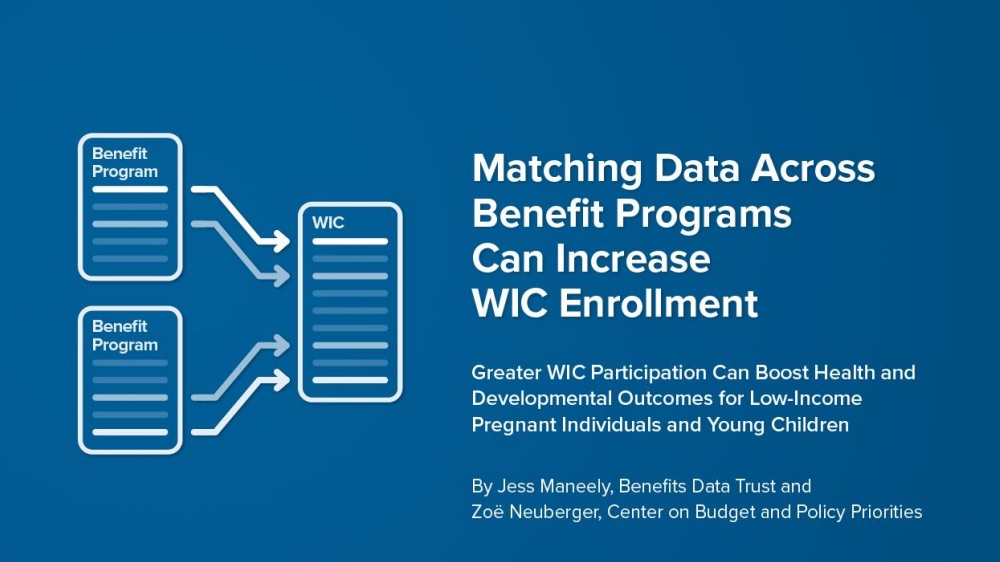
This case study highlights how states used data sharing and targeted outreach to boost WIC enrollment among Medicaid and SNAP participants, improving program reach and reducing disparities.
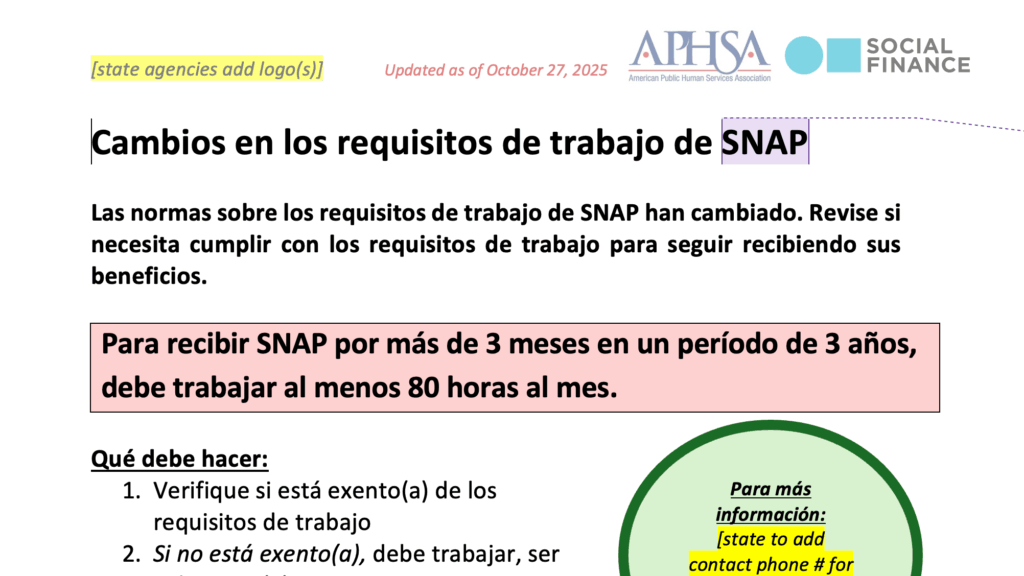
This document provides two Spanish language templates for SNAP agencies to use to communicate SNAP work requirement changes to participants who are newly subject to requirements.
American Public Human Services Association (APHSA)
This report analyzes the rise of digital driver’s licenses (DDLs) and warns that, without strong safeguards, they could threaten privacy, civil liberties, and equitable access to identification.
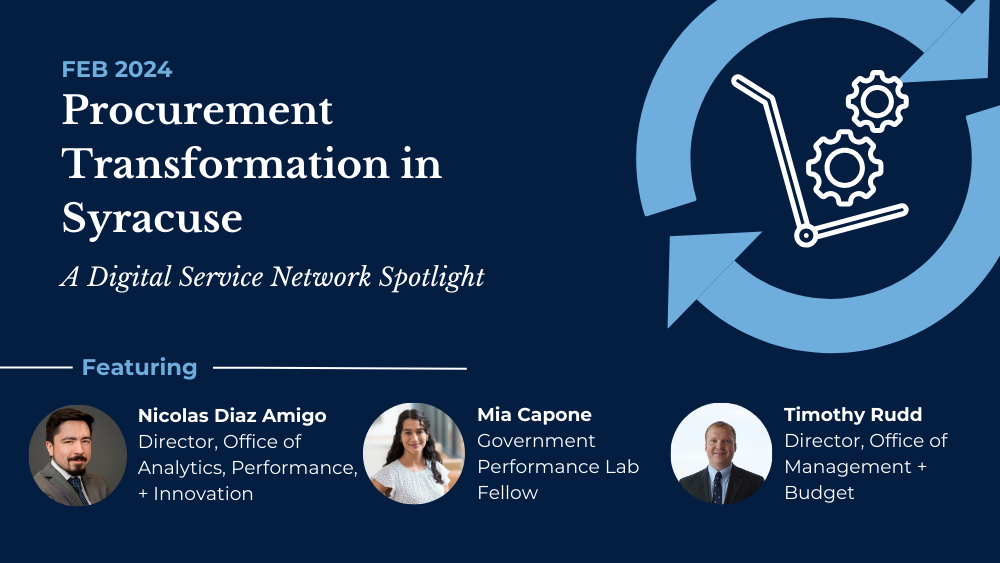
The Digital Service Network (DSN) spoke with API Director Nicolas Diaz Amigo, GPL Fellow Mia Capone, and OMB Director Timothy Rudd to learn more about the City of Syracuse's multi-year procurement transformation initiative.