This guide provides practical insights for benefits administrators on redesigning benefits systems using human-centered design to ensure all eligible residents can access crucial social safety net resources.
The article outlines NYC Opportunity's "Designed by Community" program, which funds and empowers local leaders to create solutions for challenges in marginalized communities. Initially focused on government projects, the program pivoted during the pandemic to support community-led initiatives, with projects ranging from mentorship programs to tech tools for public housing residents.
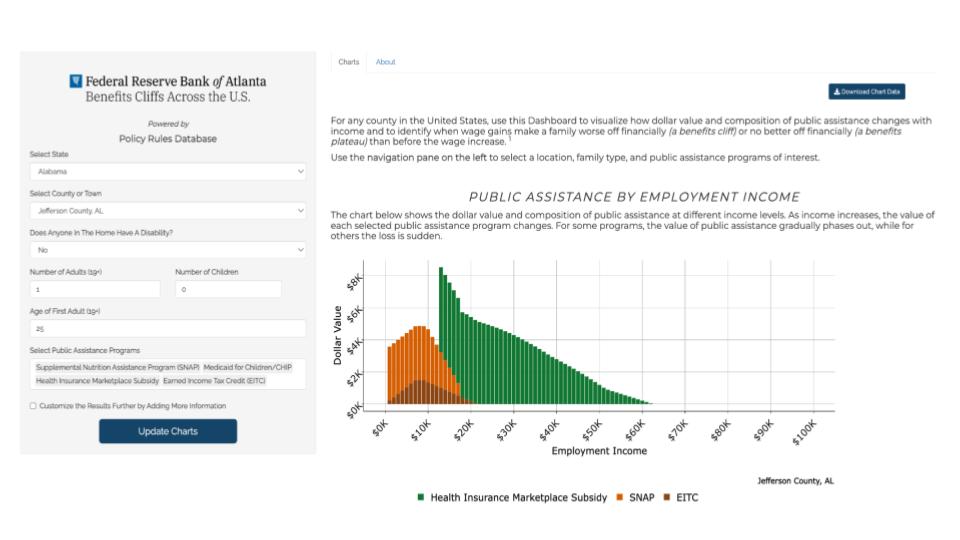
The Policy Rules Database (PRD), developed by the Federal Reserve Bank of Atlanta and the National Center for Children in Poverty, consolidates complex rules for major U.S. federal and state benefit programs and tax policies into a standardized, easy-to-use format. This database allows researchers to model public assistance impacts, simulate policy changes, and analyze benefits cliffs across various household scenarios using common rules and language across different programming platforms.
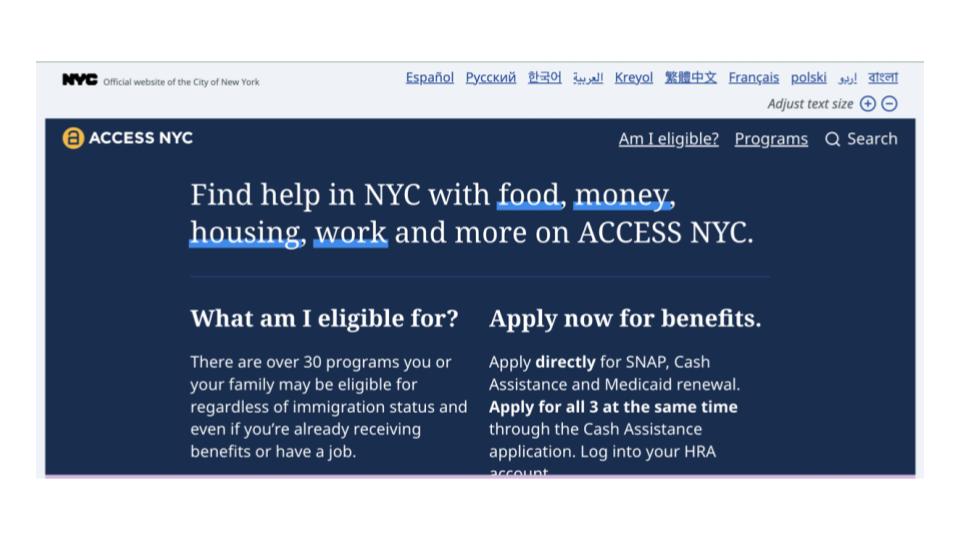
The NYC Mayor’s Office for Economic Opportunity (NYC Opportunity) developed the NYC Benefits Platform, including ACCESS NYC, to help residents easily discover and check eligibility for over 80 social programs.
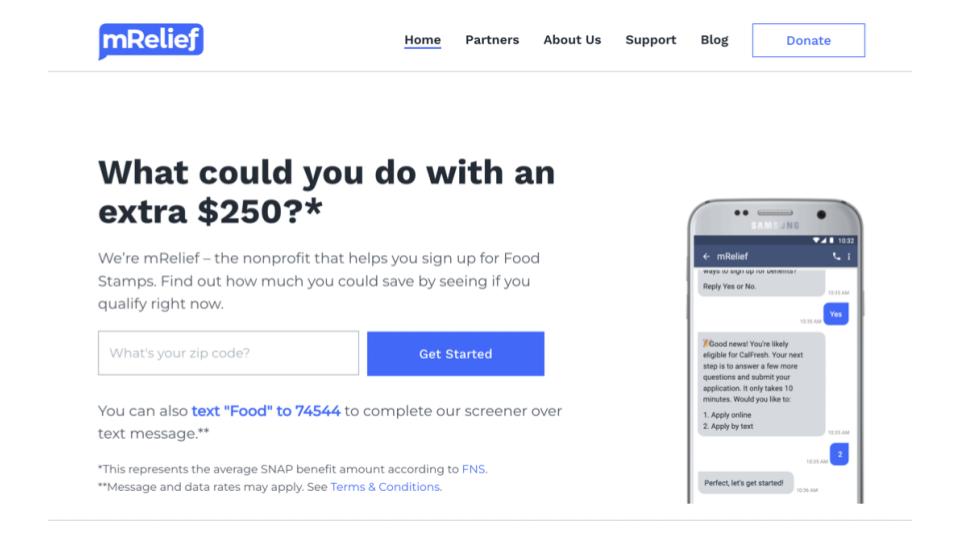
mRelief is a nonprofit that helps individuals in all 53 U.S. states and territories determine SNAP eligibility and apply using easy-to-use web and text tools. Their simplified, inclusive approach has supported over 2.7 million people and unlocked over $1 billion in benefits, focusing on minimizing barriers and adapting eligibility rules across states.
In our research announcement on theories of change (ToC) for digital government, the Digital Service Network shared our belief that all Digital Service (DS) teams should work to develop a ToC.
This resource appendix is a compilation of useful resources intended as a follow-on to the DSN’s writing on theories of change for digital transformation in government. Practitioners can use these resources to DIY their ToC after reading our essays.
The Digital Service Network (DSN) spoke with GC Forms’ Senior Product Manager Stevie-Ray Talbot and Acting Head Ioana Contu to learn more about the team's approach to building GC Forms.
The Digital Services Network (DSN) spoke with Connecticut’s digital program manager, Max Gigle, and Director of Digital Government and Operational Excellence David Labbadia, to learn more about the team’s human-centered approach to developing Business.CT.gov as the first step on the path toward an “all-digital government.”
The Digital Service Network (DSN) spoke with Boston’s new Chief People Officer, Alex Lawrence, to understand how the City is transforming its approach to people management.
The Digital Service Network (DSN) spoke with staff from ODX — Megan Evans Seeds, chief digital officer, and Lisa Yang, digital accessibility coordinator — to discuss their efforts to help center digital accessibility across Hennepin County government.