Practitioner Picks is a quarterly series designed to add fresh resources to the Digital Government Hub’s library, helping people improve government digital service delivery. Each issue spotlights resources chosen by practitioners in a specific service delivery area along with their insights on why these picks are valuable additions to the Hub.
A foundational guide that introduces the principles, governance considerations, and technical approaches involved in sharing and integrating administrative data across organizations.
A comprehensive resource guide providing an overview of mobile driver’s licenses (mDLs) in the United States, including their implementation status, technical standards, and key privacy and accessibility considerations.
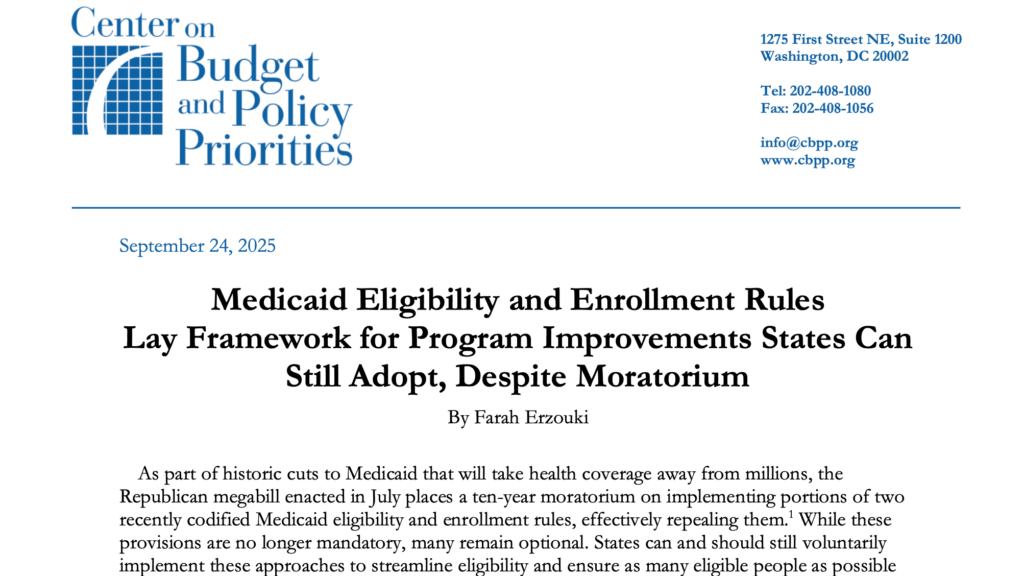
This report explains how states can continue to voluntarily implement key Medicaid and CHIP eligibility and enrollment improvements—originally required by two federal rules—despite a ten-year moratorium enacted in July 2025 that blocks their mandatory enforcement
This is the summary version of a report that documents four experiments exploring if AI can be used to expedite the translation of SNAP and Medicaid policies into software code for implementation in public benefits eligibility and enrollment systems under a Rules as Code approach.
This publication shares ten ways states can improve start-to-finish customer experience for unemployment insurance claimants. These approaches can increase overall equitable access and system integrity for UI administration.
This blog explores the rise of person-centered insights in policymaking, featuring an overview of its benefits and expert interviews highlighting its crucial role in effectively delivering public benefits and human services.
The Digital Service Network (DSN) spoke with API Director Nicolas Diaz Amigo, GPL Fellow Mia Capone, and OMB Director Timothy Rudd to learn more about the City of Syracuse's multi-year procurement transformation initiative.
This report explores the Maine Department of Labor’s (MDOL) remarkable response to this layoff through collaboration with the Peer Workforce Navigator project—a coalition of community-based organizations in partnership with the MDOL—which made a huge difference in the lives of these laid off workers. The report also examines aspects of the state’s unemployment insurance (UI) system that might be improved to account for similar situations in the future.