Policymakers, program administrators, federal leaders, researchers, and advocates are increasingly focused on using administrative data to build evidence for improving government programs. Achieving this goal requires accessible data sources and the capacity to use them, yet stakeholders have little information about the baseline level of state capacity in these areas. How does one measure concepts such as “effective data use” and “analytic capacity?” This brief reports findings from a pioneering and comprehensive needs assessment that examined the capacity of Temporary Assistance for Needy Families (TANF) programs in 54 U.S. states and territories to analyze data used for program improvement, monitoring, and evidence-building. The needs assessment provides a foundation for technical assistance and continued improvement for the TANF program and may also provide valuable insights and frameworks for other state-administered human services programs.
There were over 25 million Medicaid disenrollments in 2023, but national enrollment remained significantly above pre-pandemic levels at over 56 million, with notable state-level variations and near-recovery of child enrollment.
Artificial intelligence promises exciting new opportunities for the government to make policy, deliver services and engage with residents. But government procurement practices need to adapt if we are to ensure that rapidly-evolving AI tools meet intended purposes, avoid bias, and minimize risks to people, organizations, and communities. This report lays out five distinct challenges related to procuring AI in government.
This blog explains how the Rural Health Transformation Program—established under H.R. 1—will channel $50 billion over five years to states to support rural health care, and outlines how states can apply, qualify, and deploy funds strategically.
Association of State and Territorial Health Offices (ASTHO)
The article explains that for government agencies to successfully use Agile software development with vendors, they need to make changes in staffing—specifically by creating roles like a product owner and technical lead within the agency.
A FormFest profile highlighting how New York State’s design and technology teams are reimagining form creation through collaborative, human-centered design methods that simplify processes and expand participation.
A research report examining how privacy and security risks are unevenly experienced across socioeconomic, racial, and ethnic groups, and how digital inequality shapes people’s exposure to harm and access to protective resources.
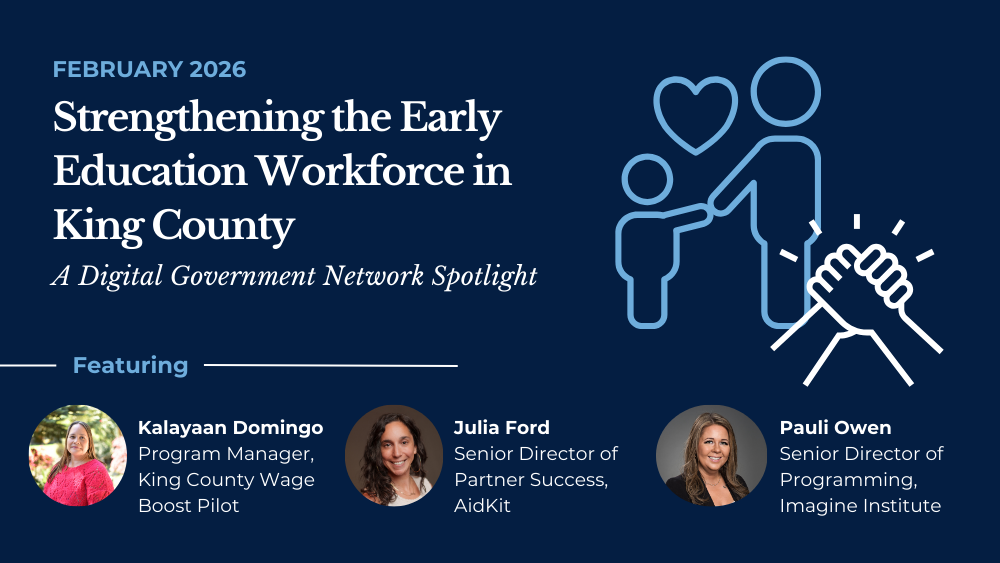
DGN Spotlights highlight innovative digital initiatives transforming how government connects with the public. This story explores Seattle’s Youth Connector—a youth-informed digital platform and outreach strategy that aims to make youth programs easier to find, access, and trust.
DGN Spotlights are short-form project profiles that feature exciting work happening across our network of digital government practitioners. Spotlights celebrate our members’ stories, lift up actionable takeaways for other practitioners, and put the resources + examples we host in the Digital Government Hub in context.
A tool for CDOs advocating for funding, authority, and expansion—and a primer for government leaders unfamiliar with the role. The report establishes shared vocabulary, identifies six CDO office archetypes, and offers cross-state insights on structures, priorities, and challenges.
A policy paper from the OECD examining how emerging technologies such as artificial intelligence, blockchain, and virtual reality can help governments address challenges in civic participation and strengthen democratic engagement.
Organisation for Economic Co-operation and Development (OECD)